
Kavach and Raksha: Protective Prayers in the Tradition
Kavach mantra meaning: kavach is Sanskrit for armor, and a kavach is a protective hymn asking a deity to guard each part of the body and each direction, one by one. The Devi Kavacham, recited before the Durga Saptashati, is the best known. Families use these hymns daily as devotion, not as a magic shield.
Key takeaways
- Kavach (kavacha in Sanskrit) means armor or a protective covering.
- The post on Navratri in Tarrant County covers the nine nights in more detail.
- The raksha sutra, a red and yellow thread (often called mauli or kalava), is tied on the wrist at pujas and festivals.
- Some families pair a kavach with mantras for particular planets; the post on planet-based mantras, which and when explains that practice.
- You may see "kavach" pendants or lockets advertised with promises of protection, sometimes at high prices and sometimes described as specially energized.
During Navaratri, in homes and community halls across Tarrant County, families sit down in the evenings to read the Durga Saptashati. Before the main text begins, many recite a long hymn naming every part of the body, from the crown of the head to the soles of the feet, and asking a different form of the Goddess to protect each one. That hymn is a kavach. If you have wondered about kavach mantra meaning, or why so many families keep these prayers, this post explains what they are and how they are used day to day.
What kavach means
Kavach (kavacha in Sanskrit) means armor or a protective covering. A kavach hymn is a prayer that wraps the person reciting it in divine protection, part by part and direction by direction. Raksha means protection, and it appears in prayer names like the Rama Raksha Stotra and in the raksha sutra, the sacred thread. Both sit within the wider tradition of mantra, sacred sound repeated with attention.
How a kavach hymn is built
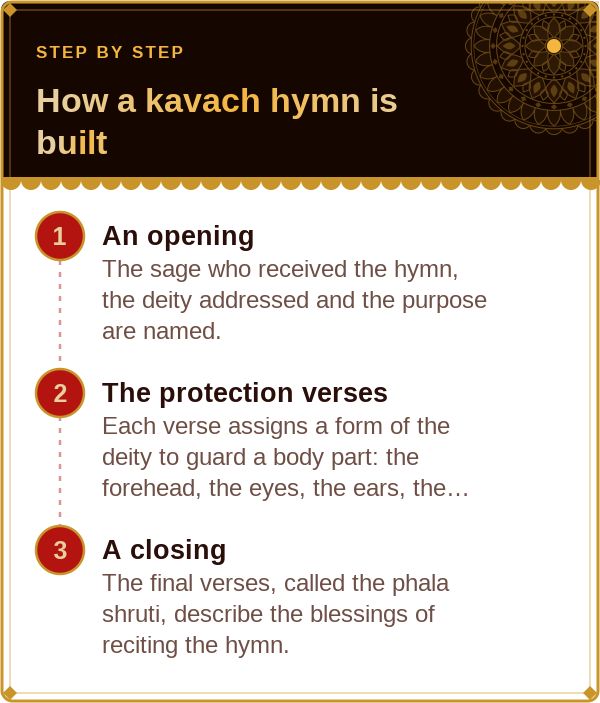
Most kavach hymns share a structure:
- An opening. The sage who received the hymn, the deity addressed and the purpose are named.
- The protection verses. Each verse assigns a form of the deity to guard a body part: the forehead, the eyes, the ears, the throat, the heart, the hands, the feet. Often the directions (east, south, west, north, above, below) are covered too.
- A closing. The final verses, called the phala shruti, describe the blessings of reciting the hymn.
The effect, for the person reciting, is a slow, deliberate walk through the whole body with a prayer at each step. Many people find that very calming.
The best-known protective hymns
Devi Kavacham (Durga Kavach)
The Devi Kavacham comes from the Markandeya Purana and, as the description of the Devi Mahatmya notes, consists of 61 verses whose recitation is regarded as protecting the reader in every part of the body, in every place and in every difficulty. It is usually recited with the Argala Stotram and Keelakam before the Durga Saptashati, especially during Navaratri. The post on Navratri in Tarrant County covers the nine nights in more detail.
Rama Raksha Stotra
A hymn to Rama attributed to the sage Budha Kaushika, asking Rama's protection for each part of the body. It is popular in Maharashtra and across North India, often recited in the evening.
Narayana Kavacha
Found in the Bhagavata Purana, this kavach invokes Vishnu in his many forms to protect from every direction. Vaishnava families often keep it.
Hanuman Kavach
Several protective hymns are addressed to Hanuman. Many families use the more familiar Hanuman Chalisa in the same spirit, as described in the Hanuman Chalisa as a protection prayer.
The raksha mantra and the sacred thread
The raksha sutra, a red and yellow thread (often called mauli or kalava), is tied on the wrist at pujas and festivals. A common raksha mantra recited while tying it begins "Yena baddho Bali raja," recalling the thread tied on the generous king Bali and asking that this thread likewise protect the wearer. The same idea lies behind Raksha Bandhan, when sisters tie a rakhi on their brothers' wrists.
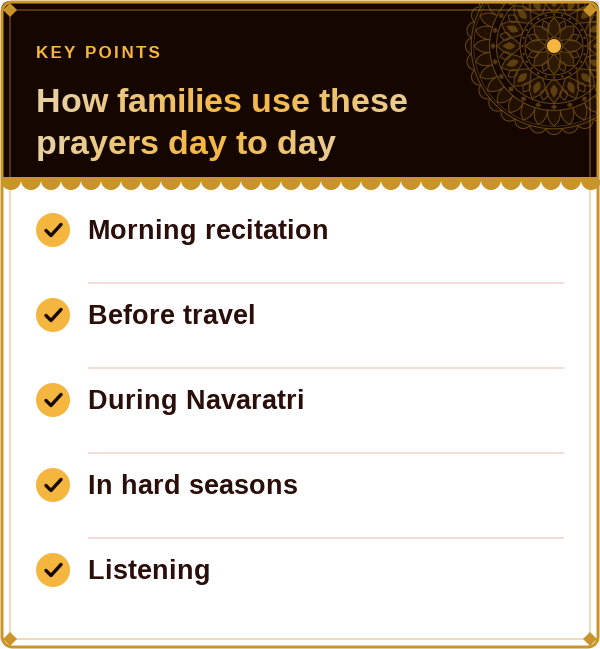
How families use these prayers day to day
- Morning recitation. A short kavach recited after bathing, before the day begins.
- Before travel. Some families recite a kavach before a long drive or flight from DFW.
- During Navaratri. The Devi Kavacham is recited each of the nine nights.
- In hard seasons. Illness in the family, exams, a difficult planetary period or a frightening event. The post on a protection prayer routine for Texas storm season shows how prayer can sit beside practical safety.
- Listening. Many people learn by listening to a recording until the words become familiar.
Some families pair a kavach with mantras for particular planets; the post on planet-based mantras, which and when explains that practice.
A word about kavach lockets
You may see "kavach" pendants or lockets advertised with promises of protection, sometimes at high prices and sometimes described as specially energized. The tradition's protective hymns need nothing bought. If someone insists you must purchase an expensive amulet to be safe, especially by frightening you, step back. The post on steps to take when fees keep growing explains why.
Learning a kavach
Start with one hymn connected to the deity your family worships. Learn a few verses a week with a recording or teacher, and read an English translation alongside so you know what you are saying. Astrologer and Psychic Vijayram can help you choose and learn a protective hymn in a mantra and meditation session, by phone, WhatsApp or video, in Central Time, and these prayers form part of the protective prayer sessions offered here.
What a kavach cannot do
A kavach is a prayer of devotion and trust. It cannot guarantee that no harm will come, and it does not replace medical care, safety precautions or practical help. Its gift is the steadiness and faith it brings to the person who recites it.
Common questions
Can anyone recite the Durga Kavach?
In most households, yes. Many families recite it during Navaratri or daily as part of the Durga Saptashati. If your family or temple follows particular rules, such as initiation for certain texts, follow those.
Do I need to pronounce the Sanskrit perfectly?
No. Learn slowly from a recording or a teacher, and do your best. The tradition values sincerity and attention. Pronunciation improves with practice, and nobody is turned away for mistakes.
Is a kavach locket the same as a kavach hymn?
No. Lockets and pendants sold as a kavach are amulets, sometimes containing a written mantra. The hymn is a prayer you recite. Be cautious of expensive lockets sold with promises of protection; the hymn needs nothing bought.
Which kavach is right for me?
Usually the one connected to the deity your family already worships: Durga, Rama, Hanuman, Narayana or another. If you are unsure, start with one short hymn and recite it regularly rather than collecting several.
Related service

Keep reading
Kohl, Kajal and Lead: Keeping Newborn Nazar Customs Safe
Nazar on baby customs, from the black dot to kajal, and why the FDA warns about lead in some kohl products. Safer ways to keep it, pediatrician first.
Read article →
A Weekly Upkeep Routine for a Small Shop After Its Blessing
An office cleansing ritual you can keep weekly after a shop blessing: a lamp, a clean threshold, a short prayer, and fire-code sense for Fort Worth leases.
Read article →
Rahu, Ketu and Feeling Under a Cloud
Rahu Ketu negative effects explained calmly: how astrologers read restless or foggy periods in a Vedic chart, without calling them a curse or selling fear.
Read article →Quick answers
Can protection prayers be said for me remotely?
Yes, protection prayers can be said for you remotely, by phone or video, as a faith practice. Safety steps come first, and the fee is stated before booking.
Read answer →Is nazar the same thing as mal de ojo?
Nazar and mal de ojo are close cousins: both name the evil eye of envy or admiration. How the South Asian and Latin American beliefs differ in Fort Worth.
Read answer →Talk to Astrologer and Psychic Vijayram
Tell us what you are facing. If a reading is unlikely to help, you will be told that plainly.