
Drishti, Nazar, Dishti: Evil Eye Words Across Indian Languages
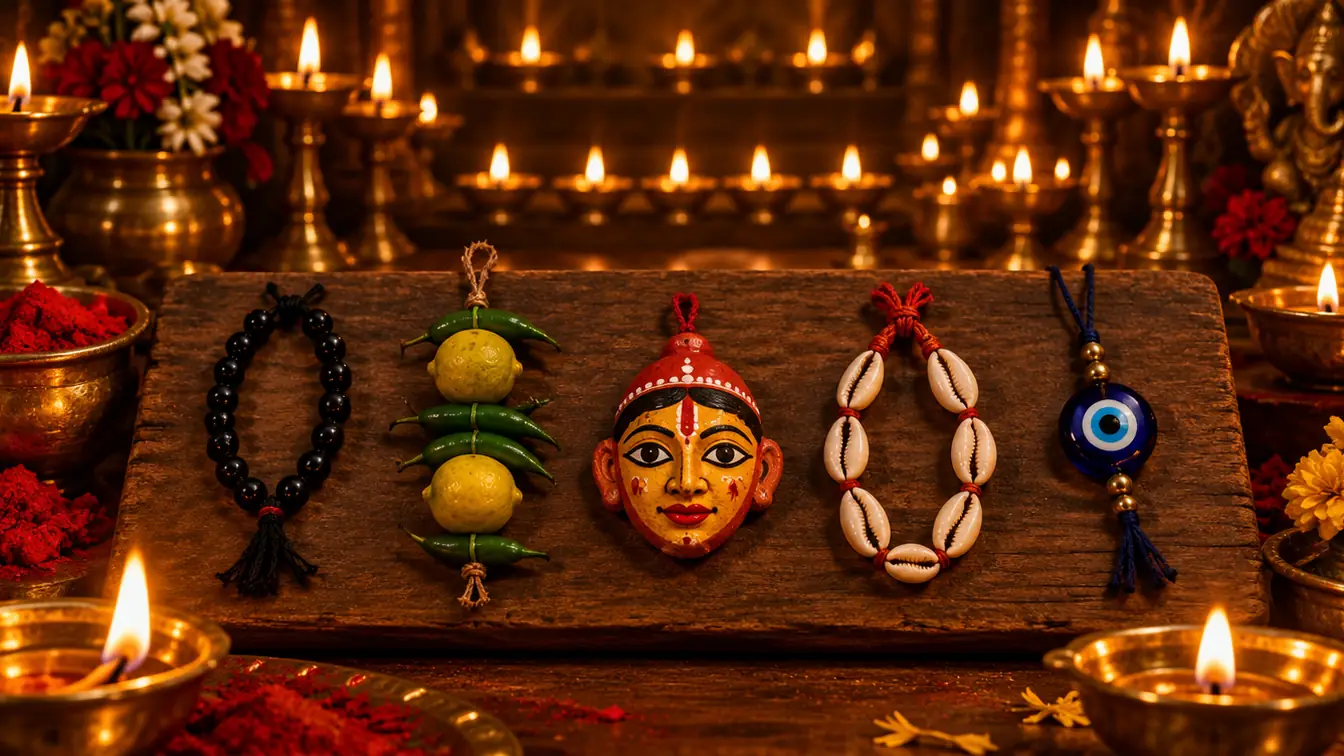
The evil eye is the old belief that an envious or admiring look, even an unintended one, can unsettle someone's good fortune, health or happiness. Across Indian languages it is called nazar, drishti or dishti, and families answer it with small household customs: a kajal dot, a black thread, or salt and chillies circled and burned.
Key takeaways
- The evil eye is the belief that a look filled with envy, or even simple admiration, can harm the person or thing admired.
- "Nazar" means sight or glance, and "nazar lagna" means to be struck by the evil eye.
- Look at the remedies across all these languages and a pattern appears.
- A fuller house blessing and cleansing follows the same logic with prayers in each room.
- For babies, protecting children from nazar pairs the customs with practical care.
Ask a room of Indian grandmothers in Fort Worth what the evil eye is, and you will hear the same idea in a dozen languages. Someone praises the baby, the new car, the daughter's exam results, and soon after something goes wrong. The baby will not sleep, the car gets a dent, the daughter falls ill before the next exam. "Nazar lag gayi," says one grandmother. "Dishti," says another. "Thirushti," says a third. So what is the evil eye, and why do so many families, from so many regions, describe it in almost exactly the same way?
The idea in one sentence
The evil eye is the belief that a look filled with envy, or even simple admiration, can harm the person or thing admired. It is one of the oldest and most widespread folk beliefs in the world. The overview of the evil eye traces it from ancient Greece and Rome through the Middle East and South Asia to Latin America, and the familiar blue-and-white glass charm is described in the history of the nazar amulet.
One worry, many words
Hindi and Urdu: nazar
"Nazar" means sight or glance, and "nazar lagna" means to be struck by the evil eye. In North Indian homes the answers include nimbu-mirchi at shop doors, a black dot on a baby's cheek, and "nazar utarna," circling salt or mustard seeds around a person and tossing them into a fire.
Sanskrit roots: drishti
"Drishti" is the Sanskrit word for sight, and "drishti dosha" means a fault or affliction from the gaze. Many regional words grow from it.
Tamil: kan thirushti
In Tamil homes, "kan thirushti" or simply "thirushti" is the evil eye. A well-known custom is the thirushti pumpkin or ash gourd, painted with a fierce face and hung at a new building or shop to draw stares away. Families also circle salt and red chillies around a person, "suthi podu," and burn them.
Telugu: dishti
Telugu speakers say "dishti," and removing it is "dishti teeyadam." A painted demon-faced doll, the dishti bomma, is often hung on houses under construction. Camphor circled and burned is a common household remedy.
Gujarati: najar
Gujarati homes say "najar lagvi." A black kajal tilak on a child's forehead or behind the ear is common, and "najar utarvi," circling salt, chillies or mustard seeds, follows a crowded event.
Bengali: nojor
Bengali families say "nojor laga." A kajal dot, "kajol-er tip," on a baby's forehead or cheek is the classic protection, and the dot is meant to be a small imperfection that keeps admirers from gazing too long.
Nepali: najar
Nepali speakers share the word najar with Hindi, and the customs are familiar: black thread, kajal for babies, and salt or chillies circled and burned when someone seems affected.
The common thread: protecting good fortune
Look at the remedies across all these languages and a pattern appears. The evil eye is believed to strike at good fortune: a healthy baby, a new home, a promotion, a wedding. The customs do two things. They soften praise, by adding a blessing or a deliberate flaw like a kajal dot. And they draw the gaze elsewhere, with a fierce face, a lemon and chillies, or a glass eye. Many grandmothers will tell you the eye is rarely malicious. It is attention, too much of it, at a fragile moment.
Evil eye home remedies families use
- Salt circling. A pinch of rock salt in a closed fist, circled seven times around the person, then dissolved in running water or dropped in a flame.
- Chillies and mustard. Dried red chillies and mustard seeds circled and burned. Families say a harsh smell means no nazar; no smell means it was present.
- Camphor. A piece of camphor circled on a steel plate and allowed to burn out.
- Kajal dot. A small black mark on a baby. Be careful with the product: the FDA warns that traditional kohl, kajal and surma can contain lead, so many parents skip it or use a tiny mark behind the ear with a product they have checked.
- Black thread. Tied on the wrist, ankle or waist. The post on black thread bracelets and anklets covers how it is worn and when to remove it.
How to remove evil eye from your house
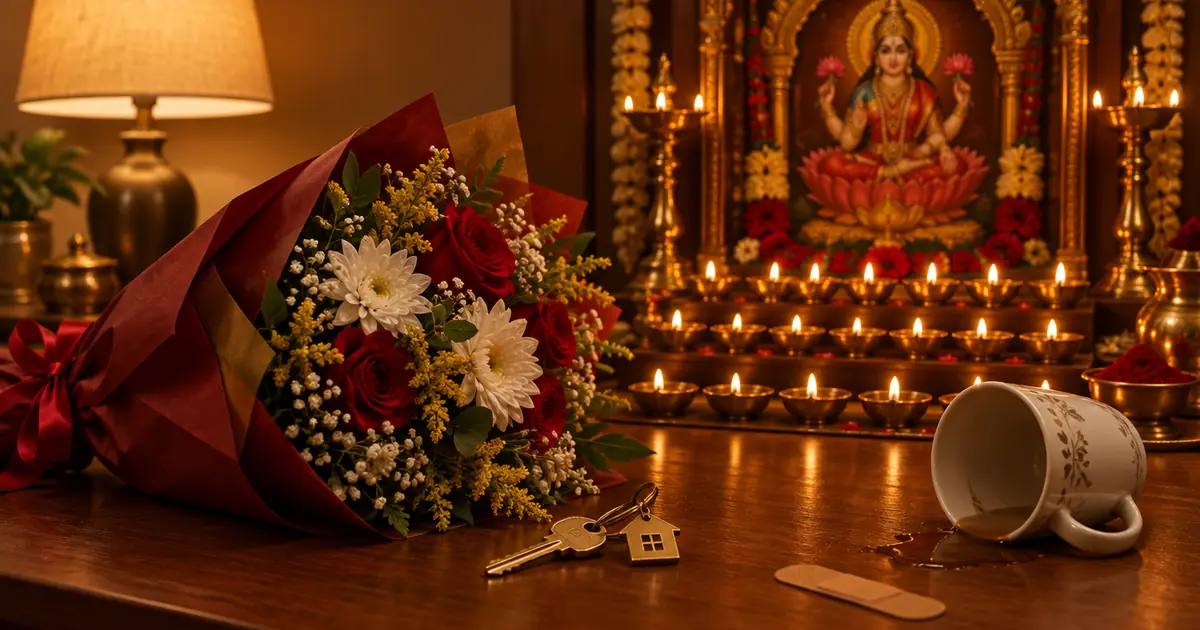
For a home rather than a person, families usually sweep the house toward the front door, mop with a little rock salt in the water, carry camphor or incense from room to room, and hang nimbu-mirchi or a protective symbol at the entrance. A fuller house blessing and cleansing follows the same logic with prayers in each room.
Ways to get rid of the evil eye, and when to look elsewhere
The household rites above are the traditional ways of removing evil eye, and many people find them comforting. But if tiredness, illness, arguments or bad luck continue, look at ordinary causes first: sleep, stress, health and money pressure. The post on nazar worries and everyday causes goes through them. For babies, protecting children from nazar pairs the customs with practical care. And if you have picked up a blue eye charm on holiday, wearing a nazar charm with respect explains its background.
When guidance helps
Astrologer and Psychic Vijayram can guide the traditional nazar rite by phone, WhatsApp or video, in Central Time, with ordinary explanations discussed first. The full service is on the evil eye removal page. Nobody is ever blamed for causing the eye.
What these customs cannot do
No thread, dot or rite can prevent illness, accidents or misfortune. They are faith-based customs that express care for the people and things a family holds dear.
Common questions
How do you remove the evil eye?
Most families use a simple household rite: a pinch of rock salt or a few dried red chillies circled around the person seven times, then dropped into a flame or running water, followed by a face wash and rest. It is a faith-based custom of comfort.
Can you get rid of the evil eye for good?
The tradition treats nazar as something that comes and goes, so families repeat small customs when needed rather than seeking a one-time fix. Be wary of anyone who sells a permanent solution at a high price.
Is the evil eye only a Hindu belief?
No. It is found across South Asia among Hindus, Muslims, Sikhs and Christians, and far beyond, in the Middle East, the Mediterranean and Latin America. The words and remedies change; the core idea is shared.
Is drishti the same as nazar?
Yes, in everyday use. Drishti is the Sanskrit word for sight, used in many South and West Indian languages, while nazar comes into Hindi and Urdu through Persian and Arabic. Both describe harm from an envious or admiring gaze.
Related service

Keep reading
A Run of Bad Luck After Good News: Nazar Worries and Everyday Causes
Evil eye symptoms families describe after a promotion, new house or new baby, and the ordinary causes to check first: sleep, stress, money and health.
Read article →
Black Thread Bracelets and Anklets: Meaning and When to Remove
Nimbu mirchi meaning, and the black thread custom explained: who wears a kala dhaga, how it is tied, hygiene points, and when to take it off or replace it.
Read article →
Buying Camphor, Rock Salt and Incense at Tarrant County Grocers
Camphor for puja, rock salt and incense: what to look for at Tarrant County grocers, how each is used in a home cleansing, and fire safety for apartments.
Read article →Quick answers
Is nazar the same thing as mal de ojo?
Nazar and mal de ojo are close cousins: both name the evil eye of envy or admiration. How the South Asian and Latin American beliefs differ in Fort Worth.
Read answer →How do I know if I need a spiritual cleansing?
How do you know if you need a spiritual cleansing? Rule out health, sleep and stress first; then a cleansing can be a calm faith practice. A Fort Worth guide.
Read answer →Talk to Astrologer and Psychic Vijayram
Tell us what you are facing. If a reading is unlikely to help, you will be told that plainly.