

A Run of Bad Luck After Good News: Nazar Worries and Everyday Causes
Evil eye symptoms, as families describe them, include sudden tiredness, headaches, a baby who will not settle, arguments at home and things going wrong after good news. Each has ordinary explanations worth checking first: lost sleep, stress, money pressure and illness. See a doctor for physical symptoms; a nazar removal rite can follow as traditional spiritual work.
Key takeaways
- What families say: "Ever since the promotion, nothing has gone right.
- What families say: "We moved in and suddenly everyone is fighting.
- What families say: "The baby was fine until all the relatives came.
- A promotion, a wedding, a new baby and a new house all disrupt routines, cost money and bring visitors.
- Once the idea of nazar takes hold, every small mishap can seem to confirm it.
Health comes first. If you or a family member has a physical symptom such as pain, fever, a racing heart, a baby who will not feed, or anything that worries you, call a doctor or pediatrician. In an emergency, call emergency services. If low mood or anxious thoughts are building, contact the Suicide and Crisis Lifeline. A spiritual rite never replaces medical care.
The story is so common that families in Fort Worth could almost tell it in unison. Good news arrives: a promotion, keys to a new house, a healthy baby. Relatives call, photos go up, people visit. And then, a week later, things start to go wrong. Headaches. Snapping at each other. The baby crying for hours. A fender bender on I-30. Someone says it quietly: nazar. Here are the evil eye symptoms families describe most often, and the ordinary causes worth ruling out before any ritual.
After a promotion
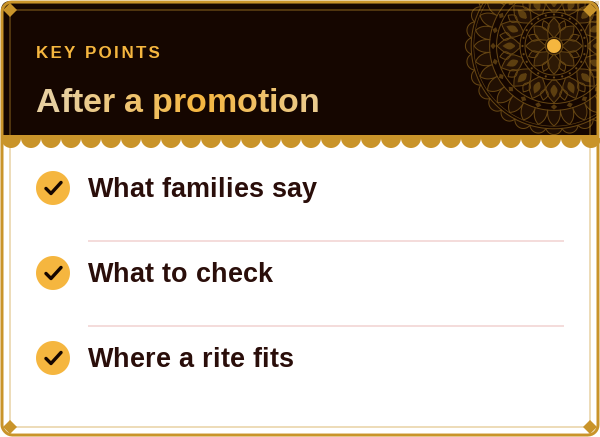
What families say: "Ever since the promotion, nothing has gone right. He is exhausted, he is short with the kids, and he keeps getting headaches."
What to check: A new role usually means longer hours, more responsibility, new people to impress and less sleep. Stress shows up in the body as headaches, tight shoulders, stomach trouble and irritability; MedlinePlus has a clear summary of how stress affects the body and mind. Are you sleeping seven hours? Eating at regular times? Still getting outside?
Where a rite fits: If the practical changes are in hand and you would find comfort in it, a simple nazar rite can mark a fresh start in the new role.
After moving into a new house
What families say: "We moved in and suddenly everyone is fighting. Things keep breaking. Nobody sleeps well."
What to check: Moving is one of the most stressful events a family goes through. Money is often tight after closing, boxes are everywhere, routines are gone, and everyone is sleeping in a strange room. New houses have their own sounds, and older houses can have damp, drafts or a heater that needs servicing. Arguments in the first months after a move are extremely common.
Where a rite fits: A house blessing or cleansing is a lovely way to settle into a home, once the boxes are unpacked and the basics are sorted.
After a new baby
What families say: "The baby was fine until all the relatives came. Now she cries all evening and will not sleep."
What to check: Babies get overstimulated by crowds, noise and being passed from person to person, and evening fussiness in the early weeks is very common. Feeding problems, reflux, colic and illness all need a pediatrician's view. For parents, sleep loss is enormous; the CDC's overview of sleep and health shows how much it affects mood, judgment and health. And for mothers, the weeks after birth bring huge physical and emotional change. If a new mother feels persistently sad, anxious, numb or unable to cope, she should talk to her doctor. Postpartum depression and anxiety are medical conditions, common and treatable.
Where a rite fits: Many families do nazar utarna after a baby's first outings or a big gathering. It is gentle and harmless when done with care. The post on protecting children from nazar covers the baby customs safely.
Signs of nazar, and the first thing to check
| What families notice | Check first |
|---|---|
| Sudden tiredness | Sleep, iron levels, thyroid, heat, overwork: see a doctor if it lasts |
| Headaches | Stress, screens, dehydration, eyesight, blood pressure |
| Loss of appetite | Stress, illness, medication side effects |
| Arguments at home | Exhaustion, money worries, big changes in routine |
| A run of small mishaps | Distraction, rushing, lack of sleep |
| A baby who will not settle | Overtiredness, hunger, teething, illness: call the pediatrician |
| Feeling low or anxious | Talk to a doctor or counselor; contact the Suicide and Crisis Lifeline in a crisis |
Why good news is stressful
It sounds odd, but happy changes add stress just as hard ones do. A promotion, a wedding, a new baby and a new house all disrupt routines, cost money and bring visitors. That is part of why the tradition of nazar exists: families noticed long ago that trouble often follows good fortune. The custom gave them a way to respond. Today we can respond on both levels, practical and spiritual.
Telling worry from intuition
Once the idea of nazar takes hold, every small mishap can seem to confirm it. If you find yourself scanning for signs, or feeling dread you cannot shake, the post on telling intuition from anxiety may help. If heaviness lingers for weeks, read when low mood needs more than prayer, and for a summer slump, heat, sleep and burnout covers the Texas angle.
When a nazar rite makes sense
Once health is checked and practical pressures are being handled, a traditional rite can be a comforting way to mark a turning point and reassure older relatives. The background to the belief is in what the evil eye is and what it is called across Indian languages. Astrologer and Psychic Vijayram guides the rite by phone, WhatsApp or video, in Central Time, as described on the evil eye removal page. Nobody is blamed, and the session starts with a few questions about health and sleep.
What a nazar rite cannot do
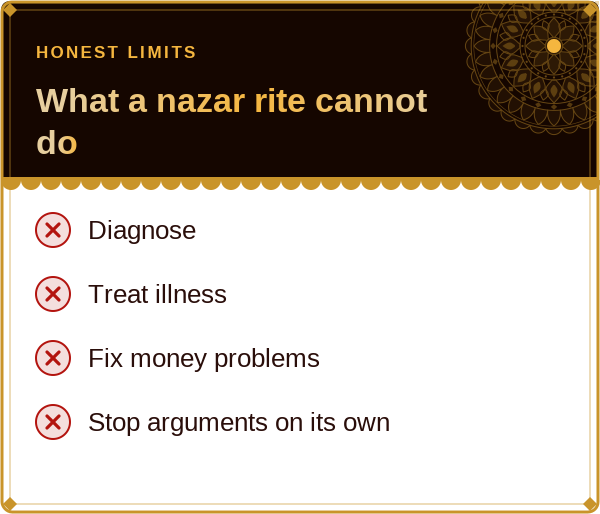
It cannot diagnose or treat illness, fix money problems or stop arguments on its own. It is faith-based comfort, offered alongside practical care, never instead of it.
Common questions
What are the signs of nazar in a baby?
Families often mention crying, poor sleep, refusing feeds or sudden fussiness after visitors. These are also common signs of overtiredness, teething, colic or illness. Call your pediatrician for fever, poor feeding, vomiting or anything that worries you.
Can stress feel like the evil eye?
Yes. Stress can cause headaches, tiredness, poor sleep, irritability and a run of small mistakes, which is very close to what families describe as nazar. Big life changes, even happy ones, add stress.
Should I do a nazar rite or see a doctor?
See a doctor first for any physical symptoms. If the doctor finds nothing worrying and you would find a rite comforting, it can follow as spiritual support. The two are not in competition, but health always comes first.
How long after good news do people say nazar strikes?
There is no fixed rule. Families usually link it to the days after a celebration, announcement or big purchase, which is also exactly when sleep, routines and budgets are most stretched.
Related service

Keep reading

Black Thread Bracelets and Anklets: Meaning and When to Remove
Nimbu mirchi meaning, and the black thread custom explained: who wears a kala dhaga, how it is tied, hygiene points, and when to take it off or replace it.
Read article →
Buying Camphor, Rock Salt and Incense at Tarrant County Grocers
Camphor for puja, rock salt and incense: what to look for at Tarrant County grocers, how each is used in a home cleansing, and fire safety for apartments.
Read article →
Heavy Feelings in a Hot Texas August: Heat, Sleep and Spirit
Negative energy or stress? Before calling it spiritual, Fort Worth readers can check heat exhaustion, sleep, burnout and health, then add prayer as support.
Read article →Quick answers
Is nazar the same thing as mal de ojo?
Nazar and mal de ojo are close cousins: both name the evil eye of envy or admiration. How the South Asian and Latin American beliefs differ in Fort Worth.
Read answer →How do I know if I need a spiritual cleansing?
How do you know if you need a spiritual cleansing? Rule out health, sleep and stress first; then a cleansing can be a calm faith practice. A Fort Worth guide.
Read answer →Talk to Astrologer and Psychic Vijayram
Tell us what you are facing. If a reading is unlikely to help, you will be told that plainly.