

When Low Mood Needs More Than Prayer
Spiritual help for depression, such as prayer, mantra or a caring conversation, can be good company, but it is not treatment. If low mood, loss of interest, sleep changes or hopelessness last most days for two weeks or more, see a doctor or counselor. If you think about ending your life, contact the Suicide and Crisis Lifeline now.
Key takeaways
- The National Institute of Mental Health describes depression as symptoms that last most of the day, nearly every day, for at least two weeks.
- MedlinePlus has a clear overview of depression and its treatments if you want to read more before an appointment.
- Faith offers things therapy does not try to: a larger story, a community, rituals that give shape to a day.
- Any prayers offered are optional and never sold as a remedy.
- People in pain often look for a cause outside themselves: a Saturn period, Rahu and Ketu, nazar, or someone's ill will.
If you need help now: contact the Suicide & Crisis Lifeline, any time of day or night. In Tarrant County, the My Health My Resources (MHMR) crisis line takes calls and texts. The NAMI HelpLine, offers information and support. If you or someone else is in immediate danger, call emergency services.
Many people turn to faith in a hard season, and that instinct is a good one. Prayer, temple, church, a mantra or a talk with a trusted reader can bring comfort and a sense of meaning. But low mood that settles in and stays may be depression, which is a health condition. Spiritual help for depression works best as company for proper care, not as a substitute for it. This post explains how to tell when prayer is not enough on its own, who to call, and how faith and treatment can sit together.
Low mood or depression? Signs that need more than prayer
Everyone has bad days and sad weeks. The National Institute of Mental Health describes depression as symptoms that last most of the day, nearly every day, for at least two weeks. Watch for:
- A sad, empty or anxious mood that does not lift.
- Losing interest or pleasure in things you used to enjoy.
- Feeling hopeless, worthless or guilty.
- Sleeping much more or much less than usual.
- Changes in appetite or weight.
- Tiredness, slowed thinking or trouble concentrating.
- Aches or pains with no clear physical cause.
- Thoughts of death or suicide.
If several of these describe you, see a doctor. If the last one does, please contact the Suicide and Crisis Lifeline today.
Who to call, and when
| Situation | Who to contact |
|---|---|
| Thoughts of suicide or harming yourself | The Suicide and Crisis Lifeline now; emergency services if you are in danger |
| Low mood most days for two weeks or more | Your primary care doctor |
| Ongoing struggles, grief that will not shift, family strain | A licensed counselor or therapist |
| No insurance, or unsure where to start in Tarrant County | MHMR of Tarrant County |
| Worried about a loved one | The Suicide and Crisis Lifeline, or the NAMI HelpLine for advice |
MedlinePlus has a clear overview of depression and its treatments if you want to read more before an appointment.
Depression and spirituality: how they can sit together
Faith offers things therapy does not try to: a larger story, a community, rituals that give shape to a day. Treatment offers what faith cannot: diagnosis, therapy that changes thinking patterns, and medicine that can lift a mood the mind cannot lift by effort. Neither cancels the other.
What does harm is the idea that depression means weak faith, bad karma or punishment. It does not. Taking an antidepressant is not a failure of devotion, and seeing a therapist is not a betrayal of your tradition. If anyone, including a religious figure, tells you to stop treatment and rely on prayer alone, get a second opinion from your doctor.
What a careful reader does when you are low
A responsible reader listens, does not diagnose, and does not blame planets, curses or other people for how you feel. If you are struggling, the reader will ask whether you have talked to a doctor and will give you the crisis lifeline details if you mention thoughts of suicide. Any prayers offered are optional and never sold as a remedy. The post on when a reading is not the right help sets out those limits in more detail.
When a planet or a curse gets the blame
People in pain often look for a cause outside themselves: a Saturn period, Rahu and Ketu, nazar, or someone's ill will. A chart can describe a hard season, but it cannot explain depression or replace treatment. Read Rahu, Ketu and feeling under a cloud for a calm view of the nodes, heavy feelings, heat and sleep for everyday causes, and why we never point a finger at anyone. Blaming a relative or neighbor tends to deepen isolation, which depression already feeds.
Mental health support in the US for immigrant families
Stigma around mental health runs deep in many South Asian and other immigrant families, and language or cost can feel like barriers too. Some practical steps: ask your doctor for a counselor who understands your culture; check whether your employer offers an assistance program with a few sessions included; look into telehealth therapy if driving across the county is hard; and if you are a student, use your college's counseling center. Speaking to a professional is a private, ordinary thing to do.
Small daily supports alongside treatment
- A short walk in morning light, even ten minutes.
- Regular meals and a steady bedtime.
- One message or call to a friend each day.
- A short prayer or mantra at a fixed time, as company rather than a test.
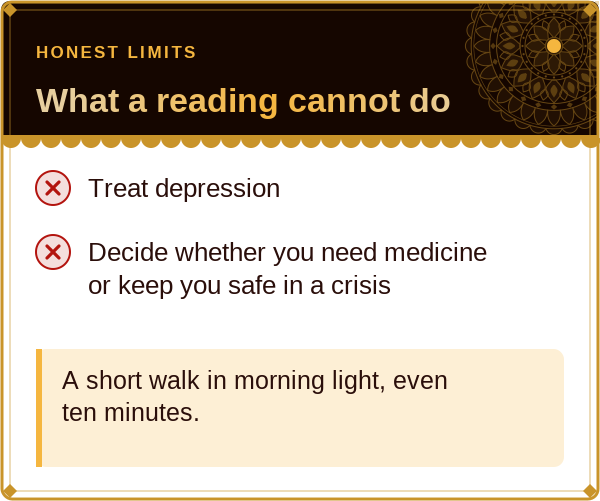
Astrologer and Psychic Vijayram offers spiritual support in grief and hard seasons and spiritual healing by phone, WhatsApp or video, always alongside medical and mental-health care. A reading cannot treat depression, decide whether you need medicine, or keep you safe in a crisis. Doctors, counselors and the Suicide and Crisis Lifeline can.
Common questions
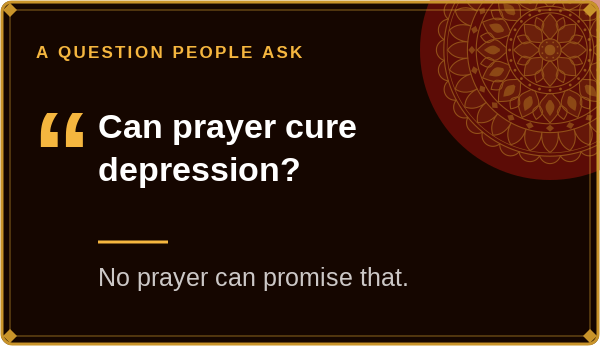
Can prayer cure depression?
No prayer can promise that. Depression is a health condition, usually treated with therapy, medicine or both. Prayer can be real comfort and a source of meaning while you get that treatment, and many people find the two work well together.
Is taking an antidepressant against my faith?
Most faith leaders see no conflict between faith and medical care, and many say healing can come through doctors. Never stop a medicine without talking to your doctor first, whatever anyone tells you.
How do I help a family member who will not see a doctor?
Listen without arguing, offer to make the appointment or go with them, and keep checking in. The NAMI HelpLine and the Suicide and Crisis Lifeline also advise family members. If they talk about suicide or seem in danger, contact the Suicide and Crisis Lifeline or emergency services.
Is the Suicide and Crisis Lifeline only for people who are suicidal?
No. You can contact the Suicide and Crisis Lifeline for any emotional crisis, including overwhelming stress, panic or worry about someone else. It is staffed around the clock.
Related service

Keep reading

Self-Care Timing From the Chart: A Wellbeing Astrology Primer
Health astrology and the sixth house: how routines, stress and recovery periods are traditionally read, why it is never a diagnosis, and how to time self-care.
Read article →
Parents Visiting From India: Prayer Routines in a Texas Summer
Parents visiting from India? Help them keep sunrise prayers, temple visits and fasts safely in Texas heat, and plan ahead for jet lag, medicines and doctors.
Read article →
A Prayer Corner in a Small Fort Worth Apartment
A home prayer corner for a small Fort Worth apartment: choosing a spot, a simple altar, lamp and incense safety, and lease-friendly ideas for renters.
Read article →Quick answers
Can I have spiritual healing while pregnant?
Yes, gentle spiritual healing while pregnant is possible: prayer and mantra only, nothing physical. Keep your obstetrician informed. A Fort Worth answer.
Read answer →Do I need to believe in chakras for a session to help?
You do not need to believe in chakras for a chakra balancing session to help you relax. What a Fort Worth session asks of a skeptic and what it never claims.
Read answer →Talk to Astrologer and Psychic Vijayram
Tell us what you are facing. If a reading is unlikely to help, you will be told that plainly.