
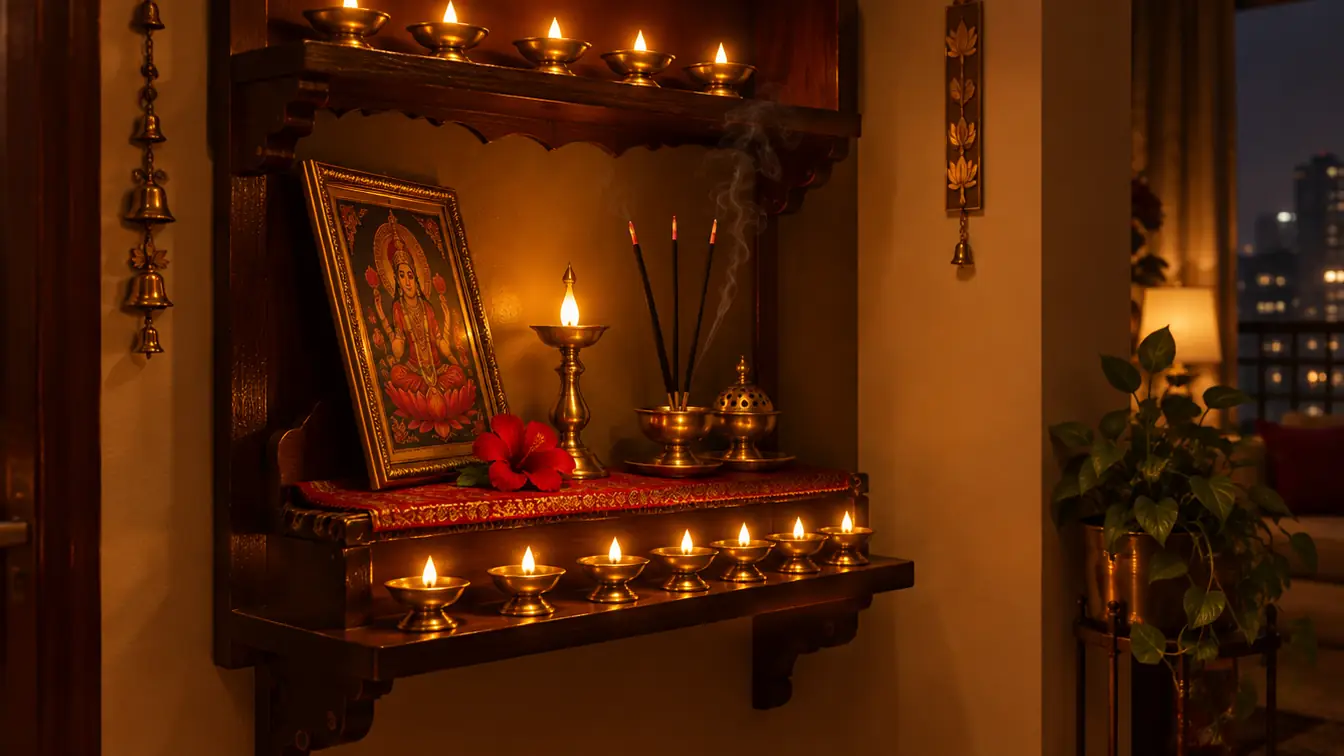
A Prayer Corner in a Small Fort Worth Apartment
A home prayer corner needs only a clean, quiet spot, a small shelf or table, one image or symbol that matters to you, and a lamp. In an apartment, use an LED diya or never leave a flame unattended, keep it away from curtains and smoke detectors, and choose adhesive hooks or a freestanding shelf so your lease stays intact.
Key takeaways
- Traditional Vastu shastra favors the northeast corner of a home, called ishanya , with the worshipper facing east or north.
- A crowded altar is hard to clean, and a cluttered one stops feeling special.
- The National Fire Protection Association's candle safety guidance applies just as well to diyas:
- Renter's insurance is worth having for any home with candles and lamps.
- Roommates may follow a different faith or none.
Safety first: apartments are close quarters, and a small flame can become a big problem fast. Never leave a lamp, candle or incense burning when you leave the room or go to sleep, keep it well away from curtains and shelves, and never cover or disable a smoke detector. If a fire starts, get out and call emergency services.
A new apartment in West 7th, a one-bedroom near the hospitals on the Near Southside, a shared townhouse up near Alliance: wherever you live, a home prayer corner gives the day a place to begin and end. It does not need a spare room or an expensive mandir. This post covers choosing the spot, building a simple altar, keeping lamps and incense safe, and setting it all up in ways your lease and your roommates can live with.
Choosing the spot
Traditional Vastu shastra favors the northeast corner of a home, called ishanya, with the worshipper facing east or north. If your apartment's northeast corner is the bathroom wall or the space beside the trash can, choose somewhere else. Cleanliness and calm count for more than compass points. Good options in a small space:
- The top of a bookshelf at eye level or a little above.
- A closet niche with doors you can close at night.
- A wall-mounted wooden mandir, if your lease allows the fixings.
- A windowsill, though west-facing windows in a Fort Worth summer get hot enough to fade pictures and soften wax.
Most traditions suggest avoiding the bathroom, the space under stairs and spots where shoes are kept. If you would like help placing an altar in a new home, a Vastu consultation can look at your floor plan with you.
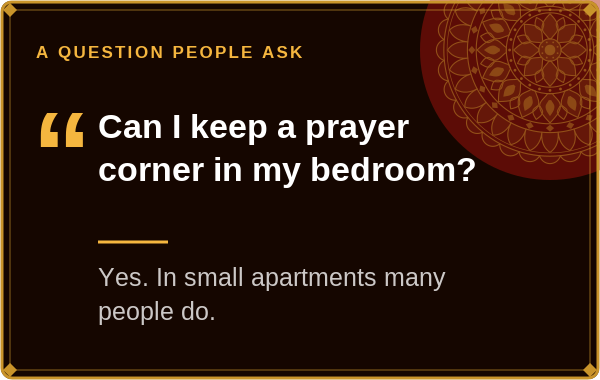
A simple altar, piece by piece
- A clean cloth in a color you like, to mark the space as different.
- One image or murti, of your family deity, a guru or a symbol such as Om. One is enough to start.
- A lamp, either an LED diya or a small brass diya for festival use.
- A small bowl or kalash of water, changed daily.
- Fresh flowers when you have them, or a single leaf.
- Optional extras: a bell, a mala, an incense holder, a small book of prayers.
Resist the urge to fill every inch. A crowded altar is hard to clean, and a cluttered one stops feeling special.
Lamp and incense safety in an apartment
The National Fire Protection Association's candle safety guidance applies just as well to diyas:
- Keep any flame at least a foot from anything that can burn, including curtains, paper and dried flowers.
- Use a sturdy holder on a stable, nonflammable surface, out of reach of children and pets.
- Put the flame out before you leave the room or go to bed.
- Do not place the altar directly beneath a smoke detector or sprinkler head.
Incense is the other apartment issue. One stick, a window open a crack, and a thought for neighbors with allergies who share your air. Many apartment complexes forbid open flames on balconies, so check before you set up a lamp outside for Diwali.
Lease-friendly ideas
- Adhesive hooks and strips for hanging images, instead of nails.
- A freestanding shelf or small cabinet, so nothing is fixed to the wall.
- A folding wooden mandir that packs flat for your next move.
- LED string lights for festivals instead of rows of real lamps.
Renter's insurance is worth having for any home with candles and lamps. If you want to draw a rangoli or hang a torana in a shared hallway at Diwali, ask the leasing office first; rules vary from one complex to the next.
Sharing a home
Roommates may follow a different faith or none. Keeping the altar in your own room solves most questions. If it is in a shared space, agree on simple things: when the bell is rung, whether incense is fine, and that the shelf is not used for keys and mail. Couples from different traditions sometimes share a corner with a symbol from each, which can be a lovely thing to build together.
Using the corner every day
A five-minute routine is enough: wipe the shelf, change the water, light the lamp, repeat a mantra eleven times, and sit for one quiet minute. If you would like a mantra chosen for you, Astrologer and Psychic Vijayram offers personal mantra and meditation guidance by phone, WhatsApp or video. For something to chant at dawn, read the Gayatri mantra and its sunrise timing, and after a cleansing, the habits in keeping the home calm build on the same corner.
Festivals in a small space
Festivals are where apartment altars get creative. Ganesh Chaturthi with a small clay murti and a bucket for visarjan is described in clay murtis and bucket visarjan in Tarrant County. The month-long evening lamp of Kartik is covered in Kartik deepdaan in a Fort Worth home. If you live in the area, the West 7th page describes how neighbors there book sessions.
A prayer corner cannot quiet noisy neighbors, settle a roommate dispute or ease stress on its own. It gives you a fixed place to stop, breathe and remember what matters, and for many people that is where a steadier day begins.
Common questions
Which direction should a prayer corner face?
Vastu prefers the northeast part of the home, with the person praying facing east or north. In an apartment that is not always possible. A clean, calm spot you will actually use matters more than a perfect direction.
Can I keep a prayer corner in my bedroom?
Yes. In small apartments many people do. Some families prefer to draw a cloth or close a cabinet door over the altar at night, which is an easy habit to keep.
Is an LED diya acceptable instead of a real flame?
Yes. The lamp stands for light and awareness, and an LED diya carries that meaning without the fire risk. Many people keep a real flame only for festivals, when someone can stay beside it.
What are good home altar ideas for a very small space?
A single floating shelf with one framed image and an LED tealight. A deep picture frame, used as a shadow box. The top of a dresser with a cloth laid over it. A small folding wooden mandir that closes when not in use.
Related service

Keep reading

A Sunrise Reflection Walk on the Trinity Trails
Meditation spots in Fort Worth start at the river: a sunrise walk on the Trinity Trails with a breath count, a short mantra and a pause by the water.
Read article →
A Mindful Morning at the Fort Worth Botanic Garden
A Fort Worth Botanic Garden meditation: a slow walking practice through the gardens, including the Japanese Garden, with notes on tickets, hours and etiquette.
Read article →
Sitali Breath and Early Walks for a 100-Degree Fort Worth August
A cooling breath practice for Fort Worth summers: sitali and sitkari breathing, early walks and light food customs, plus the heat-illness signs that need help.
Read article →Quick answers
Can I have spiritual healing while pregnant?
Yes, gentle spiritual healing while pregnant is possible: prayer and mantra only, nothing physical. Keep your obstetrician informed. A Fort Worth answer.
Read answer →Do I need to believe in chakras for a session to help?
You do not need to believe in chakras for a chakra balancing session to help you relax. What a Fort Worth session asks of a skeptic and what it never claims.
Read answer →Talk to Astrologer and Psychic Vijayram
Tell us what you are facing. If a reading is unlikely to help, you will be told that plainly.