
Sitali Breath and Early Walks for a 100-Degree Fort Worth August
Sitali is a cooling breath practice: curl the tongue, inhale slowly through it, close the mouth and exhale through the nose. Sitkari, drawn through the teeth, works if you cannot curl your tongue. Pair it with walks before eight and lighter meals. Breathing does not treat heat illness; confusion, fainting or hot, dry skin means call emergency services.
Key takeaways
- Sitali appears in the classical hatha yoga texts among the forms of pranayama , breath control, and it has always been described as a practice for hot weather.
- Not everyone can curl the tongue, and that is no problem.
- For a slower, balancing breath that works year-round, see alternate-nostril breathing step by step .
- The tradition has always used sunrise as the anchor of the day, and in a Fort Worth summer that habit makes practical sense too.
- Astrologer and Psychic Vijayram teaches breath and mantra practices like these through energy healing with breath and mantra , by phone, WhatsApp or video.
Heat comes first: know the warning signs before you try any breathing practice. Heavy sweating, cold and clammy skin, weakness, nausea, headache, dizziness or fainting can mean heat exhaustion: move to a cool place, loosen clothing, sip water and get medical help if symptoms worsen or do not ease. A very high body temperature, hot red skin, a fast strong pulse, confusion or passing out can mean heat stroke, which is an emergency. Call emergency services and cool the person while you wait. The National Weather Service's heat safety guide and MedlinePlus on heat illness explain both in plain terms.
By the middle of August, Fort Worth has usually seen a run of days near or above 100 degrees, and the nights barely cool. A cooling breath practice will not change the forecast, but it can take the edge off the irritability and restlessness that come with a long Texas summer. This post teaches two traditional breaths, sitali and sitkari, then shows how to arrange the day so you do the hard things before the heat does them to you.
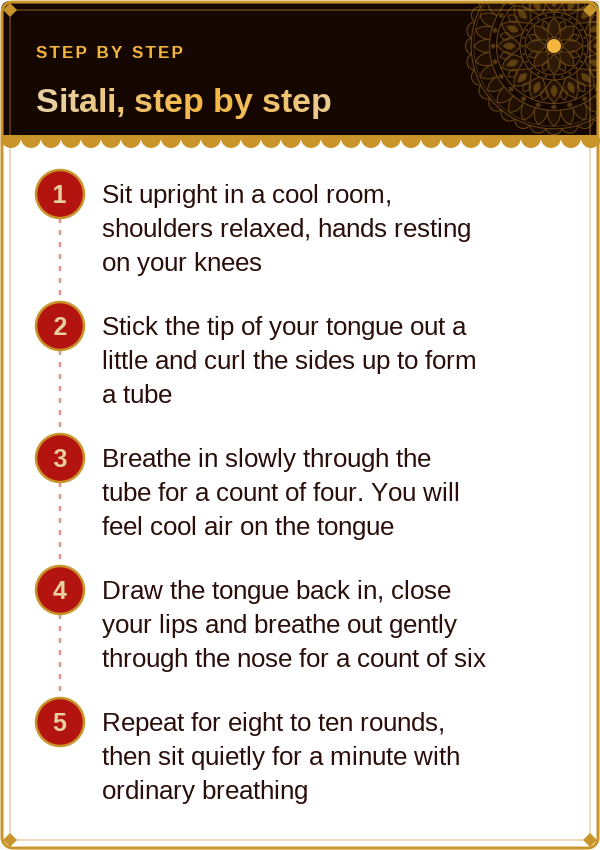
Sitali, step by step
- Sit upright in a cool room, shoulders relaxed, hands resting on your knees.
- Stick the tip of your tongue out a little and curl the sides up to form a tube.
- Breathe in slowly through the tube for a count of four. You will feel cool air on the tongue.
- Draw the tongue back in, close your lips and breathe out gently through the nose for a count of six.
- Repeat for eight to ten rounds, then sit quietly for a minute with ordinary breathing.
Sitali appears in the classical hatha yoga texts among the forms of pranayama, breath control, and it has always been described as a practice for hot weather.
Sitkari, for tongues that will not roll
Not everyone can curl the tongue, and that is no problem. Sitkari gives the same cooling sensation another way. Bring your upper and lower teeth lightly together, part your lips, and breathe in slowly through the gaps between your teeth with a soft hissing sound. Close your mouth and breathe out through the nose. Use the same counts as sitali.
If your teeth are sensitive to cold, keep the in-breath gentle or switch back to plain slow breathing through the nose with a longer exhale.
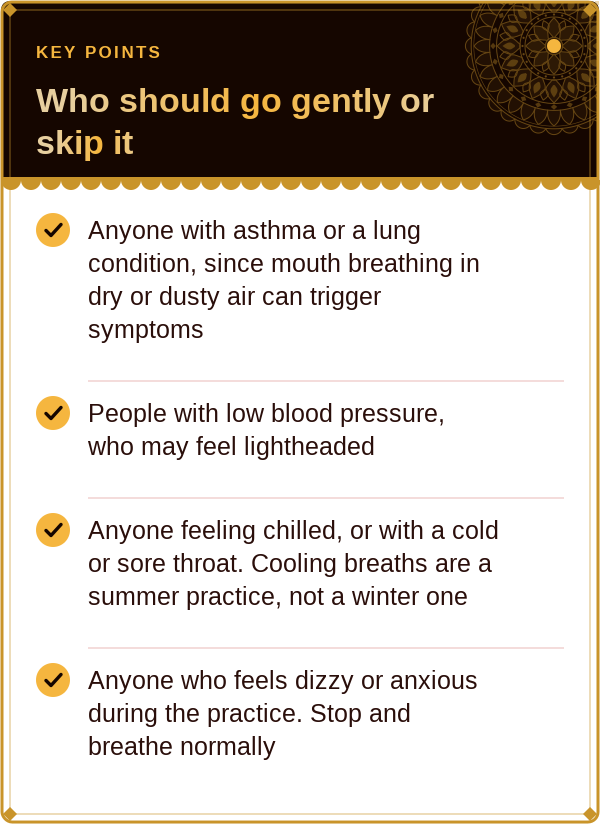
Who should go gently or skip it
- Anyone with asthma or a lung condition, since mouth breathing in dry or dusty air can trigger symptoms.
- People with low blood pressure, who may feel lightheaded.
- Anyone feeling chilled, or with a cold or sore throat. Cooling breaths are a summer practice, not a winter one.
- Anyone who feels dizzy or anxious during the practice. Stop and breathe normally.
If you have a heart or lung condition, ask your doctor before starting any breathing routine. For a slower, balancing breath that works year-round, see alternate-nostril breathing step by step.
Timing the day around the heat
The tradition has always used sunrise as the anchor of the day, and in a Fort Worth summer that habit makes practical sense too. Sunrise falls around 6:20 to 6:50 a.m. from June through August.
- Before eight: walks, yard work, outdoor puja, errands on foot. The post on a sunrise walk on the Trinity Trails describes a morning routine.
- Midday: indoors, blinds down on the west and south sides, heavier tasks postponed. A round of sitali after lunch.
- Evening: pavement and car interiors stay hot well after sunset. Check sidewalks with the back of your hand before walking a dog.
Food customs for a hot season
Ayurvedic custom treats high summer as a season to cool the body, and many Indian households shift their cooking without thinking about it: buttermilk with roasted cumin, cucumber raita, mint chutney, watermelon, coconut water, lighter lunches and fewer fried snacks at midday. These are customs, not medical treatment, and they suit most people. If your doctor has you on a fluid restriction, for kidney or heart reasons, follow that advice over any tradition.
Summer also brings fasting days. The post on Ekadashi fasting with heat safety explains why dry fasts are risky here and what gentler options the tradition allows. If you have parents visiting from India, read prayer routines for visiting parents in a Texas summer.
A five-minute midday reset
When the afternoon gets heavy and short-tempered: run cool water over your wrists, sit away from the window, do six rounds of sitali or sitkari, then sit for a minute with your eyes closed. That is all. It will not fix a bad day, but it can stop a hot one from turning into an argument.

Where this fits, and its limits
If summer leaves you drained in a way that goes beyond the heat, the post on heat, sleep and heavy feelings in a Texas August helps sort ordinary causes from anything else. Astrologer and Psychic Vijayram teaches breath and mantra practices like these through energy healing with breath and mantra, by phone, WhatsApp or video. Breathing practices are for calm and comfort. They are not treatment for heat illness, dehydration or any medical condition, and they are never a reason to stay out in the heat longer.
Common questions
Does sheetali pranayama lower body temperature?
It feels cooling because air passes over a moist tongue, and the slow pace calms the body. It is a soothing practice, not a way to treat overheating. If you are overheated, get into shade or air conditioning and drink water first.
How many rounds should I do?
Start with five to ten rounds, once or twice a day. Stop if you feel dizzy, lightheaded or short of breath, and breathe normally until it passes.
Can I practice sitali while walking outside?
It works best seated. If you want it on a walk, stop in the shade, stand still for a few rounds, then carry on. In spring, pollen and dust can make mouth breathing uncomfortable.
Is it suitable for older parents or children?
A gentle version usually is, with fewer rounds and no strain. Older adults are more vulnerable to heat, so the practical steps matter more for them: cool rooms, regular drinks and someone checking in during heat waves.
Related service

Keep reading

Hospice, Shraddha and Goodbyes: Faith Support in Tarrant County
Grief support in Fort Worth with room for faith: bringing Hindu last rites into hospice and funeral plans in Tarrant County, with counseling and crisis lines.
Read article →
Rest for Medical District Night-Shift Workers
A spiritual sleep routine for night shift staff in Fort Worth's Medical District: breath, mantra and a short release ritual after handoff. Not medical advice.
Read article →
Birdsong and Stillness at the Fort Worth Nature Center
Nature meditation in Fort Worth at the Nature Center and Refuge on Lake Worth: a sitting practice with birdsong, breath and mantra, plus trail and safety notes.
Read article →Quick answers
Can I have spiritual healing while pregnant?
Yes, gentle spiritual healing while pregnant is possible: prayer and mantra only, nothing physical. Keep your obstetrician informed. A Fort Worth answer.
Read answer →Do I need to believe in chakras for a session to help?
You do not need to believe in chakras for a chakra balancing session to help you relax. What a Fort Worth session asks of a skeptic and what it never claims.
Read answer →Talk to Astrologer and Psychic Vijayram
Tell us what you are facing. If a reading is unlikely to help, you will be told that plainly.