
Fasting Through a Fort Worth Summer: Ekadashi With Heat Safety
Hindu fasting rules for Ekadashi traditionally mean avoiding grains and beans for one lunar day, and some devotees keep a dry fast. In a Fort Worth summer, dry or water-only fasts can lead to dehydration. The tradition allows gentler options, such as fruit, milk and water, and excuses the ill, the elderly, children and pregnant women. Ask your doctor first.
Key takeaways
- Ekadashi is the eleventh lunar day, or tithi , in each half of the lunar month, so it falls about twice a month and roughly twenty-four times a year.
- Because Fort Worth's sunrise happens many hours after India's, the Ekadashi you keep here can fall a day earlier or later than the one your relatives keep in Delhi or Kathmandu.
- Customs differ between regions and families.
- Nirjala Ekadashi, the best-known waterless fast, falls in the Hindu month of Jyeshtha, usually in late May or June.
- Hindu teaching has never demanded that people harm themselves to fast.
Check with your doctor first if you: have diabetes, especially if you use insulin or medicines that lower blood sugar; are pregnant or breastfeeding; have kidney disease, a heart condition or a history of fainting; take blood pressure medicines or water pills; have ever had an eating disorder; or are an older adult or a teenager. Never stop or skip a prescribed medicine to fast. If you feel very thirsty, dizzy, confused or faint, or your urine turns dark, end the fast, drink water and get help. MedlinePlus explains the signs of dehydration and heat illness; call emergency services if someone is confused or collapses.
Ekadashi comes twice a month, and many Fort Worth families keep it. In January that is easy. In July, when the afternoon is over 100 degrees and you still have to drive to work, it is a different matter. This post sets out the traditional Hindu fasting rules for Ekadashi, explains why a dry fast is risky in Texas heat, and describes the gentler options the tradition has always allowed.
What Ekadashi is
Ekadashi is the eleventh lunar day, or tithi, in each half of the lunar month, so it falls about twice a month and roughly twenty-four times a year. It is dedicated to Vishnu, and each Ekadashi has its own name and story. The background on Ekadashi describes how it is kept across India and among Vaishnava communities worldwide.
Why Fort Worth's Ekadashi may fall on a different day
A tithi is counted from local sunrise. Because Fort Worth's sunrise happens many hours after India's, the Ekadashi you keep here can fall a day earlier or later than the one your relatives keep in Delhi or Kathmandu. The fast is also broken in a specific window the next morning, called parana, worked out from local sunrise. A panchang set to Fort Worth and Central Time gives both; the post on setting up a panchang for Fort Worth shows how.
The traditional rules, in brief
- No grains, such as rice and wheat, and no beans or lentils.
- Many families also avoid onion and garlic.
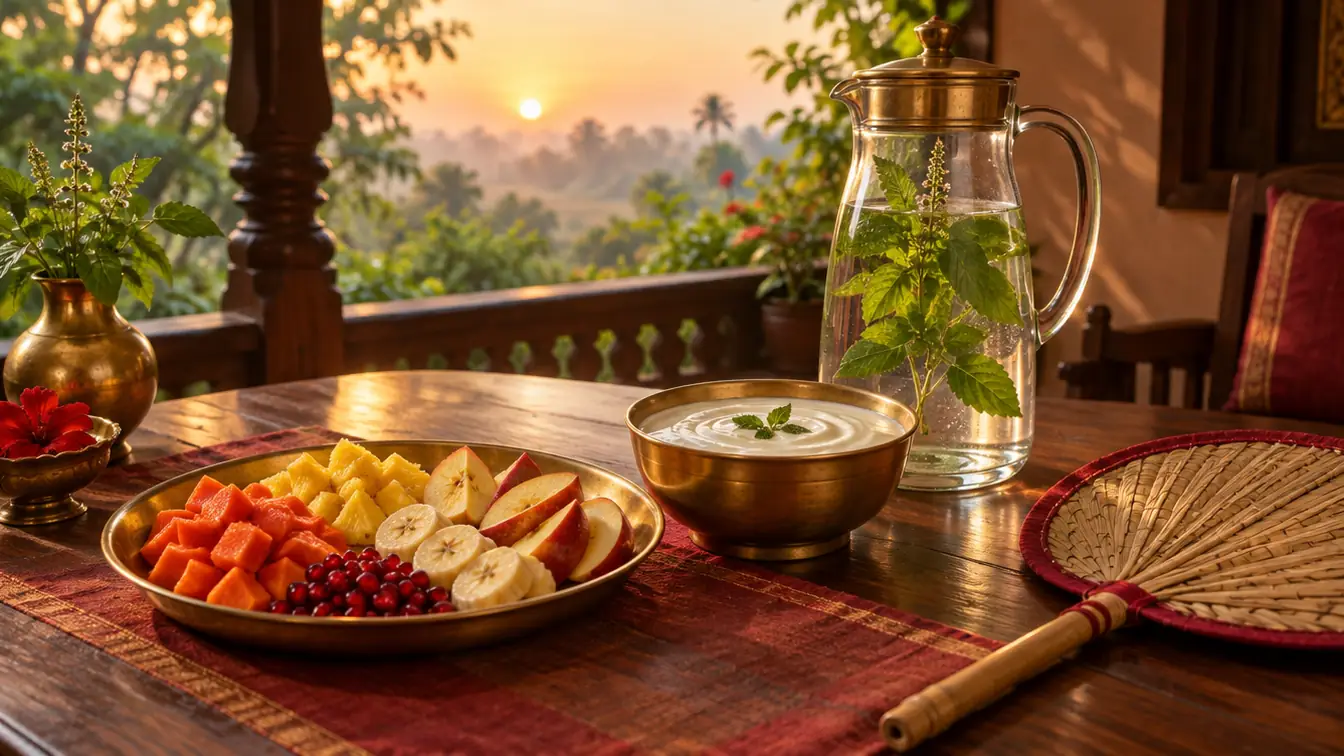
- Commonly allowed: fruit, milk and yogurt, nuts, potatoes, sabudana, and flours such as kuttu and singhara, with rock salt in place of table salt.
- Levels of fasting range from nirjala (no food or water) to water only, to phalahar (fruit and milk), to a single simple meal.
Customs differ between regions and families. Follow your own, adjusted for your health.
Why dry fasts are risky in Texas heat
Nirjala Ekadashi, the best-known waterless fast, falls in the Hindu month of Jyeshtha, usually in late May or June. That is exactly when Fort Worth's heat starts in earnest. A full day without water, combined with a commute, outdoor work or even a hot car, can cause dehydration surprisingly fast, and the risk is higher for older adults and anyone on medicines that affect fluids. A dry fast that might be manageable in a cool climate is a different thing here.
Gentler options the tradition allows
Hindu teaching has never demanded that people harm themselves to fast. Many teachers and elders say the sick, the elderly, children, and pregnant or nursing women are excused, and that a lighter fast kept sincerely counts fully. Good summer choices:
- Water and phalahar: fruit, milk, buttermilk and coconut water through the day.
- One meal: a single non-grain meal, such as sabudana khichdi or potatoes, eaten early.
- A fast of attention: for those who cannot fast at all, an Ekadashi of extra prayer, the Vishnu Sahasranama, charity or kindness.
A safer summer Ekadashi, hour by hour
| Time | What to do |
|---|---|
| Sunrise | Prayers and a glass of water; fruit or milk soon after |
| Midday | Stay indoors; a light phalahar meal; no outdoor errands |
| Afternoon | Rest, reading, chanting; keep sipping water |
| Evening | Aarti or kirtan; a simple non-grain dish if you are keeping one meal |
| Next morning | Break the fast in the parana window with something light |
Other fasts need the same care. The posts on Maha Shivaratri fasting and the night vigil and Karwa Chauth on a work day cover two more. For staying cool on hot days, see cooling breath and early walks for a Fort Worth August.
Breaking the fast gently
How a fast ends matters as much as how it is kept. After a day of fruit or water, the stomach is not ready for a heavy plate of fried food. Many families break Ekadashi with a little water and a few tulsi leaves or a sweet offered at the altar, then a light meal: rice and dal, a simple khichdi, or fruit and yogurt. Eat slowly. If you take medicines with food, keep to your usual timing. And if you felt unwell during the fast, tell your doctor rather than pushing harder next time.
Fasting, timing and the chart
Some people choose fasts by planet, such as Mondays for the Moon or Saturdays for Saturn, and ask how to time self-care through the year. Astrologer and Psychic Vijayram discusses this in self-care and wellbeing astrology, by phone, WhatsApp or video, always as reflection and never as medical advice. A chart cannot tell you whether fasting is safe for your body. Your doctor can.
Common questions
What are the basic vrat rules for a beginner?
Choose a level you can keep safely, tell your household, plan your fruit or phalahar meals ahead, keep taking any medicines, and break the fast gently the next morning. Devotion on the day matters as much as what you leave off the plate.
Can I drink water on Ekadashi?
For most people, yes. The waterless nirjala fast is one option among several, meant only for healthy adults. In a Texas summer, drinking water is the sensible choice, and it does not undo the fast.
Can I take my medicines while fasting?
Yes, always. Never skip prescribed medicine for a fast. If a medicine must be taken with food, ask your doctor or pharmacist how to fit it around the fast.
Is a partial fast still a real Ekadashi?
Yes. Family elders and teachers widely accept fruit-and-milk or one-meal fasts. The tradition values sincerity and remembrance of Vishnu more than hardship.
Related service

Keep reading
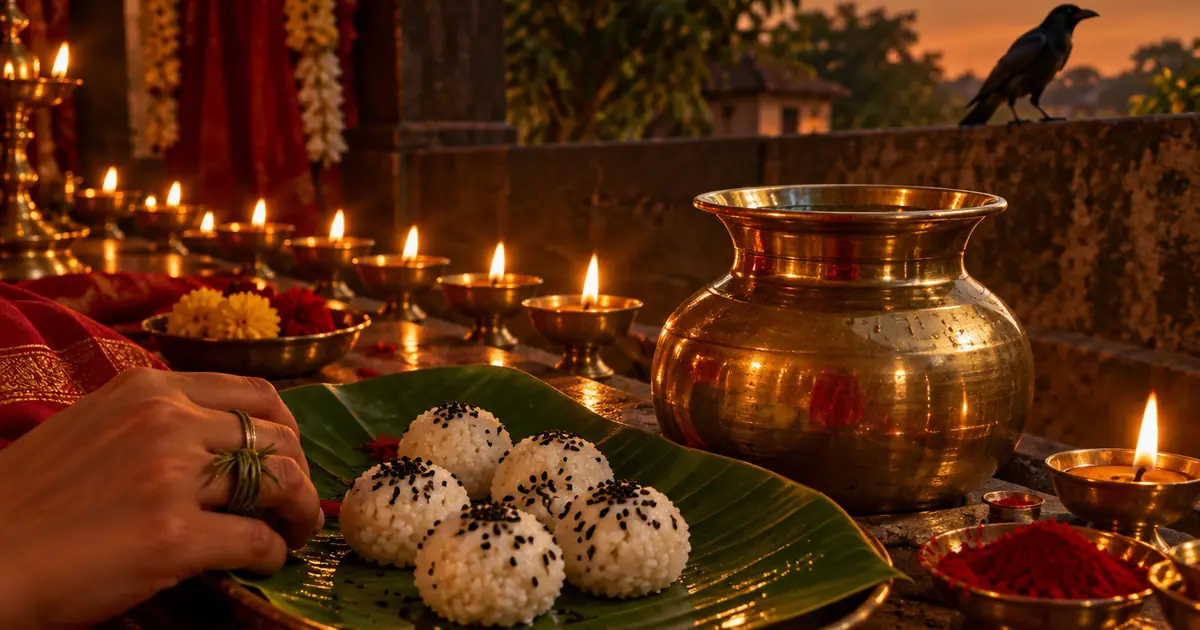
Ancestors and Remembrance: Pitru Paksha Explained
Pitru Paksha meaning, explained simply: the lunar period of remembrance for ancestors, what shraddha involves, and gentle ways families abroad keep it in Texas.
Read article →
When Low Mood Needs More Than Prayer
Spiritual help for depression can sit beside real care: how to recognize when low mood needs a doctor, a counselor or the Suicide and Crisis Lifeline, with faith as company, not cure.
Read article →
Self-Care Timing From the Chart: A Wellbeing Astrology Primer
Health astrology and the sixth house: how routines, stress and recovery periods are traditionally read, why it is never a diagnosis, and how to time self-care.
Read article →Quick answers
Can I have spiritual healing while pregnant?
Yes, gentle spiritual healing while pregnant is possible: prayer and mantra only, nothing physical. Keep your obstetrician informed. A Fort Worth answer.
Read answer →Do I need to believe in chakras for a session to help?
You do not need to believe in chakras for a chakra balancing session to help you relax. What a Fort Worth session asks of a skeptic and what it never claims.
Read answer →Talk to Astrologer and Psychic Vijayram
Tell us what you are facing. If a reading is unlikely to help, you will be told that plainly.