
Ancestors and Remembrance: Pitru Paksha Explained
Pitru Paksha is a period of about sixteen lunar days, usually in September or early October, when Hindu families remember their ancestors with water offerings, food and prayers known as tarpan and shraddha. Its meaning is gratitude and remembrance. Families abroad keep it simply at home, through a temple, or by feeding others in their ancestors' names.
Key takeaways
- Pitru means ancestors and paksha means a lunar half-month.
- Hindu teaching speaks of three debts every person carries: to the gods, to the teachers and sages, and to the ancestors.
- Living in Texas changes the setting, not the meaning.
- Many families lost track of exact dates for grandparents or great-grandparents.
- Many families avoid weddings, housewarmings and major purchases during Pitru Paksha.
If grief is heavy right now: the first Pitru Paksha after a death can reopen the loss. If you feel overwhelmed, contact the Suicide and Crisis Lifeline at any hour, and call emergency services if anyone is in danger. A counselor, a hospice bereavement team or your doctor can help alongside the rituals.
Each year, as the Texas heat finally starts to ease in late September, many Hindu families in Tarrant County set aside time for their ancestors. The Pitru Paksha meaning is simple at its heart: those who came before us are remembered, thanked and fed. This post explains what the period is, what shraddha and tarpan involve, and how families living far from their ancestral homes keep it in ways that fit a Fort Worth week.
What the name means
Pitru means ancestors and paksha means a lunar half-month. Pitru Paksha is the waning half of the month of Bhadrapada in the calendar most of South and West India follows, or of Ashvin in the northern calendar that counts months from full moon to full moon. It runs for about sixteen lunar days and ends on the new moon called Mahalaya Amavasya, or Sarva Pitru Amavasya, "the new moon of all ancestors." Navratri begins the next day. The overview of Pitri Paksha describes the regional variations.
The exact dates move every year with the lunar calendar. They must be calculated for Fort Worth's sunrise in Central Time, so they can differ by a day from those printed in an Indian almanac. The post on Hindu festival dates for 2027 worked out for Tarrant County explains why.
Why remembrance matters in the tradition
Hindu teaching speaks of three debts every person carries: to the gods, to the teachers and sages, and to the ancestors. Pitru Paksha is the time for the third. A popular story tells of the warrior Karna, who reached heaven and found himself offered gold and jewels to eat. He had given generously all his life, but never food in his ancestors' names. He was allowed to return to earth for these days to make that offering. Whatever you make of the story, its point is clear: memory is kept alive through care, and especially through food.
The Hindu American Foundation's explainer on Pitru Paksha is a good short read to share with children or friends who are new to the custom.
Shraddha and tarpan, simply explained
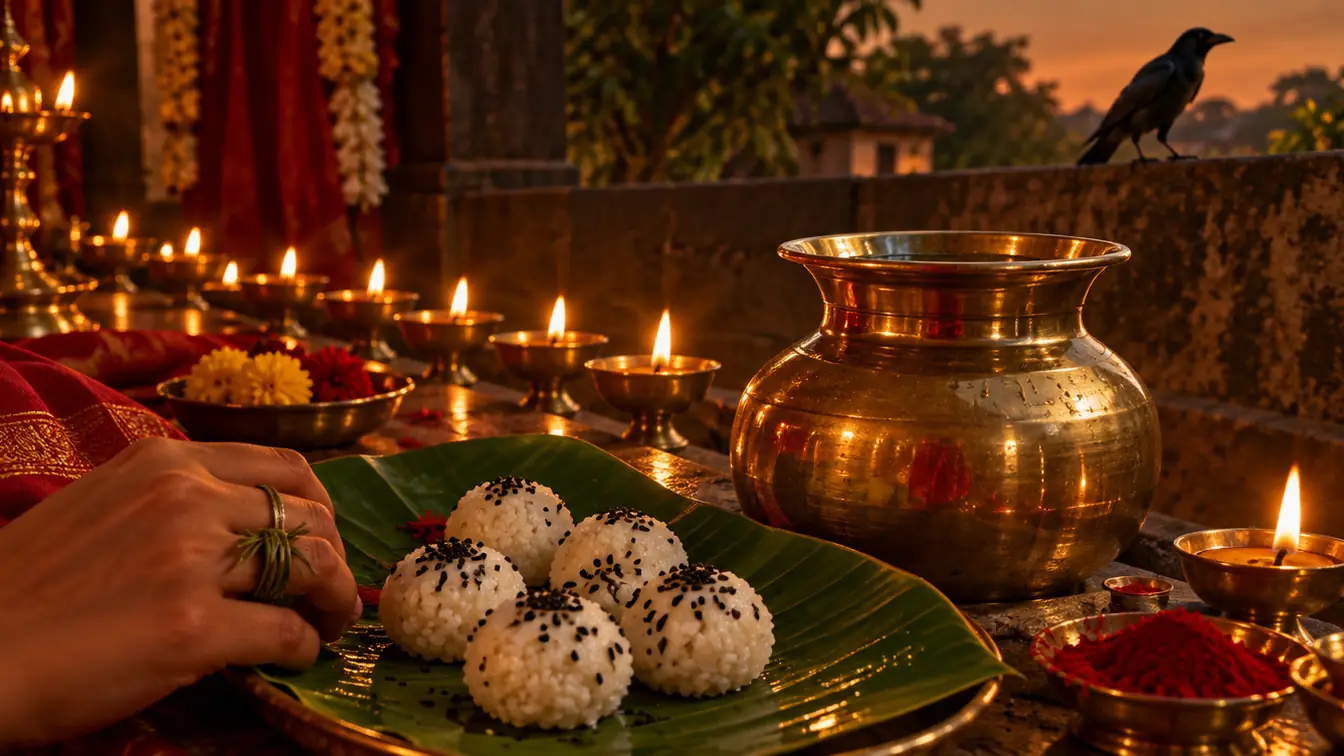
- Shraddha is the rite for a particular ancestor, held on the lunar day (tithi) of their death that falls inside Pitru Paksha. It usually includes food offerings, rice balls called pinda, prayers and a meal given to others. The background on shraddha covers the classical forms.
- Tarpan is the offering of water mixed with black sesame seeds, poured slowly through the fingers while the names of ancestors are spoken. It can be done daily through the period.
- Feeding others in the ancestors' names is central. Traditionally portions are set aside for a cow, a dog, crows, ants and a guest, so that every kind of being shares the meal.
Pitru Paksha in the USA: ways families keep it
Living in Texas changes the setting, not the meaning. Families here commonly:
- Offer tarpan at home, on a balcony or in the backyard, pouring the water onto soil or into a plant pot.
- Cook the ancestor's favorite dish and share it, setting the first portion aside at the family altar.
- Feed the birds that come. Crows are central to the custom in India. In a Fort Worth backyard, the first portion may go to grackles or sparrows, and that is fine. Place food on your own property and follow any rules your apartment complex or HOA sets.
- Give a meal to someone in need, through a food bank or shelter, in the ancestor's name.
- Request a shraddha at a temple. The Hindu Temple of Greater Fort Worth and the DFW Hindu Temple Society in Irving serve families across the area; call the temple office for details. Our post on the Hindu Temple of Greater Fort Worth tells its story.
- Join family in India by video for a rite at the ancestral home or a pilgrimage town.

If you do not know the date of death
Many families lost track of exact dates for grandparents or great-grandparents. That is what Mahalaya Amavasya is for. On the last day of the period, all ancestors are remembered together, including those whose tithi is unknown and those with no one else to remember them.
Customs around celebrations and purchases
Many families avoid weddings, housewarmings and major purchases during Pitru Paksha. The reason is focus, not fear: these days belong to remembrance. If your work or circumstances require you to sign a lease or buy a car, nothing terrible follows. Celebrations resume with joy at Navratri, which begins the next day.
When grief is still fresh
For someone who lost a parent this year, Pitru Paksha can be the hardest stretch of the calendar. Let it be. Some people find comfort in the structure of daily tarpan; others need to keep things very small. The post on hospice, shraddha and goodbyes in Tarrant County covers the first months after a death. Astrologer and Psychic Vijayram offers spiritual support in grief by phone, WhatsApp or video, including help working out the tithi and choosing simple prayers.
The rites honor the dead and steady the living. They cannot replace mourning, counseling or the people around you, and no reading can tell you what your ancestors want or feel. Remembrance, kept sincerely, is enough.
Common questions
Can women perform tarpan or shraddha?
Traditionally the rites were led by sons, but many families now include daughters, wives and other relatives, and many priests support this. Follow your family's custom, or ask your priest. A sincere offering of water and remembrance is open to anyone who grieves.
Can shraddha be done in the USA?
Yes. Temples in the Metroplex arrange shraddha, priests can guide a ceremony at home, and families often join a rite in India by video. The tithi should be worked out for Fort Worth in Central Time, not copied from an Indian calendar.
Do I need a priest for a simple tarpan?
No. A short tarpan of water and sesame, with the names of your ancestors and a prayer, can be done at home by any family member. A priest is helpful for a full shraddha but not required for a heartfelt offering.
Is it bad luck to buy a car during Pitru Paksha?
Many families postpone big purchases and celebrations during these days as a mark of respect, not because of danger. If you must buy or sign something, there is no curse involved. Keep the remembrance and carry on with life.
Related service
Keep reading
When Low Mood Needs More Than Prayer
Spiritual help for depression can sit beside real care: how to recognize when low mood needs a doctor, a counselor or the Suicide and Crisis Lifeline, with faith as company, not cure.
Read article →
Self-Care Timing From the Chart: A Wellbeing Astrology Primer
Health astrology and the sixth house: how routines, stress and recovery periods are traditionally read, why it is never a diagnosis, and how to time self-care.
Read article →
Parents Visiting From India: Prayer Routines in a Texas Summer
Parents visiting from India? Help them keep sunrise prayers, temple visits and fasts safely in Texas heat, and plan ahead for jet lag, medicines and doctors.
Read article →Quick answers
Can I have spiritual healing while pregnant?
Yes, gentle spiritual healing while pregnant is possible: prayer and mantra only, nothing physical. Keep your obstetrician informed. A Fort Worth answer.
Read answer →Do I need to believe in chakras for a session to help?
You do not need to believe in chakras for a chakra balancing session to help you relax. What a Fort Worth session asks of a skeptic and what it never claims.
Read answer →Talk to Astrologer and Psychic Vijayram
Tell us what you are facing. If a reading is unlikely to help, you will be told that plainly.