
Self-Care Timing From the Chart: A Wellbeing Astrology Primer
In health astrology, the sixth house is traditionally read for daily routines, work stress, conflict, illness and recovery. A careful astrologer reads it with the first, eighth and twelfth houses and your current dasha to suggest good times for rest, new routines and check-ups. It is never a diagnosis; symptoms and treatment belong with your doctor.
Key takeaways
- In Parashara's classical text, the sixth house is named ari , the house of adversaries.
- The sixth, eighth and twelfth are grouped as dusthana , difficult houses.
- A chart is a symbolic map drawn from the time and place of birth.
- Many kundli apps generate a health astrology report that lists diseases linked to single placements: Mars in one house, Saturn in another.
- Where the chart can help is with timing and reflection.
A health note first: astrology does not diagnose, treat or predict illness. If you have symptoms, see a doctor. Never stop, start or change a treatment because of a chart reading. If you are worried about your mental health, contact the Suicide and Crisis Lifeline.
Health astrology has a poor reputation in some circles, and often deservedly: apps print alarming lines about disease, and some astrologers sell fear. Read carefully, though, the sixth house of the Vedic chart is less about illness than about the ordinary machinery of a life: daily routines, work pressure, conflict and the slow business of recovery. This primer explains how the sixth house is traditionally read, why it is never a diagnosis, and how some people use it to time self-care alongside their doctor's advice.
What the sixth house covers
In Parashara's classical text, the sixth house is named ari, the house of adversaries. The text lists enemies, wounds, fears and maternal relatives among the matters judged from it, as the translation of Brihat Parashara Hora Shastra, chapter 11 shows. Later astrologers added illness, debt and daily service to the list. The overview of houses in astrology explains how the twelve houses divide up a life.
Put together, the sixth house is about friction and maintenance: the daily habits that keep you going, the obstacles you push against, and how you recover when something wears you down. It is also an upachaya house, one that tradition says improves with effort and age. That is a hopeful reading, not a frightening one.
The other houses that join the conversation
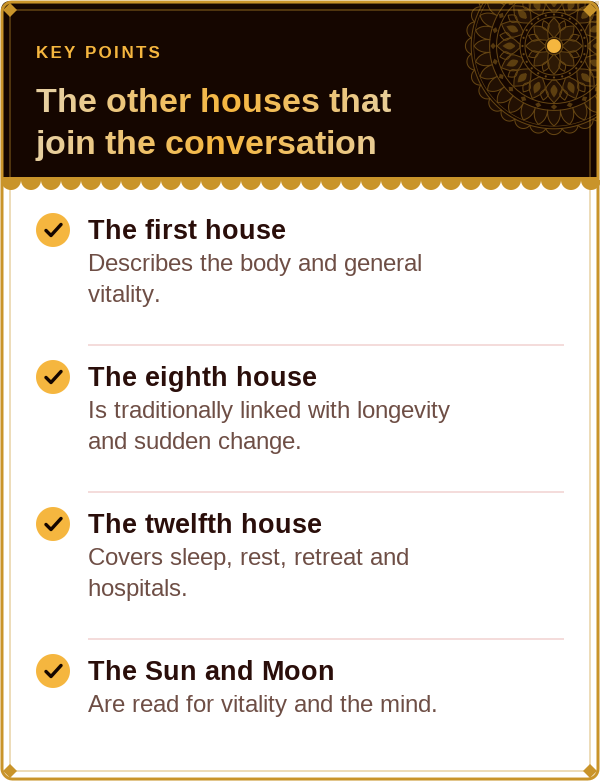
- The first house describes the body and general vitality.
- The eighth house is traditionally linked with longevity and sudden change. Responsible astrologers read it with great restraint and never make predictions about death.
- The twelfth house covers sleep, rest, retreat and hospitals. The post on the twelfth house of sleep and retreat goes further.
- The Sun and Moon are read for vitality and the mind.
The sixth, eighth and twelfth are grouped as dusthana, difficult houses. Difficult does not mean doomed. These are the houses where life asks for effort.
Why it is never a diagnosis
A chart is a symbolic map drawn from the time and place of birth. It has never been shown to detect disease, and it cannot replace a blood test, a scan or an examination. An astrologer who tells you that you have, or will get, a particular illness is overstepping badly. Ethical practice draws a clear line: no illness predictions, no death predictions, no advice about medicine.
Health astrology report: what automated reports get wrong
Many kundli apps generate a health astrology report that lists diseases linked to single placements: Mars in one house, Saturn in another. These reports strip out context, ignore the rest of the chart and the running dasha, and present old symbolism as medical fact. They frighten people for no reason. If one has worried you, set it aside and talk to your doctor about any real symptoms.
Using the chart for self-care timing
Where the chart can help is with timing and reflection. A dasha and transit reading shows which periods are running. Some people use that to plan:
- Rest during demanding periods. If a stretch is traditionally read as heavy, such as a Saturn sub-period, build in more sleep and fewer commitments.
- New routines at a good moment. Some like to start an exercise habit or a diet change on a day chosen through a muhurta, as a way of marking intention.
- A yearly check-up anchor. Booking your annual physical around your birthday makes it easy to remember, and ties the habit to the start of your astrological year.
- Seasonal planning. In Fort Worth, that might mean saving outdoor training for the cooler months and keeping summer workouts indoors or before sunrise.
None of this replaces medical advice. It simply gives some people a structure they find motivating.
A sixth house self-care checklist
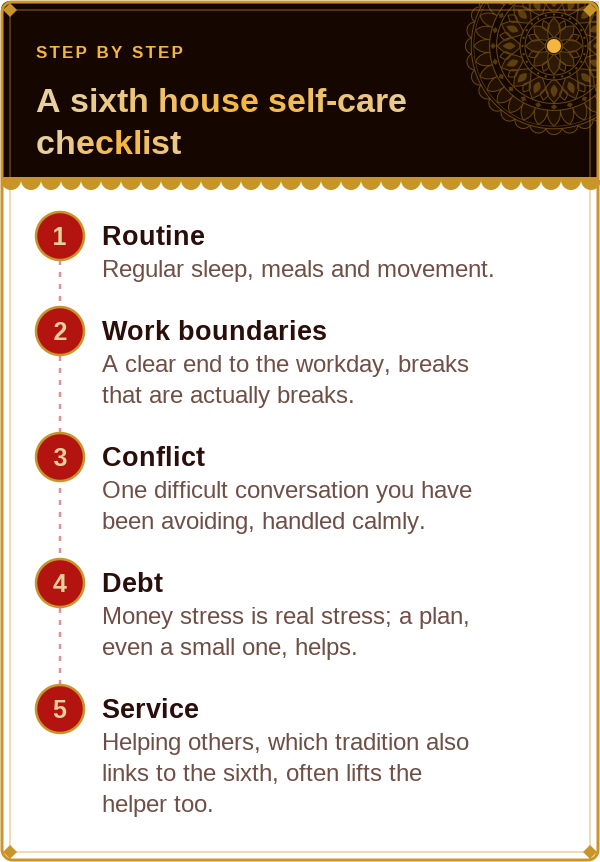
- Routine: regular sleep, meals and movement.
- Work boundaries: a clear end to the workday, breaks that are actually breaks.
- Conflict: one difficult conversation you have been avoiding, handled calmly.
- Debt: money stress is real stress; a plan, even a small one, helps.
- Service: helping others, which tradition also links to the sixth, often lifts the helper too.
Fasting is part of self-care for many families; read Ekadashi fasting with heat safety before you try it in summer.
Where a reading fits
Astrologer and Psychic Vijayram offers self-care and wellbeing astrology by phone, WhatsApp or video: a look at your sixth house, your current periods and the rhythms that suit you, always framed as reflection. If work itself is the question, a career astrology reading focuses on the tenth house instead. A reading cannot tell you whether you are ill, what treatment to take, or how long recovery will last. Your doctor can.
Common questions
What is a career chart in astrology?
A career chart usually means the tenth house of the birth chart, the house of profession and public role, read with the dashamsha, the tenth divisional chart. The sixth house adds the everyday side of work: routines, coworkers and service. For a full look, see a career astrology reading.
Can astrology predict illness?
No responsible astrologer will predict that you will fall ill, and no chart can show a disease. Astrology describes tendencies and timing in symbolic terms. Only medical tests and a doctor can tell you about your health.
Is a strong sixth house good or bad?
Tradition calls the sixth an upachaya house, one that improves with effort over time. Planets there are often read as giving the capacity to work hard, compete and recover. It is not a sign of poor health.
Should I time medical treatment by my chart?
Never delay urgent or recommended care for astrological reasons. If your doctor says the date of something elective is genuinely flexible, some people like to choose a day they feel good about, but the medical advice always comes first.
Related service

Keep reading

Parents Visiting From India: Prayer Routines in a Texas Summer
Parents visiting from India? Help them keep sunrise prayers, temple visits and fasts safely in Texas heat, and plan ahead for jet lag, medicines and doctors.
Read article →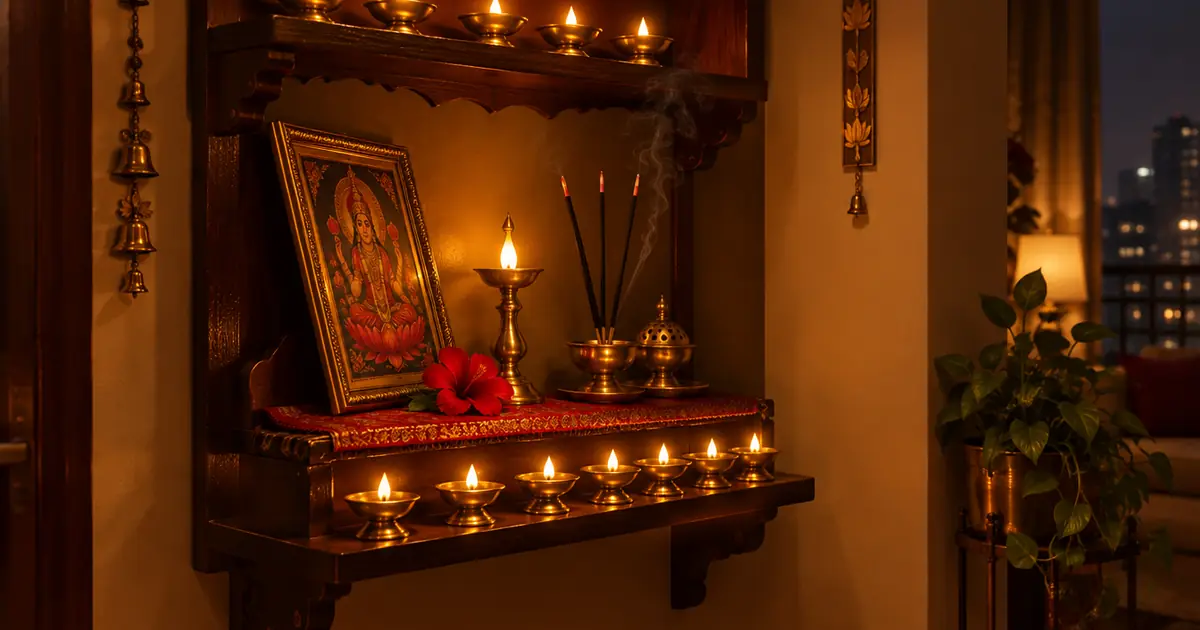
A Prayer Corner in a Small Fort Worth Apartment
A home prayer corner for a small Fort Worth apartment: choosing a spot, a simple altar, lamp and incense safety, and lease-friendly ideas for renters.
Read article →
A Sunrise Reflection Walk on the Trinity Trails
Meditation spots in Fort Worth start at the river: a sunrise walk on the Trinity Trails with a breath count, a short mantra and a pause by the water.
Read article →Quick answers
Can I have spiritual healing while pregnant?
Yes, gentle spiritual healing while pregnant is possible: prayer and mantra only, nothing physical. Keep your obstetrician informed. A Fort Worth answer.
Read answer →Do I need to believe in chakras for a session to help?
You do not need to believe in chakras for a chakra balancing session to help you relax. What a Fort Worth session asks of a skeptic and what it never claims.
Read answer →Talk to Astrologer and Psychic Vijayram
Tell us what you are facing. If a reading is unlikely to help, you will be told that plainly.