
Breath Before Belief: Alternate-Nostril Breathing Step by Step
Nadi shodhana, or alternate-nostril breathing, is a simple pranayama for calm: close the right nostril, breathe in through the left, switch sides, breathe out through the right, then reverse. Use gentle counts such as four in and six out, with no breath-holding at first. Skip it, or ask a doctor first, if you have a heart or breathing condition.
Key takeaways
- The name means "cleansing of the channels." It is one of the classic forms of pranayama , the breath practices of yoga, and is usually taught early because it is slow and simple.
- After two or three weeks of comfortable daily practice, you may lengthen the exhale to eight counts.
- In many Indian households this practice is called anulom vilom , and you will hear the two names used interchangeably.
- Slow breathing can take the edge off nervousness before a test, a presentation or a difficult phone call.
- You are in a downtown parking garage, or a restroom at work, or your car outside a school in Benbrook, and something stressful starts in five minutes.
A health note first: breathing practices are gentle, but not for everyone in every form. If you have a heart condition, high blood pressure, asthma, COPD or another lung condition, or if you are pregnant, ask your doctor before you start, and never hold your breath. Stop if you feel dizzy, short of breath or anxious. Nothing here replaces medical care.
This practice asks for no belief at all. You do not need to accept anything about energy channels or chakras to find that slow, even breathing settles you down. That is why it is a good first pranayama for calm: the body responds whether or not the mind is convinced. Below is nadi shodhana, alternate-nostril breathing, taught slowly, plus a ninety-second version for the parking garage before a hard meeting.
What nadi shodhana is
The name means "cleansing of the channels." It is one of the classic forms of pranayama, the breath practices of yoga, and is usually taught early because it is slow and simple. The idea is to breathe through one nostril at a time, alternating, so the breath becomes even and deliberate.
Step by step
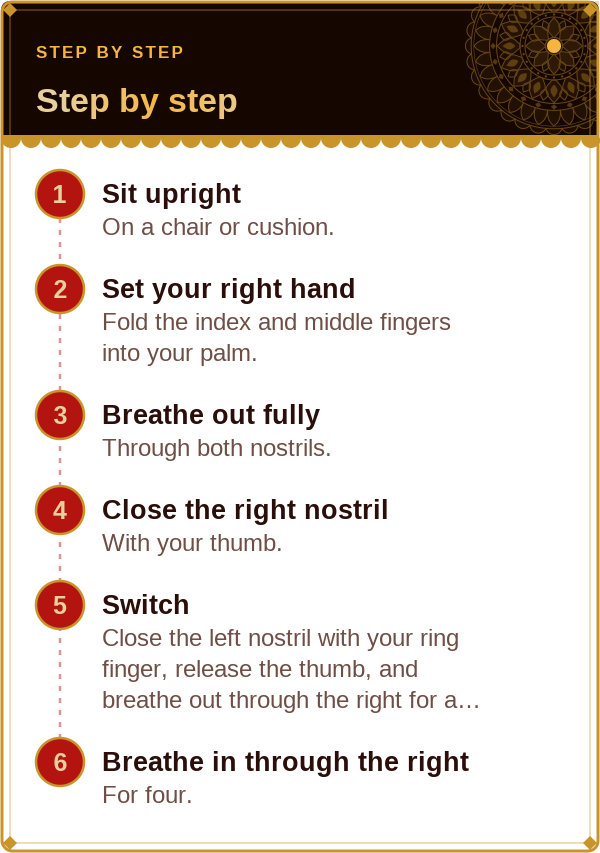
- Sit upright on a chair or cushion. Rest your left hand on your knee.
- Set your right hand. Fold the index and middle fingers into your palm. You will use your thumb for the right nostril and your ring finger for the left. If that is awkward, simply use your thumb and index finger.
- Breathe out fully through both nostrils.
- Close the right nostril with your thumb. Breathe in slowly through the left for a count of four.
- Switch. Close the left nostril with your ring finger, release the thumb, and breathe out through the right for a count of six.
- Breathe in through the right for four.
- Switch again and breathe out through the left for six.
- That is one round. Do five to ten rounds, then lower your hand and breathe normally for a minute.
Keep the breath quiet and smooth. If you can hear it rasping, slow down. If six is too long for the exhale, use four and four.
Building up slowly
After two or three weeks of comfortable daily practice, you may lengthen the exhale to eight counts. Some traditions later add a short pause after the in-breath. Leave that out unless you are healthy, practicing with a teacher, and have no heart, lung or blood pressure concerns. Calm comes from slowness, not from holding.
Anulom vilom and other names
In many Indian households this practice is called anulom vilom, and you will hear the two names used interchangeably. Some teachers draw a fine distinction between them; for everyday purposes, the method above is what most people mean by either name.
Breathing for anxiety: what it can and cannot do
Slow breathing can take the edge off nervousness before a test, a presentation or a difficult phone call. The National Center for Complementary and Integrative Health reviews research on yoga, including breathing practices, and finds some evidence for stress relief, with mixed results overall. But an anxiety disorder is a health condition that deserves real treatment. The National Institute of Mental Health describes the signs of anxiety disorders and the therapies and medicines that help. If worry is affecting your sleep, work or relationships, see a doctor or therapist and use breathing as a support alongside that care.
The ninety-second version before a meeting
You are in a downtown parking garage, or a restroom at work, or your car outside a school in Benbrook, and something stressful starts in five minutes. Try this:
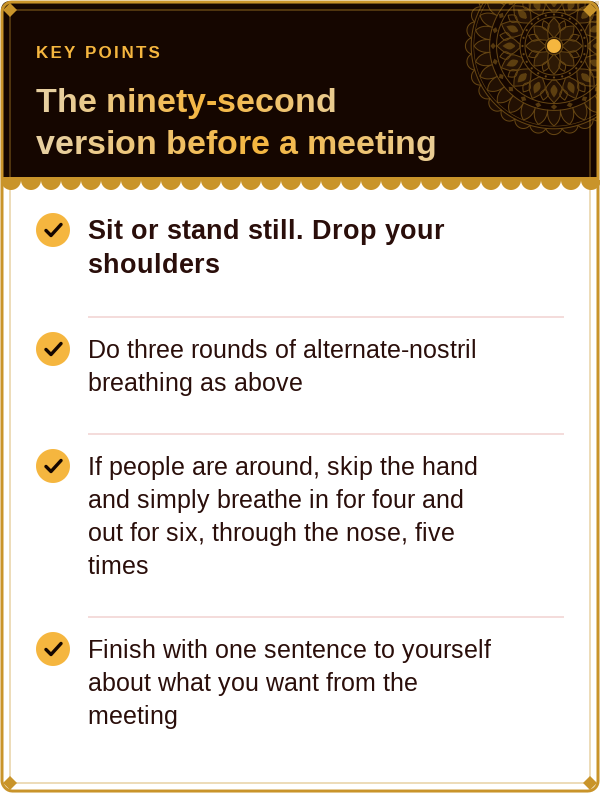
- Sit or stand still. Drop your shoulders.
- Do three rounds of alternate-nostril breathing as above.
- If people are around, skip the hand and simply breathe in for four and out for six, through the nose, five times.
- Finish with one sentence to yourself about what you want from the meeting.
It will not make the meeting easy. It may help you walk in less rushed.
Pairing breath with mantra
Many people find that a breath practice followed by a short mantra makes a steady daily routine. Astrologer and Psychic Vijayram teaches combinations like this through energy healing with breath and mantra by phone, WhatsApp or video, and through personal mantra guidance. In a Fort Worth summer, you may prefer the cooling breaths described in sitali breath for a 100-degree August. If someone at home doubts the whole idea, explaining spiritual healing to a skeptic offers plain words, and for a quiet place to practice outdoors, try a mindful morning at the Botanic Garden.
Common questions
Is anulom vilom the same as nadi shodhana?
The names are often used for the same practice. Some teachers use anulom vilom for the version without breath-holding and nadi shodhana for a version that adds a pause. If you are a beginner, the steps here, with no holding, are the place to start, whatever name you use.
How soon will I feel calmer?
Many people notice a slower heartbeat and a quieter mind after a handful of rounds. Others feel more of a difference after a few weeks of daily practice. If you feel worse, stop.
Can I do it lying down?
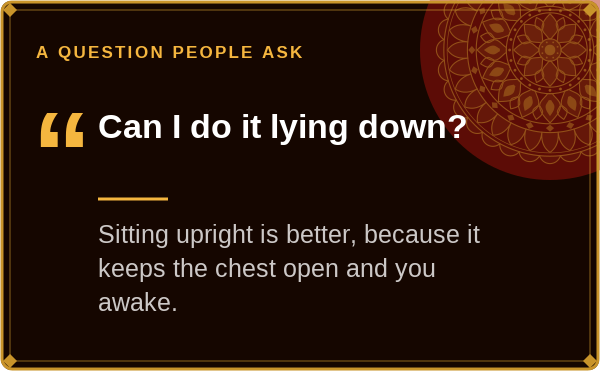
Sitting upright is better, because it keeps the chest open and you awake. Lying down is fine at bedtime if you only want to relax, but you may drift off before you finish.
Should I use it during a panic attack?
Some people find that a slow, long exhale helps in the moment, and the hand movements of nadi shodhana can feel too fiddly then. Panic attacks deserve proper care from a doctor or therapist. If you are in crisis, contact the Suicide and Crisis Lifeline.
Related service

Keep reading
One Planet a Day: Navagraha Mantras Matched to the Weekdays
A simple navagraha mantra rotation matched to the weekdays, from Surya on Sunday to Shani on Saturday, with small counts, Rahu and Ketu notes and no promises.
Read article →
Fasting Through a Fort Worth Summer: Ekadashi With Heat Safety
Hindu fasting rules for Ekadashi in Texas heat: why dry fasts are risky, the gentler options the tradition allows, and who should check with a doctor first.
Read article →
Ancestors and Remembrance: Pitru Paksha Explained
Pitru Paksha meaning, explained simply: the lunar period of remembrance for ancestors, what shraddha involves, and gentle ways families abroad keep it in Texas.
Read article →Quick answers
Can I have spiritual healing while pregnant?
Yes, gentle spiritual healing while pregnant is possible: prayer and mantra only, nothing physical. Keep your obstetrician informed. A Fort Worth answer.
Read answer →Do I need to believe in chakras for a session to help?
You do not need to believe in chakras for a chakra balancing session to help you relax. What a Fort Worth session asks of a skeptic and what it never claims.
Read answer →Talk to Astrologer and Psychic Vijayram
Tell us what you are facing. If a reading is unlikely to help, you will be told that plainly.