
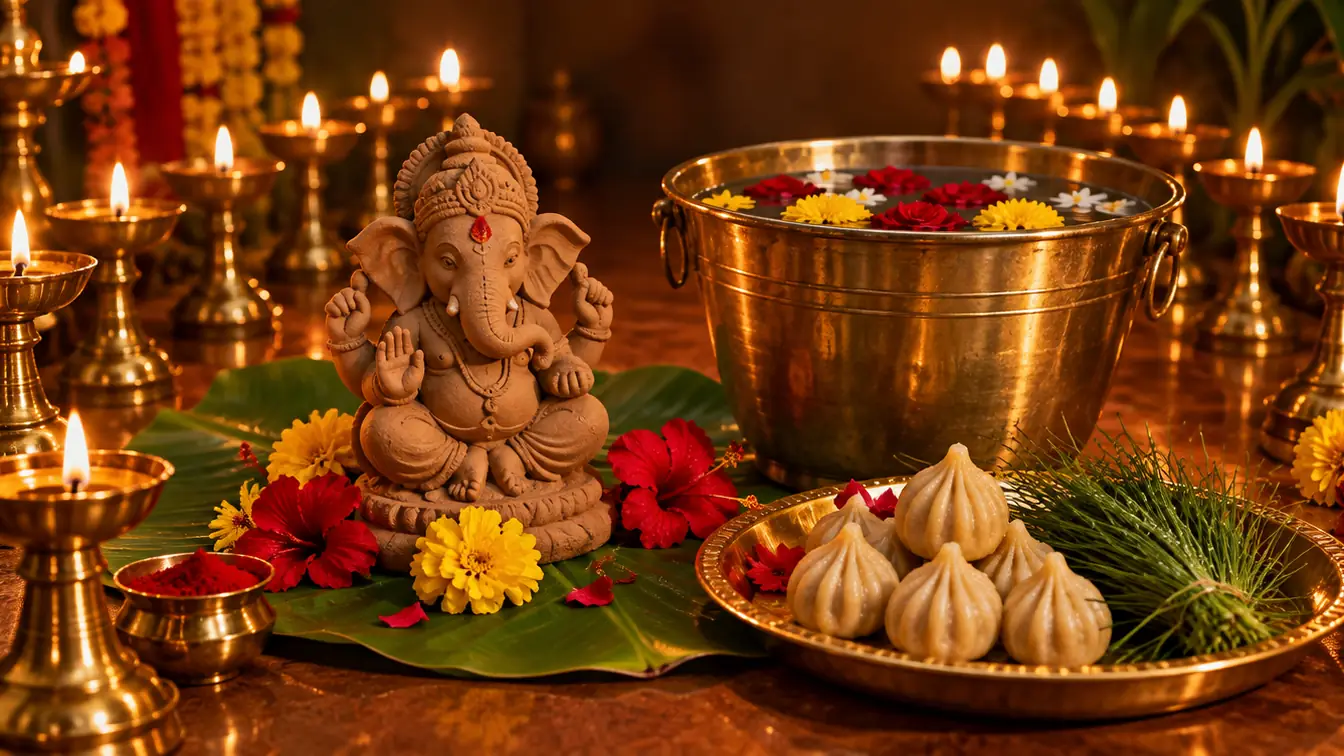
Clay Murtis and Bucket Visarjan: Ganesh Chaturthi in Tarrant County
Ganesh Chaturthi in Fort Worth falls on Friday 3 September 2027, with the traditional midday puja window from about 12:11 to 2:45 pm Central Daylight Time. Choose an unbaked clay murti, keep the puja simple, and immerse it at home in a bucket or tub, then return the dissolved clay to a garden bed or a potted plant.
Key takeaways
- Ganesha's birth is traditionally placed at midday, so the main puja is held in madhyahna, the middle fifth of the daylight.
- Our post on Sankashti Chaturthi moonrise times covers the monthly Ganesha observance if you want to keep the connection going through the year.
- An old story warns against looking at the Moon on the night of Ganesh Chaturthi, lest one face a false accusation.
- Please do not immerse murtis in Lake Worth, the Trinity River, Eagle Mountain Lake or neighborhood retention ponds.
- Ganesha is invoked first at every family rite, from a baby's naming to a wedding, which makes Chaturthi a natural time to involve children.
In Mumbai the farewell to Ganesha means processions to the sea. In Tarrant County it more often means a garden hose, a large bucket on the patio and a family gathered around it in the September heat. That is not a lesser version. Ganesh Chaturthi in Fort Worth, kept with an unbaked clay murti and a home visarjan, is closer to the festival's spirit of returning the god to the earth than many big-city immersions are.
The 2027 date and the midday window
Ganesha's birth is traditionally placed at midday, so the main puja is held in madhyahna, the middle fifth of the daylight. In 2027 the fourth lunar day of the bright half of Bhadrapada runs from about 3:49 am on Friday 3 September until about 1:56 am on Saturday, Central Daylight Time. Working from Fort Worth's sunrise at about 7:05 am and sunset at about 7:51 pm, calculated by the Naval Observatory method, the midday window is roughly 12:11 to 2:45 pm on Friday 3 September.
It is a working Friday, so many families install the murti in the morning or at lunchtime and hold the bigger celebration that evening and over the weekend. A muhurta session can work out an installation time that suits your household if the midday window is impossible.

Choosing a murti that will return to the earth
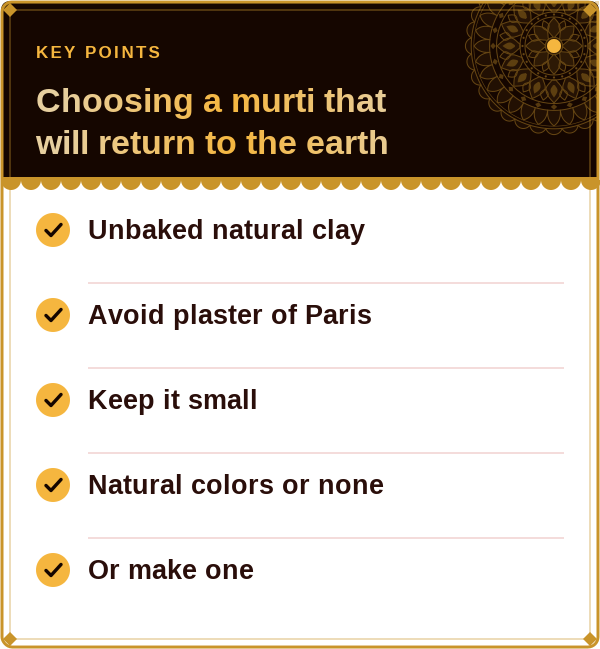
- Unbaked natural clay, sometimes sold as shadu clay, dissolves in water within a day or two.
- Avoid plaster of Paris. It barely dissolves, and many are finished with paints that should not end up in soil or water.
- Keep it small. A murti of eight to twelve inches suits a home altar and dissolves easily in a bucket.
- Natural colors or none. An unpainted clay Ganesha, decorated with flowers and a cloth, is traditional and beautiful.
- Or make one. Shaping a simple Ganesha from clay with children the weekend before is one of the nicest parts of the festival.
A simple puja in a small home
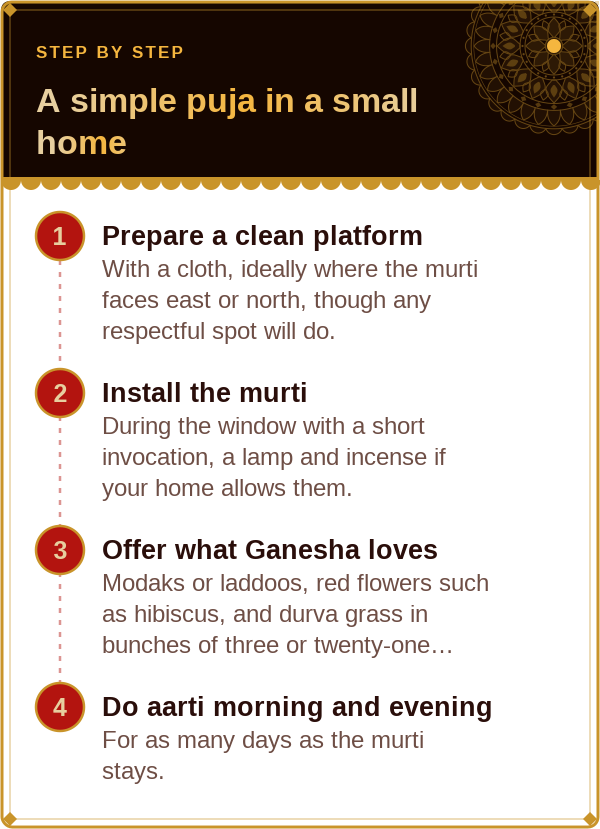
- Prepare a clean platform with a cloth, ideally where the murti faces east or north, though any respectful spot will do.
- Install the murti during the window with a short invocation, a lamp and incense if your home allows them. A puja can be as simple as this.
- Offer what Ganesha loves: modaks or laddoos, red flowers such as hibiscus, and durva grass in bunches of three or twenty-one blades.
- Do aarti morning and evening for as many days as the murti stays.
Our post on Sankashti Chaturthi moonrise times covers the monthly Ganesha observance if you want to keep the connection going through the year.
The moon custom on the first night
An old story warns against looking at the Moon on the night of Ganesh Chaturthi, lest one face a false accusation. In Fort Worth on 3 September 2027 the young crescent sits in the western sky after sunset and sets at about 9:30 pm. Families who keep the custom simply avoid looking west during the evening aarti.
Bucket visarjan, step by step
- Choose the day: one and a half days (Saturday 4 September), three, five, seven or ten days, or Anant Chaturdashi on Tuesday 14 September.
- Do a final aarti and a short farewell prayer, asking Ganesha to return next year.
- Remove flowers, cloth and ornaments. Flowers and durva go into the compost; cloth and ornaments are kept or recycled.
- Lower the murti into clean water in a bucket or tub large enough to cover it, outdoors or in a corner of the garage.
- Let it dissolve overnight or for a day or two, stirring gently.
- Return the clay water to the earth by pouring it into garden beds or potted plants, never into a storm drain. Many families keep a handful of the clay to plant a tulsi or a seed.
Please do not immerse murtis in Lake Worth, the Trinity River, Eagle Mountain Lake or neighborhood retention ponds. Public water is shared, and the home method avoids the problem entirely.
Children and the god of beginnings
Ganesha is invoked first at every family rite, from a baby's naming to a wedding, which makes Chaturthi a natural time to involve children. Let them shape the clay, choose the flowers and ring the bell at aarti. If you are expecting or have a newborn this autumn, a newborn kundli and naming session can suggest name syllables from the baby's birth nakshatra, and our guide to planning a namkaran in Tarrant County covers the ceremony itself.
What the festival cannot do
Ganesha is honored as the remover of obstacles, but a puja is devotion, not a way to clear a particular problem or win a particular outcome. Astrologer and Psychic Vijayram can help with festival timing or a child's chart by phone, WhatsApp or video, in Central Time.
Common questions
How many days should we keep Ganpati at home?
Families choose one and a half, three, five, seven or ten days, or keep the murti until Anant Chaturdashi, which falls on Tuesday 14 September in 2027. Follow your family's custom, or pick the length you can care for properly. A shorter stay with daily aarti is better than a longer one that is neglected.
Is a bucket visarjan as proper as immersing in a lake?
Yes. The rite is the farewell and the return of the clay to water and earth, not the size of the water. Many cities in India now provide artificial tanks for exactly this reason. Immersing at home also keeps clay, paint and decorations out of Tarrant County's lakes and the Trinity River.
Can we use grass from the yard as durva?
Durva grass is the same species as Bermuda grass, which grows in many Texas lawns. Pick it from a patch that has not been treated with weed killer or fertilizer, rinse it, and tie the blades in small bunches for the offering.
What if the clay does not dissolve completely?
Unbaked clay softens within a day or two. Stir gently, add water, and break larger pieces with your hands. If a murti contains plaster or a hidden armature, separate those parts respectfully and dispose of them with household waste.
Related service

Keep reading
Akshaya Tritiya Gold Buying in Tarrant County: Custom and Budget
Akshaya Tritiya in Fort Worth falls on Saturday 8 May 2027. Why families buy gold or start ventures that day, how to stay within budget, and why giving counts.
Read article →
Janmashtami Midnight Timing in Central Time
Janmashtami in Fort Worth in 2027: why Krishna's midnight falls near 1:30 am on a Central Daylight clock, which night counts, and how temples set their times.
Read article →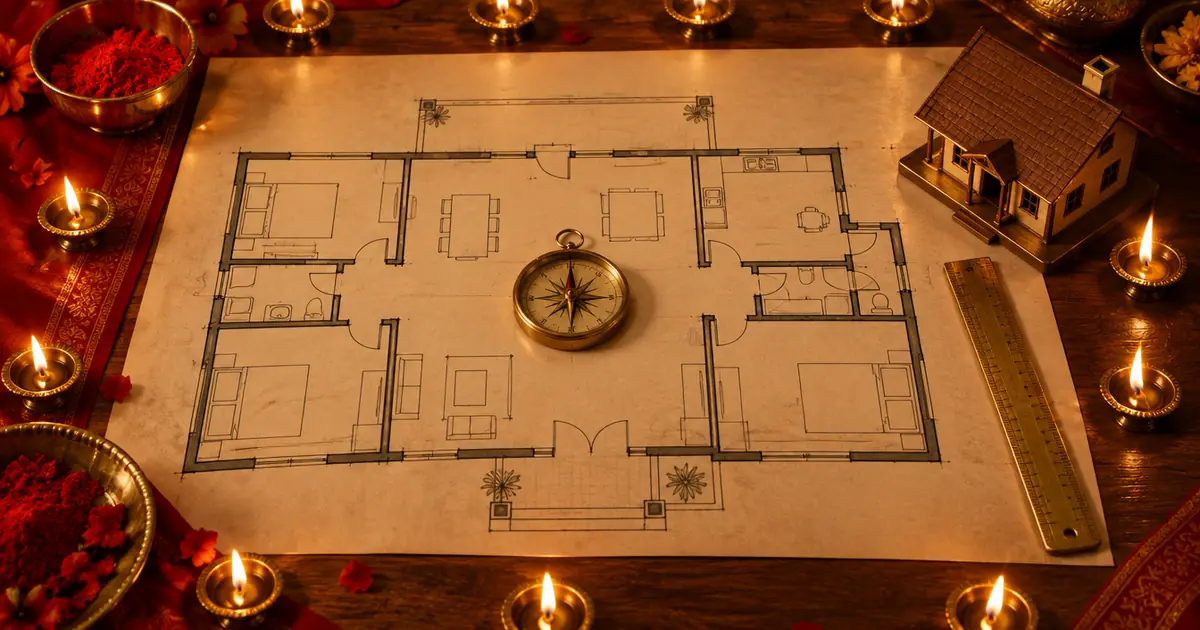
Vastu for Texas Ranch-Style and New-Build Homes
Vastu for Texas homes: applying direction-based principles to single-story ranch plans and builder floor plans common in Tarrant County, without demolition.
Read article →Quick answers
Must I stop reading Western horoscopes to see a Vedic astrologer?
No, you do not need to stop reading your Western horoscope to see a Vedic astrologer in Fort Worth. How the two zodiacs differ and why your sign may shift.
Read answer →Do I need my birth certificate for a Vedic reading?
You do not need your birth certificate for a Vedic reading in Fort Worth: date, time and place of birth matter, and a certificate simply confirms the time.
Read answer →Talk to Astrologer and Psychic Vijayram
Tell us what you are facing. If a reading is unlikely to help, you will be told that plainly.