
A Protection Prayer Routine for Texas Storm Season
A protection prayer for home during Texas storm season belongs after the practical steps: a weather radio or phone alerts, a shelter room chosen in advance, and close attention to National Weather Service warnings. Once those are in place, a short daily prayer at a home shrine, at dawn or dusk, can steady a worried household.
Key takeaways
- None of the steps above take away the fear of a sky turning green at four in the afternoon.
- Many families make their main prayer at brahma muhurta, the period before dawn the tradition considers best for worship and meditation.
- Morning prayer as above, and a glance at the forecast.
- The post on a prayer corner in a small apartment has placement ideas for tight spaces.
- The post on planning outdoor ceremonies around North Texas weather covers timing and fallback plans.
Safety first. When a tornado warning is issued for your area, go to your shelter immediately: an interior room on the lowest floor, away from windows. For life-threatening emergencies, call emergency services. Follow the National Weather Service's tornado safety guidance and keep an eye on the Dallas/Fort Worth forecast office for watches and warnings.
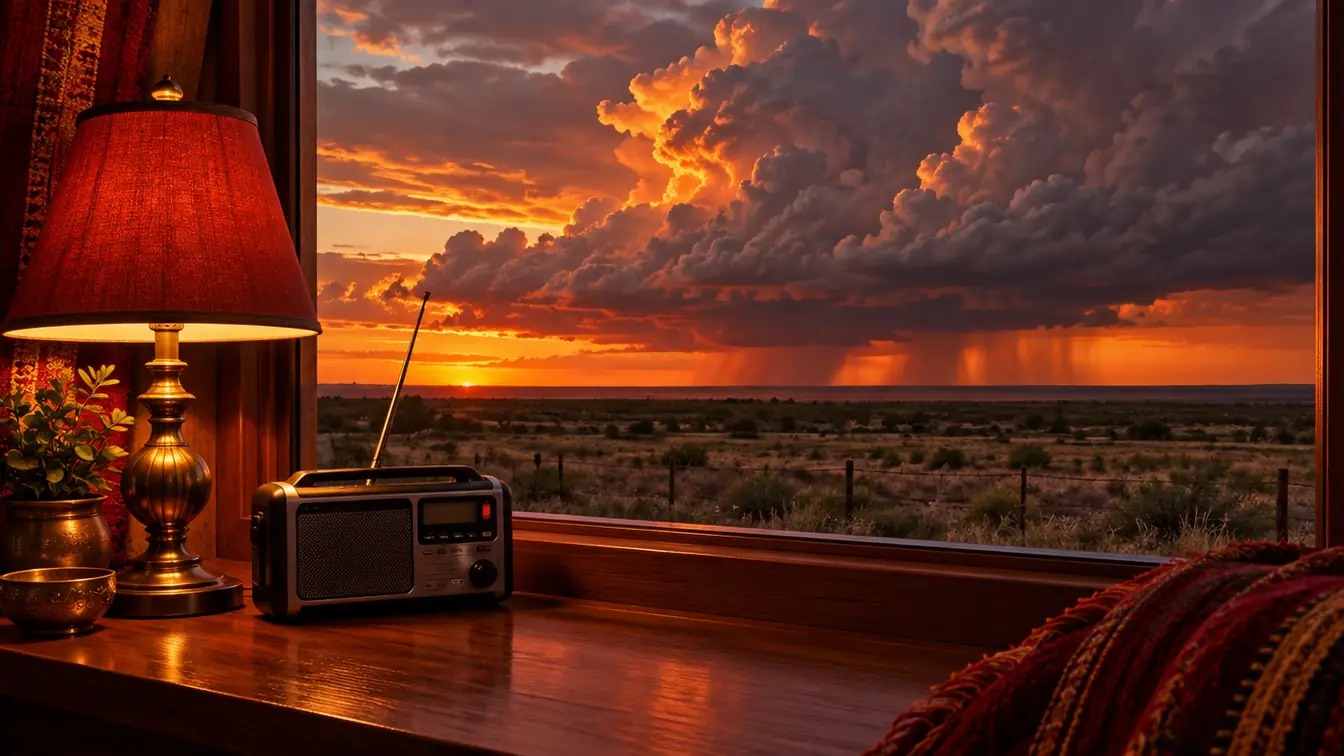
Spring in North Texas is beautiful and unsettled. Hail, high winds, flash flooding and tornado warnings arrive with little notice, and many families, especially those newer to Texas, find the season genuinely frightening. Faith can help with that fear. But a protection prayer for home belongs in the right place: after the weather radio, after the shelter plan, after the alerts are switched on. This post sets out a calm routine in that order.
The practical plan, before any prayer
- Alerts. Turn on Wireless Emergency Alerts on every phone, and consider a NOAA weather radio with battery backup. Outdoor warning sirens are meant for people outside; do not rely on hearing them indoors.
- A shelter room. Choose it now: an interior bathroom, closet or hallway on the lowest floor. Keep shoes, a flashlight, a phone charger, water and any medicines nearby.
- Flooding. Never drive through water on the road. The National Weather Service's phrase is simple: turn around, don't drown.
- Hail. Park cars in the garage or under cover when storms are forecast.
- Mobile homes and cars are not safe in a tornado. Know where you would go instead.
- Practice once with the whole family, including children and visiting grandparents who may not know what a warning means.
Why prayer still matters here
None of the steps above take away the fear of a sky turning green at four in the afternoon. A short, steady prayer routine through storm season gives a household something to do with its worry. It brings the family together for a few minutes, gives children a sense of calm, and reminds everyone that the plan is in place. It is devotion and steadiness, not a forcefield.
Brahma muhurta: how to pray in the early morning
Many families make their main prayer at brahma muhurta, the period before dawn the tradition considers best for worship and meditation. As the explanation of brahmamuhurta sets out, it is a 48-minute window beginning one hour and 36 minutes before sunrise. In mid-April, Fort Worth's sunrise falls near 7:00 a.m. Central Time, so brahma muhurta runs from about 5:24 to 6:12 a.m.
- Wake and wash. Splash water on your face and hands, or bathe if that is your habit.
- Sit facing east at your shrine or any quiet corner.
- Light a lamp and take three slow breaths.
- Recite one prayer. Choose one you know: the Gayatri mantra, the Mahamrityunjaya mantra, a few verses of the Hanuman Chalisa, or a prayer to your family deity.
- Make a short sankalpa, an intention, for the safety of everyone in the home.
- Put the lamp out before you leave the room, then check the day's forecast.
If dawn prayer is unrealistic with work and school, the evening, around sunset, is the traditional alternative.
A storm-season routine, day by day
On an ordinary spring day
Morning prayer as above, and a glance at the forecast. That is all.
When storms are forecast
Check that the shelter room is ready, charge phones, bring in loose outdoor items, and park cars under cover. In the evening, gather the family for a slightly longer prayer, five or ten minutes. Many families recite the Hanuman Chalisa as a protection prayer on these nights, or a protective hymn such as those described in kavach and raksha prayers.
During a warning
No rituals. Go to the shelter room straight away. Once there, you can pray silently, hold your children, or repeat a simple mantra together. That is often when a familiar prayer helps most.
After the storm
Check on neighbors, especially older ones. Light a lamp in gratitude once power is back and the weather has passed. Many families make a small donation or offer help to those affected.
Keeping the home shrine safe in storm season
- Never leave a lamp, candle or incense burning unattended, and especially not when you may need to move suddenly.
- During power cuts, use flashlights or battery lanterns rather than diyas or candles.
- Keep the shrine away from windows that could break in hail or high winds.
The post on a prayer corner in a small apartment has placement ideas for tight spaces.
Planning ceremonies around the weather
If you have an outdoor puja, wedding or family event in spring, build in a backup. The post on planning outdoor ceremonies around North Texas weather covers timing and fallback plans.
Protective prayer as a service
Some families ask for prayers to be said on their behalf during a hard season, or want a personal routine set up. Astrologer and Psychic Vijayram offers this by phone, WhatsApp or video, scheduled in Central Time, as part of the protective prayer sessions, which are about steadiness and devotion rather than fear. The short answer on whether protection prayers can be said remotely explains how that works.
What prayer cannot do
A prayer is not a storm shelter and cannot stop a tornado, hail or flood from reaching your home. Follow official warnings every time. Prayer is a faith-based source of calm alongside those steps, never in place of them.
Common questions
Should I pray during a tornado warning?
Go to your shelter first. Once everyone is in the safest room, praying quietly or reciting a familiar mantra can help keep you and your children calm. Never delay sheltering to finish a ritual.
Can I light a diya during a power cut in a storm?
Use flashlights or battery lanterns instead. Open flames during storms and outages are a fire risk, especially if you might need to move quickly. Light the lamp again once the weather has passed and power is back.
Which mantra is traditional for protecting the home?
Families use different ones: the Hanuman Chalisa, the Gayatri mantra, the Mahamrityunjaya mantra, or a short prayer to their family deity. Choose one you can recite calmly and regularly rather than chasing the most powerful-sounding option.
Can protection prayers be said for my home while I am away?
Yes, prayers can be said on your behalf remotely, and many families ask relatives to pray when they travel. It is a faith-based comfort and does not replace weather alerts, insurance or a neighbor checking the house.
Related service

Keep reading

Drishti, Nazar, Dishti: Evil Eye Words Across Indian Languages
What is the evil eye? How Hindi, Tamil, Telugu, Gujarati, Bengali and Nepali homes name it, the remedies each uses, and the shared aim of guarding good fortune.
Read article →
A Run of Bad Luck After Good News: Nazar Worries and Everyday Causes
Evil eye symptoms families describe after a promotion, new house or new baby, and the ordinary causes to check first: sleep, stress, money and health.
Read article →
Black Thread Bracelets and Anklets: Meaning and When to Remove
Nimbu mirchi meaning, and the black thread custom explained: who wears a kala dhaga, how it is tied, hygiene points, and when to take it off or replace it.
Read article →Quick answers
Can protection prayers be said for me remotely?
Yes, protection prayers can be said for you remotely, by phone or video, as a faith practice. Safety steps come first, and the fee is stated before booking.
Read answer →Is nazar the same thing as mal de ojo?
Nazar and mal de ojo are close cousins: both name the evil eye of envy or admiration. How the South Asian and Latin American beliefs differ in Fort Worth.
Read answer →Talk to Astrologer and Psychic Vijayram
Tell us what you are facing. If a reading is unlikely to help, you will be told that plainly.