
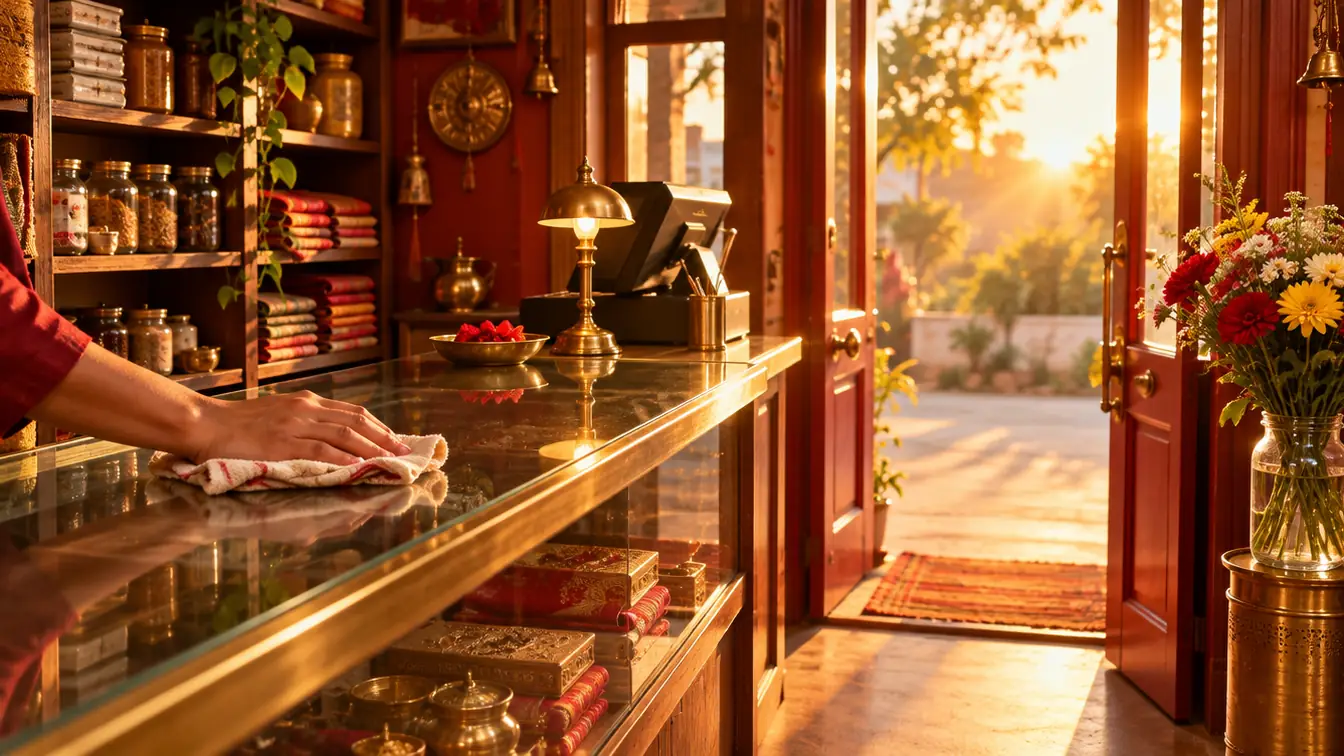
A Weekly Upkeep Routine for a Small Shop After Its Blessing
An office cleansing ritual after a shop blessing can be small and weekly: sweep and wipe the threshold, light a lamp or an LED diya, say a short prayer at opening, and refresh the water or flowers at your altar. Check your lease and the fire rules before using open flames or incense in a shared building.
Key takeaways
- A big ceremony once a year can feel like a reset, but the space between ceremonies is where a shop actually lives.
- A Near Southside cafe that opens at six will keep a different rhythm from a boutique that opens at eleven.
- Many commercial leases and fire codes restrict open flames, and a strip-center unit often shares air handling and ceiling space with its neighbors.
- Smoke that feels sacred to you may set off a detector, drift through shared ductwork into the nail salon next door, or bother a customer with asthma.
- Stock Show weeks in January bring some shops a rush and others a lull.
The opening day is behind you. The priest or reader has gone, the marigolds have dried, and the coconut shell is in the trash. Now the shop has to run on ordinary Tuesdays. An office cleansing ritual kept weekly is how many owners carry the feeling of that first blessing into the months that follow, without hiring anyone to come back. The habits below are small on purpose: most take less time than counting the till.
Why weekly beats occasional
A big ceremony once a year can feel like a reset, but the space between ceremonies is where a shop actually lives. In the tradition, a puja is less a one-time event than a relationship kept up through small offerings, as the overview of puja practice describes. A lamp lit each Friday, a threshold swept each Monday, a minute of gratitude at closing: these say the same thing as the opening blessing, in a voice quiet enough to keep using.
A seven-day rhythm you can adapt
| Day | Habit | Time |
|---|---|---|
| Monday | Sweep the entrance from the inside out; wipe the door handle and glass | 5 minutes before opening |
| Tuesday | Fresh water in a small bowl or kalash at the altar; a Hanuman Chalisa verse if that is your practice | 2 minutes |
| Wednesday | Clear the counter and desk: file papers, sort receipts. Wednesday belongs to Budha, the planet of trade and accounts | 10 minutes |
| Thursday | Dust the altar shelf and replace wilted flowers | 3 minutes |
| Friday | Light the lamp or LED diya at opening with a short Lakshmi prayer | 2 minutes |
| Saturday | One line of thanks at closing, however the day went | 1 minute |
| Sunday | Take out the trash, check the back door and storage, and let the space rest | 10 minutes |
Swap days to suit your hours. A Near Southside cafe that opens at six will keep a different rhythm from a boutique that opens at eleven. What matters is that each habit has a fixed slot, so it happens without a decision.
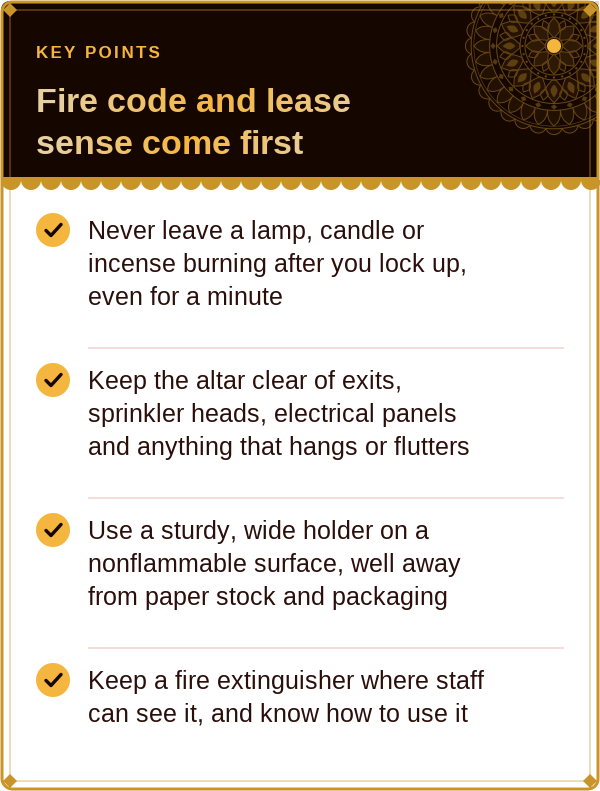
Fire code and lease sense come first
Many commercial leases and fire codes restrict open flames, and a strip-center unit often shares air handling and ceiling space with its neighbors. Before you light anything, read your lease and ask your landlord. If in doubt, ask the fire marshal's office. A few rules hold almost everywhere:
- Never leave a lamp, candle or incense burning after you lock up, even for a minute.
- Keep the altar clear of exits, sprinkler heads, electrical panels and anything that hangs or flutters.
- Use a sturdy, wide holder on a nonflammable surface, well away from paper stock and packaging.
- Keep a fire extinguisher where staff can see it, and know how to use it.
The National Fire Protection Association's candle safety guidance is written for homes, but its basics apply to a shop counter too. Many owners simply switch to a battery diya for daily use and keep a real flame for Diwali, with someone standing beside it.
Incense, customers and the shop next door
Smoke that feels sacred to you may set off a detector, drift through shared ductwork into the nail salon next door, or bother a customer with asthma. A food business has health rules to think about as well. Gentler ways to mark the space include a bowl of fresh flowers, a small bell rung once at opening, a dab of sandalwood paste on the altar image, or a sprig of tulsi in water. If you do burn incense, keep it to one stick, in the back, before customers arrive, with the door open.
The first sale of the day, the bohni, is its own small ritual in many South Asian shops. Touching the first payment to your forehead with thanks takes a second and keeps gratitude at the start of the day.
Business negative energy, or a slow quarter?
When sales dip, it is natural to wonder whether something is wrong with the space itself. Before reaching for a cleansing, look at the ordinary causes: road work on your street, a competitor opening nearby, the drop in foot traffic during a 100-degree August, a price change, a bad online review, staffing gaps. Stock Show weeks in January bring some shops a rush and others a lull. Write down what changed and when.
The U.S. Small Business Administration lists local assistance for small businesses, including small business development centers, and advisers there can look at your numbers with you. If you would also like timing advice, a business astrology consultation reads the chart of the owner and the opening date. A tarot spread for small-business owners can help you think through a decision. If the space still feels heavy after the practical work, Astrologer and Psychic Vijayram offers negative energy removal prayers by phone, WhatsApp or video.
Keeping it yours
A routine you keep yourself should never become a subscription. No one needs to come back monthly to "top up" a blessing, and a practitioner who insists on it is selling, not praying. If you are planning your next opening, the post on choosing a muhurta for a soft or grand opening covers timing, and our guide to buying camphor, rock salt and incense locally covers supplies.
One honest limit: no lamp or prayer can bring customers through the door, fix cash flow or settle a dispute with a landlord. A weekly routine keeps you steady and your shop cared for while you do the work that does those things.
Common questions
Can I keep an office cleansing ritual in a cubicle or shared office?
Yes, if it is quiet and scent-neutral. Wipe your desk at the start of the week, keep one small image or plant, and say a line of prayer under your breath when you sit down. No one else needs to notice.
Do I need to repeat the opening blessing every year?
No. Some owners renew it on Diwali or on the shop's anniversary because they enjoy the occasion, but nothing lapses if you do not. The weekly habits carry the intention forward.
Is salt water on the shop floor a good idea?
A little rock salt in mop water is a common custom, but test it on one corner first, since salt can leave a film on sealed concrete, tile and wood. Rinse afterward if customers bring dogs inside.
What if my staff follow different faiths?
Keep the altar personal and the shared habits neutral. Everyone can keep a clean threshold and a tidy counter. Invite people to a Diwali puja if you like, but never make it part of the job.
Related service

Keep reading

Rahu, Ketu and Feeling Under a Cloud
Rahu Ketu negative effects explained calmly: how astrologers read restless or foggy periods in a Vedic chart, without calling them a curse or selling fear.
Read article →
After a Cleansing: Keeping the Home Calm
What to do after spiritual cleansing: light, order and a short daily prayer to keep the home calm, with no repeat fees or top-up rituals required.
Read article →
Blessing a Food Truck Before Its First Fort Worth Season
A food truck blessing for Fort Worth owners: propane and generator safety first, then a short vahan puja style prayer and a weekly habit. Faith, not a promise.
Read article →Quick answers
Is nazar the same thing as mal de ojo?
Nazar and mal de ojo are close cousins: both name the evil eye of envy or admiration. How the South Asian and Latin American beliefs differ in Fort Worth.
Read answer →How do I know if I need a spiritual cleansing?
How do you know if you need a spiritual cleansing? Rule out health, sleep and stress first; then a cleansing can be a calm faith practice. A Fort Worth guide.
Read answer →Talk to Astrologer and Psychic Vijayram
Tell us what you are facing. If a reading is unlikely to help, you will be told that plainly.