
Tarot as a Mirror, Not a Forecast: Reading Patterns in the Present
Tarot cannot predict the future as a set of fixed events, and there is no good evidence that it can. What it does well is reflect present patterns: how you feel, what you are avoiding, and where things seem to be heading if nothing changes. Used as a mirror, it helps you choose; used as a forecast, it misleads.
Key takeaways
- Think of a forecast as a window: you look through it and see what is coming.
- Tarot can be accurate as a description of your situation and feelings, but there is no reliable evidence that it predicts specific future events.
- People come away from a thoughtful reading with a clearer sense of their priorities, a decision they had been circling, or the words for a conversation they need to have.
- Questions about dates and outcomes are natural, especially in love.
- A woman in her thirties, recently moved to the Near Southside for a hospital job, asks about a relationship that began just before her move.
Can tarot predict the future? It is the question underneath many first bookings, sometimes asked outright and sometimes hidden inside another question, like "will we still be together next year?" The straight answer is no, not in the sense of naming fixed events before they happen. What tarot does well is different and, for most people, more useful: it reflects the patterns in your present clearly enough that you can see where they are leading and decide whether you want to go there.
A mirror, not a window
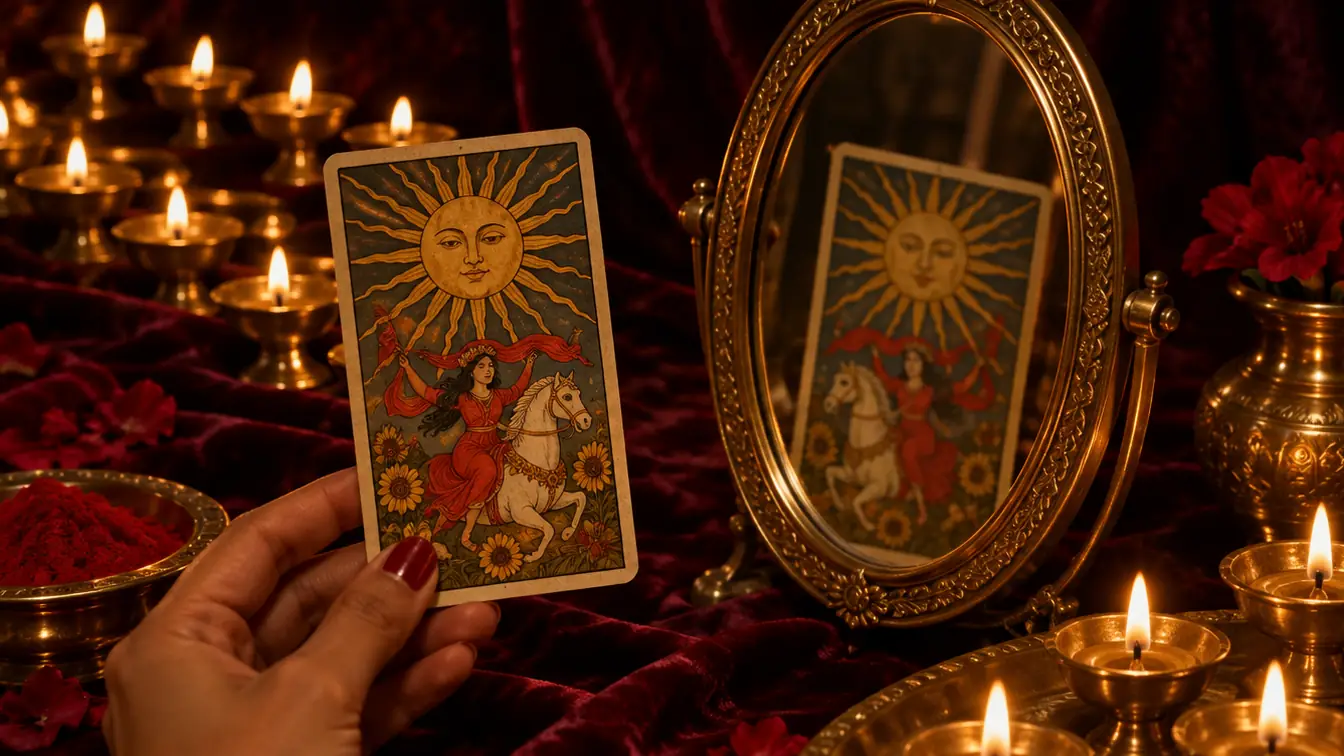
Think of a forecast as a window: you look through it and see what is coming. A mirror shows you yourself, here, now, sometimes from an angle you had not noticed. Tarot works much more like the mirror. The cards are a structured set of images; laid in positions and read carefully, they help put words to how you feel, what you keep doing, what you are afraid of and what you want.
From that picture of the present, a likely direction often becomes obvious. If you keep avoiding a conversation, the relationship will probably drift. If you keep saying yes to every extra shift, you will probably burn out. That is not prophecy. It is pattern, seen clearly.
Is tarot accurate?
Tarot can be accurate as a description of your situation and feelings, but there is no reliable evidence that it predicts specific future events. Research into claimed precognition, summarized in the overview of precognition, has not produced results that hold up under careful testing.
There is also a well-known reason readings can feel uncannily right. The Barnum effect describes how people accept vague, general statements as personal descriptions. "You give a lot to others and sometimes feel unappreciated" fits nearly everyone. A careful reader avoids hiding behind statements like that and stays specific to the cards and to what you have said.
Does tarot work, then?
It works for what it is good at. People come away from a thoughtful reading with a clearer sense of their priorities, a decision they had been circling, or the words for a conversation they need to have. Those are real effects, and they come from reflection, not from foreknowledge. If you judge tarot by whether it names the day you will meet someone, it will fail. If you judge it by whether you understand yourself better at the end of the session, it often succeeds.
What this means for date and outcome questions
Questions about dates and outcomes are natural, especially in love. Here is how a mirror-style reading handles a few of them.
- "When will I meet someone?" becomes "What am I looking for, and what is getting in the way of meeting it?"
- "Will he propose this year?" becomes "What do I need from this relationship, and have I said so clearly?"
- "Is she the one?" becomes "What do I value in this relationship, and where do we differ?"
Each rewrite keeps the heart of the question while moving it onto ground where the cards can help. The guide to rewriting worry questions into open ones has more worked examples.
An example from a love reading
Consider a composite example. A woman in her thirties, recently moved to the Near Southside for a hospital job, asks about a relationship that began just before her move. The Lovers appears in the center of her spread. A forecasting reader might say "marriage is coming." A mirror reading notices that the Lovers in the Rider-Waite-Smith deck is above all a card of choice and shared values. The conversation turns to whether she and her partner want the same things now that she has a demanding new schedule. She leaves with a question to discuss with him, not a prediction to wait for. That is the approach a love tarot reading takes.
Getting the most from a reading that does not forecast
- Bring a real question about your own choices. The more it belongs to you, the more the reading can help.
- Notice your reactions. The card that irritates you is often the one with something to say.
- Ask "what can I do?" at the end of every reading.
- Write down the main points. Look at them again in a month.
- Keep big decisions in your own hands. Use the reading as one input among several, alongside facts and advice from people who know the situation.
Warning signs in a reader
Be wary of anyone who claims certainty about future events, names a date for a marriage or a death, frightens you into paying, or pushes a ritual as the only way to change what the cards show. Those are signs of a sales pitch, not a reading. The post on the careful language an honest reader uses explains what to listen for, and the guide to spotting cold-reading tactics shows how fishing for clues works.
The plain limit
A tarot reading with Astrologer and Psychic Vijayram reflects your present and suggests likely directions. It cannot guarantee any result, foretell events, or tell you what someone else will choose. Readers who say otherwise are claiming more than the cards can give. Used as a mirror, though, tarot can be a steady, thoughtful companion when you are trying to see your situation clearly.
Common questions
If tarot cannot predict, why do readings sometimes feel so accurate?
Partly because the images are rich and open, so we find our own lives in them, and partly because a good reader listens closely. A reading that feels accurate about your present can still be useful without being a prediction.
Can tarot tell me when I will get married?
No reading can give you a reliable date. A love spread can look at what you want in a partner, what holds you back and what you can do now. For questions about timing as a season rather than a date, some people also consult a Vedic chart.
What does the outcome card mean, then?
It shows the likely direction if things continue as the other cards describe. Change your approach and the direction can change. That is why careful readers call it a direction rather than a result.
Is it wrong to enjoy the mystery of tarot?
Not at all. The imagery is beautiful and the tradition is old. Enjoying the mystery is fine as long as important decisions rest on your own judgment, not on a card.
Related service
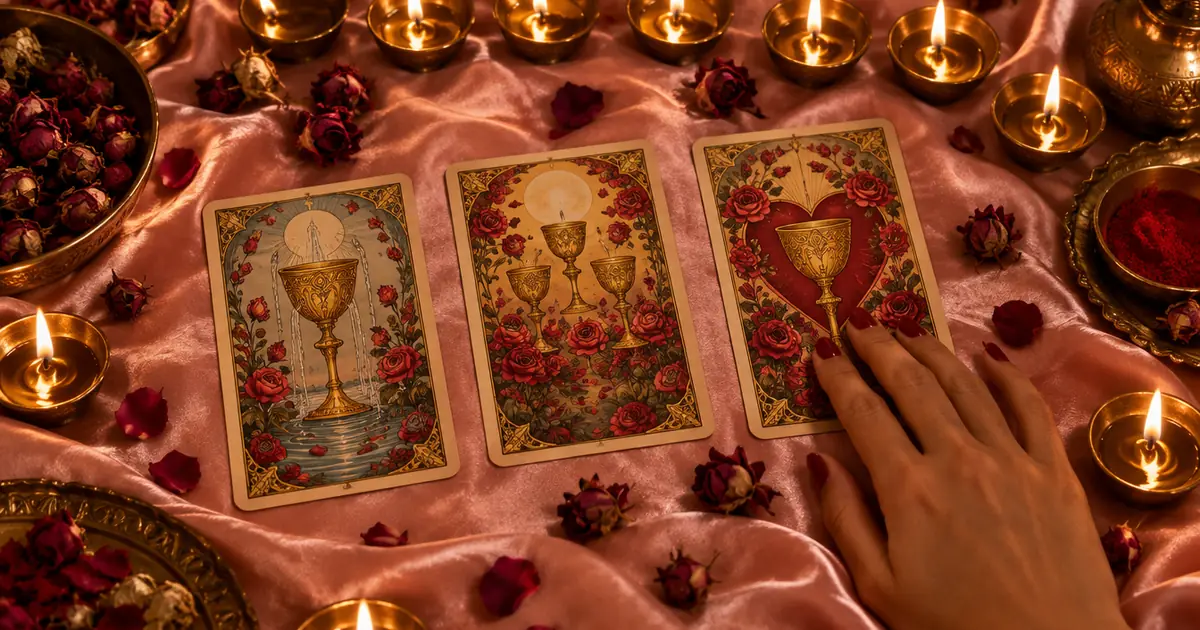
Keep reading
A Tarot Spread for the Anniversary of a Loss
Tarot for grief on the anniversary of a death: a gentle five-card spread for memory and gratitude, with grief support in Tarrant County and the Suicide and Crisis Lifeline listed first.
Read article →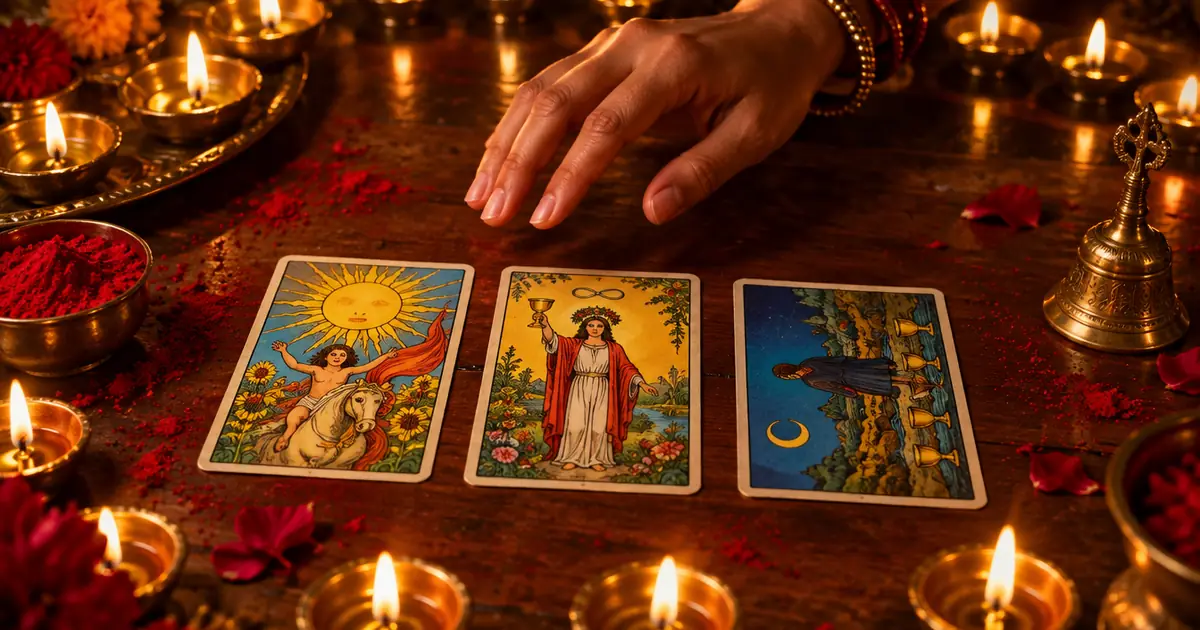
Three Cards for a Yes-or-No Question: A Worked Fort Worth Example
A yes or no tarot spread with three cards, worked through a sample question about a job offer in Alliance, and why the result is a leaning, not a verdict.
Read article →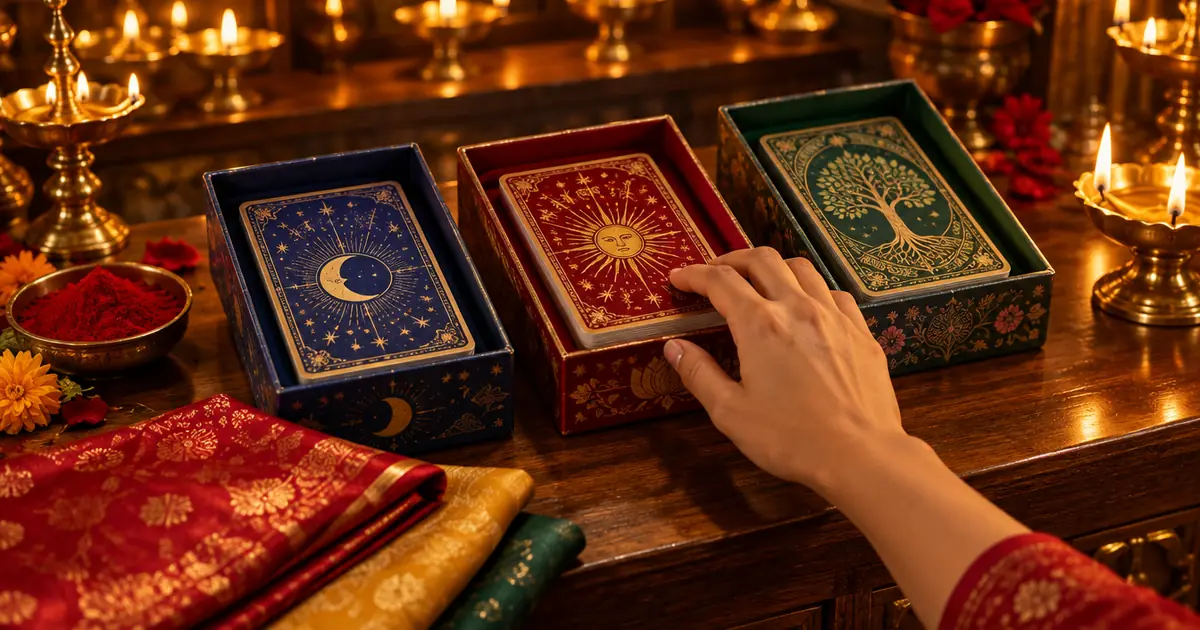
Choosing Your First Tarot Deck
Looking for the best tarot deck for beginners? What to check in a first deck, why Rider-Waite-Smith imagery is easiest to learn, and which decks can wait.
Read article →Quick answers
How many cards are used in a tarot reading?
How many cards are used in a tarot reading? Usually one to ten from a 78-card deck, depending on the spread. A Fort Worth reader explains the common layouts.
Read answer →Is a tarot spread useful when comparing two job offers?
A tarot spread can help when comparing two job offers by clarifying what you value. It never replaces checking pay, benefits and terms. A Fort Worth guide.
Read answer →Talk to Astrologer and Psychic Vijayram
Tell us what you are facing. If a reading is unlikely to help, you will be told that plainly.