
Seed Syllables of the Chakras: Lam, Vam, Ram and the Rest
The seven chakras, explained simply, are centers along the spine described in yoga and tantra traditions, each paired with a seed syllable: Lam, Vam, Ram, Yam, Ham, Om, and silence at the crown. Chanting them in order is a calming practice. It is a spiritual framework, not anatomy, and it does not diagnose or treat any condition.
Key takeaways
- The word chakra means "wheel." The history of the chakra systems shows that different Hindu and Buddhist texts describe different numbers of centers, with four, six or seven among the common schemes.
- Seed syllables are single-syllable sounds believed to hold the essence of a larger mantra, much as a seed holds a tree.
- As you get comfortable, increase to seven repetitions of each sound.
- Long Sanskrit mantras take weeks to learn well, and worry about pronunciation can crowd out the calm they are meant to bring.
- Long exhalations can make some people lightheaded; if that happens, shorten the hum and breathe normally between sounds.
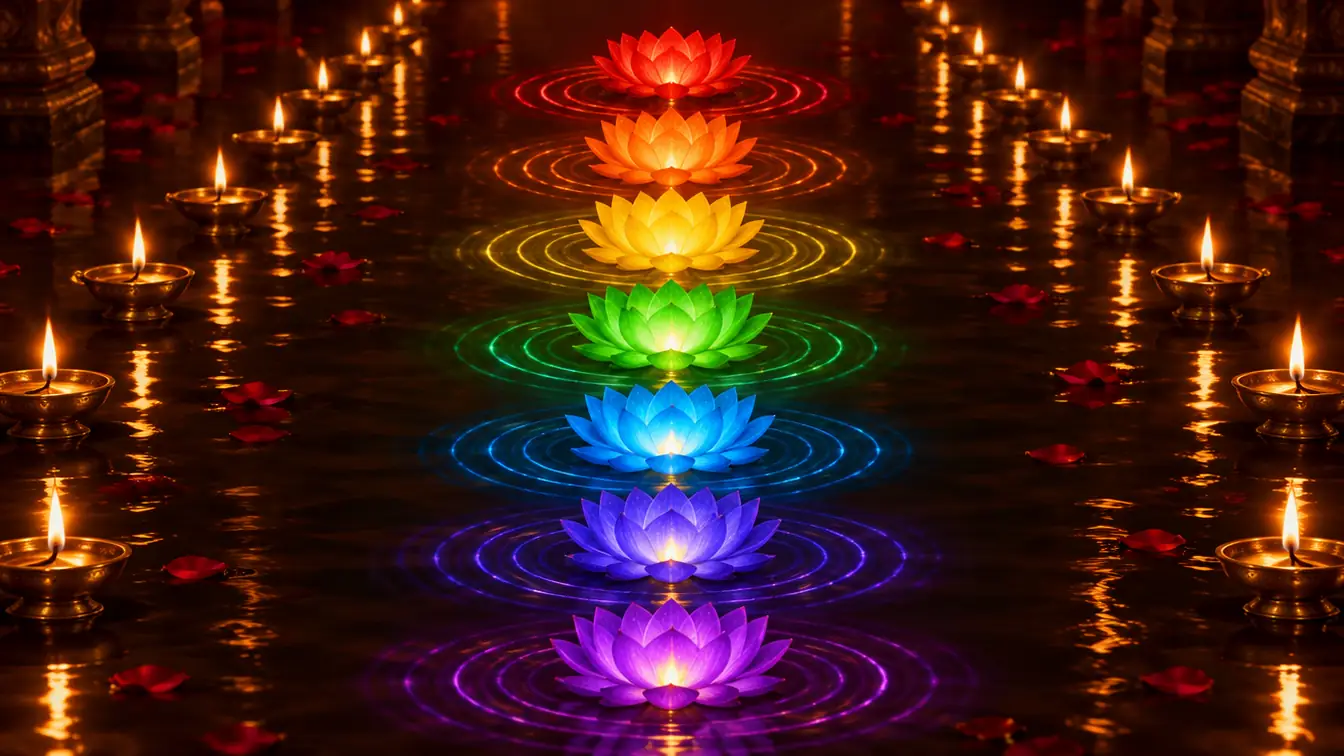
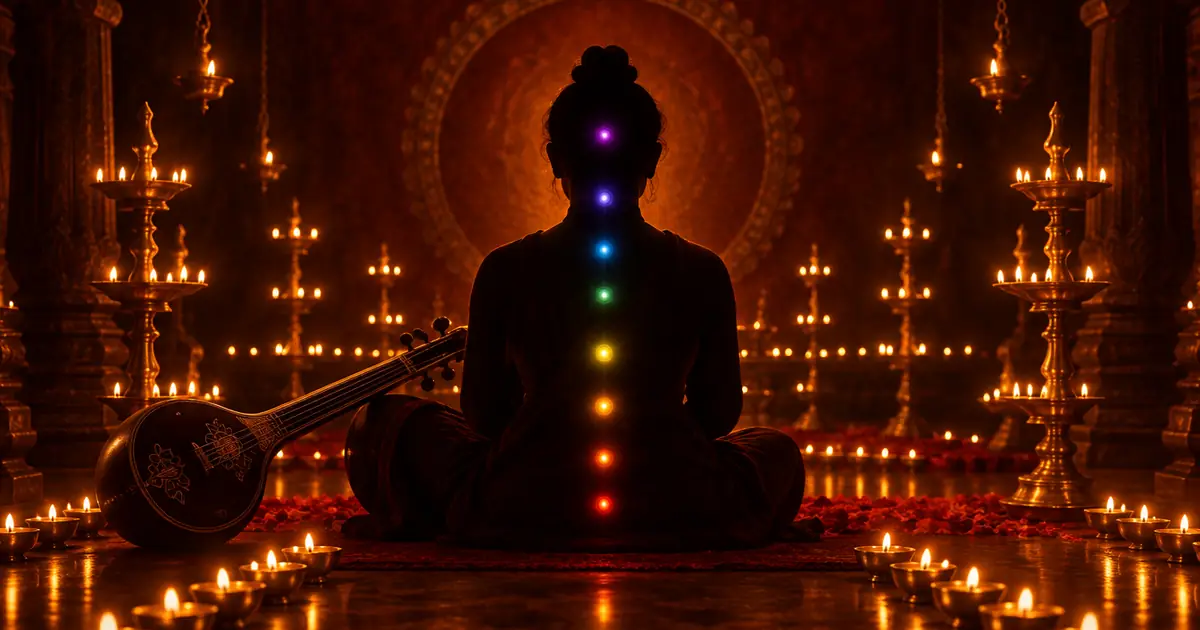
Most beginners meet the chakras through a colorful poster: seven glowing circles stacked up a meditating figure. The poster rarely mentions the part of the tradition you can actually practice today: each center has a bija, or seed syllable, that is chanted to bring attention to it. With the seven chakras explained through their sounds, the system stops being decoration and becomes a short, steady practice you can do in ten minutes.
A spiritual map, not an anatomy chart
The word chakra means "wheel." The history of the chakra systems shows that different Hindu and Buddhist texts describe different numbers of centers, with four, six or seven among the common schemes. The seven-chakra model familiar today owes much to a Sanskrit text translated into English in the early twentieth century, which spread the idea widely in the West.
None of this describes physical organs. You will not find a chakra on an X-ray. The centers are a map for prayer and meditation, a way of moving attention up the body in a meaningful order. Keep that in mind, and the practice is simple and safe.
Chakra chart: names, places and seed sounds
| Chakra | Traditional place | Element | Seed syllable |
|---|---|---|---|
| Muladhara (root) | Base of the spine | Earth | Lam |
| Svadhisthana (sacral) | Below the navel | Water | Vam |
| Manipura (navel) | Navel and solar plexus | Fire | Ram |
| Anahata (heart) | Center of the chest | Air | Yam |
| Vishuddha (throat) | Throat | Space | Ham |
| Ajna (brow) | Between the eyebrows | Mind | Om |
| Sahasrara (crown) | Top of the head | Beyond the elements | Silence |
Seed syllables are single-syllable sounds believed to hold the essence of a larger mantra, much as a seed holds a tree. The background on bija syllables explains how they are used across Hindu and Buddhist practice.
How to sound a seed syllable
Each syllable has two parts: a short vowel and a long, humming finish.
- Say the consonant, then an open "ah," as in father. Lam sounds like "lahm."
- Close the lips and let the "m" hum. The hum should last two or three times longer than the vowel.
- Pitch: whatever is comfortable for your voice. You are not performing.
- Notice where you feel the vibration. Many people feel Lam and Vam low in the body, Ham in the throat, Om in the head. If you feel nothing in particular, that is fine.
Chakra meanings in plain words
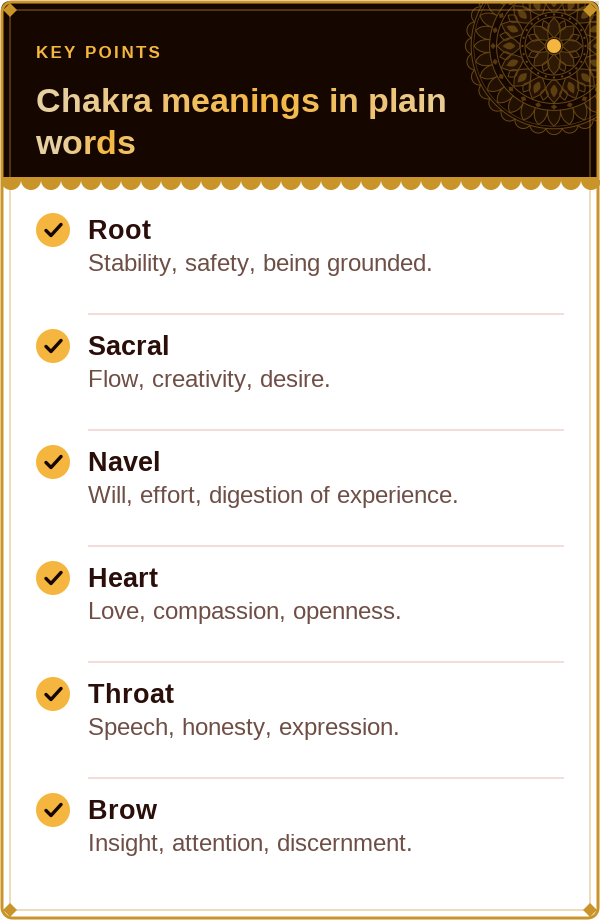
Each center carries traditional associations. These are spiritual themes, not psychological diagnoses:
- Root: stability, safety, being grounded.
- Sacral: flow, creativity, desire.
- Navel: will, effort, digestion of experience.
- Heart: love, compassion, openness.
- Throat: speech, honesty, expression.
- Brow: insight, attention, discernment.
- Crown: stillness and the sense of something larger than yourself.
A ten-minute chanting practice
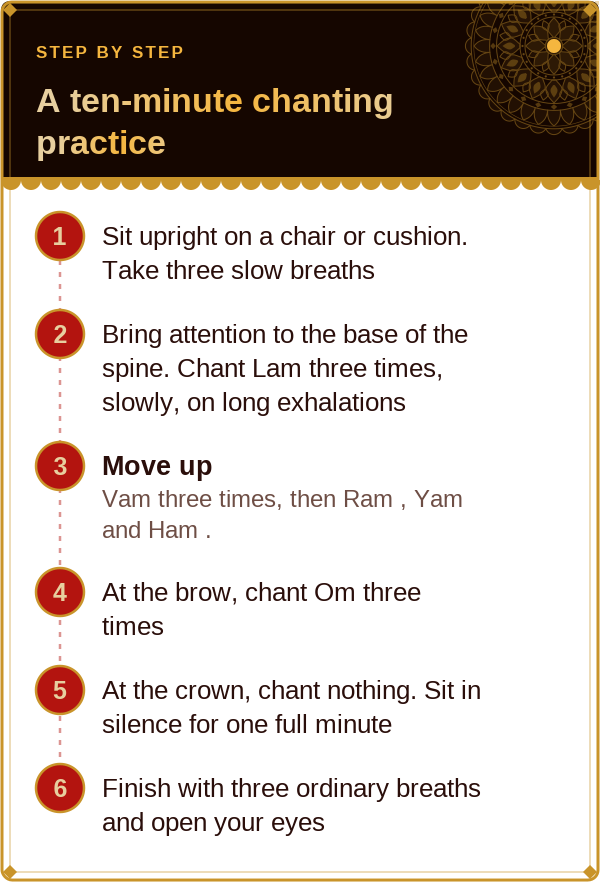
- Sit upright on a chair or cushion. Take three slow breaths.
- Bring attention to the base of the spine. Chant Lam three times, slowly, on long exhalations.
- Move up: Vam three times, then Ram, Yam and Ham.
- At the brow, chant Om three times.
- At the crown, chant nothing. Sit in silence for one full minute.
- Finish with three ordinary breaths and open your eyes.
As you get comfortable, increase to seven repetitions of each sound. Many people like to keep this practice at a fixed time each day. If you enjoy linking practice to the calendar, planet mantras matched to the weekdays offers a different rotation.
Why one syllable instead of a long mantra?
Long Sanskrit mantras take weeks to learn well, and worry about pronunciation can crowd out the calm they are meant to bring. A seed syllable is one breath long. You can learn all seven in an evening, chant them in a parked car before work or in a quiet bedroom before the house wakes, and still keep a sense of moving through an ordered practice. For many people in busy Fort Worth households, that simplicity is what makes a daily habit stick. Later, if you want more, a teacher can add a longer mantra to one center you feel drawn to.
Cautions
Long exhalations can make some people lightheaded; if that happens, shorten the hum and breathe normally between sounds. Chanting can stir strong feelings, which is usually harmless but sometimes surprising. Stop whenever you need to. If you have a voice condition, keep the sound soft or chant silently. Above all, chakra chanting is not treatment. It does not diagnose or heal any illness, and it is never a reason to delay seeing a doctor.
Going further
If you would like guidance, Astrologer and Psychic Vijayram offers chakra balancing with mantra by phone, WhatsApp or video, which uses these syllables alongside prayers chosen from your chart. Wondering whether you need to believe in any of this for it to help? Read whether belief in chakras matters. For a related practice centered on the sense of a personal field around you, see the aura cleansing ritual, and for a plain-language overview to share with family, explaining spiritual healing to a skeptic.
Common questions
What is the seed syllable for the third eye chakra?
Most modern teachers use Om for the ajna, the center between the eyebrows. Some older lineages give a different syllable, and both approaches are part of the tradition. Use the one your teacher or family follows.
Do I need to picture colors for each chakra?
No. The rainbow color scheme in many chakra charts is a fairly recent addition. You can chant the syllables with no imagery at all and simply feel where the sound seems to resonate.
Can chanting the seed sounds balance my chakras?
The tradition says chanting focuses attention on each center in turn, and many people find it calming. There is no scientific way to measure a chakra, so treat any talk of balance as spiritual language, not a health result.
Is it fine to chant these if I am not Hindu?
Yes. The seed syllables name no deity, which is one reason people from many backgrounds use them. Chant with respect for where they come from.
Related service
Keep reading

Ten Minutes of Mantra on a TEXRail Ride or a Loop 820 Commute
A daily mantra practice for Fort Worth commuters: a silent ten-minute routine for TEXRail riders and a spoken one for drivers, eyes always on the road.
Read article →
Gayatri at Sunrise: Timing the Mantra to Fort Worth's Changing Dawn
The Gayatri mantra meaning, line by line, and how the sunrise practice shifts through a Fort Worth year, from 6:20 a.m. dawns in June to late ones in January.
Read article →
Breath Before Belief: Alternate-Nostril Breathing Step by Step
Pranayama for calm, taught slowly: alternate-nostril breathing with counts, cautions for heart or breathing conditions, and a version for before a meeting.
Read article →Quick answers
Do I need to believe in chakras for a session to help?
You do not need to believe in chakras for a chakra balancing session to help you relax. What a Fort Worth session asks of a skeptic and what it never claims.
Read answer →Can I have spiritual healing while pregnant?
Yes, gentle spiritual healing while pregnant is possible: prayer and mantra only, nothing physical. Keep your obstetrician informed. A Fort Worth answer.
Read answer →Talk to Astrologer and Psychic Vijayram
Tell us what you are facing. If a reading is unlikely to help, you will be told that plainly.