
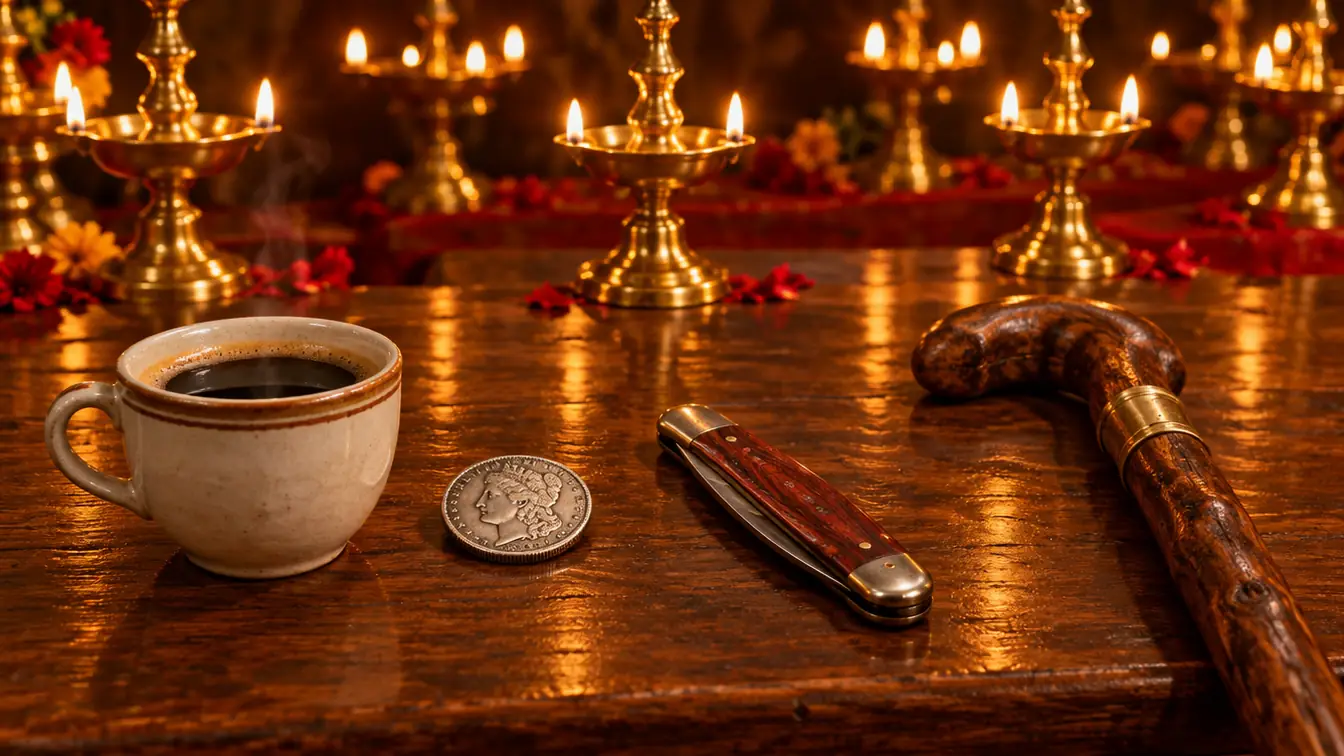
Learning the Tarot Suits Through Fort Worth Scenes
The minor arcana suits meaning in brief: Cups are feelings and relationships, Pentacles are money, work and the body, Swords are thoughts, words and conflict, and Wands are energy, drive and new ventures. Picture each as an everyday scene, a family dinner, a paycheck, a hard conversation and a new idea, and the 56 cards become far easier to remember.
Key takeaways
- Picture a kitchen in Ryan Place on a Sunday evening.
- Now picture a rail worker checking the deposit after a long run of shifts, a nurse paying off a car, or a shop owner on Magnolia Avenue counting the week's takings.
- Someone has driven across town to tell their parents they are not moving back home.
- Finally, picture a food truck plan sketched on a napkin at a taco place on the Northside, or a weekend booth at a craft market finally booked.
- The overview of the minor arcana notes that these suits descend from Italian playing-card suits of cups, coins, swords and batons, which is why the objects are so plain.
Fifty-six of the seventy-eight cards in a tarot deck belong to four suits. Beginners often memorize keyword lists for each one and forget them a week later. A better method is to tie each suit to an ordinary scene you already know. Here, then, is the minor arcana suits meaning told through four Fort Worth moments: a family dinner, a paycheck, a hard conversation and a new venture. Once you can picture the scene, the cards in that suit start to explain themselves.
Cups: a long Sunday dinner
Picture a kitchen in Ryan Place on a Sunday evening. Three generations at the table, too much food, someone telling the same story they tell every week, and a quiet moment when a teenager finally laughs at it. That is the suit of Cups: feelings, family, friendship, love, belonging and the things that fill or empty us.
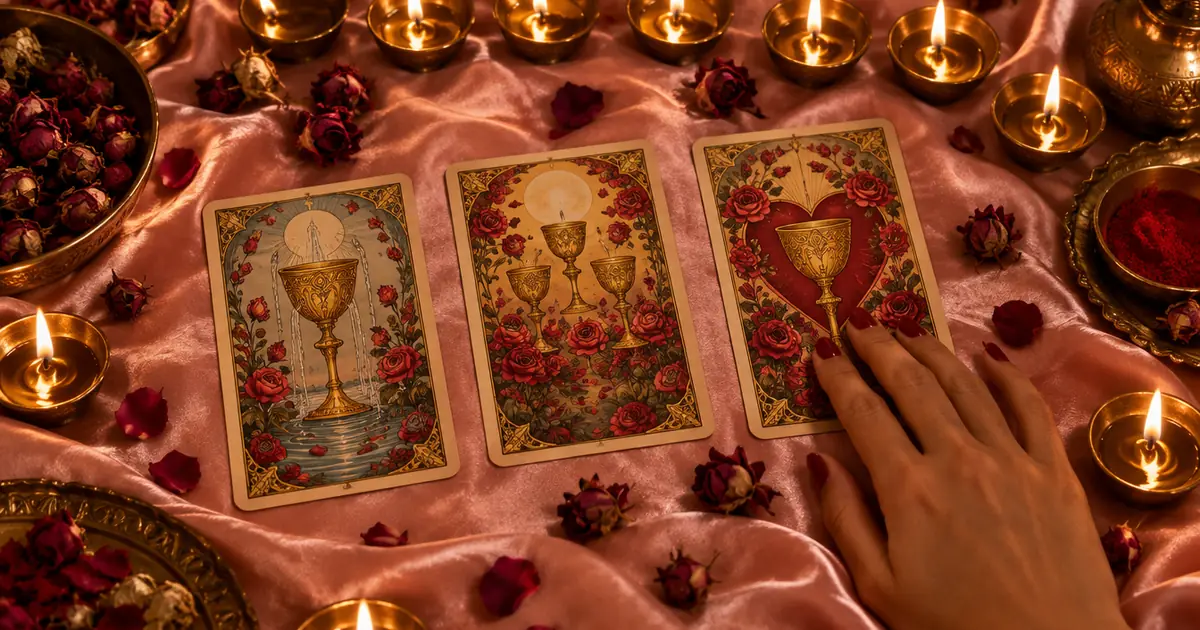
The cups in these cards are vessels, and the question they ask is what you are holding. The Ace of Cups in the Rider-Waite-Smith deck shows a single cup overflowing with streams of water, a dove descending toward it; the Victoria and Albert Museum's copy of the Ace of Cups shows the image clearly. It is the beginning of feeling. By the Ten of Cups, a family stands under a rainbow: the settled happiness that the whole suit reaches toward. In between come the frictions of real families: the Five of Cups mourning spilled cups, the Eight of Cups walking away from a table that no longer feeds you.
Pentacles: the paycheck lands
Now picture a rail worker checking the deposit after a long run of shifts, a nurse paying off a car, or a shop owner on Magnolia Avenue counting the week's takings. Pentacles are the suit of earth: money, work, health habits, home, the body and anything that grows slowly. These cards are patient. They care about effort repeated over time.
The Eight of Pentacles shows an apprentice carving coin after coin, the steady practice behind any skill. The Nine of Pentacles shows a figure alone in a garden, comfortable and self-sufficient. The Five of Pentacles shows two people in the snow outside a lit window: hardship, and the help that is often nearer than it seems. If money worries are what bring you to the cards, the post on the Pentacles suit and money worries goes deeper.
Swords: the conversation in the parked car
Someone has driven across town to tell their parents they are not moving back home. The car is parked in the driveway, the engine off, and they are rehearsing the sentence for the fifth time. That is Swords: the suit of air, thought, words, decisions, truth and conflict. A sword cuts. It can cut through confusion or cut someone down.
Swords include some of the hardest images in the deck: the Three of Swords pierced heart, the Nine of Swords sleepless figure, the Ten of Swords face down on the ground. They also include the Ace of Swords, a single clear idea, and the Six of Swords, a boat moving toward calmer water. When Swords crowd a spread, the question is usually being fought in the head, and the reading often comes down to what needs to be said, and how kindly.
Wands: the idea on the napkin
Finally, picture a food truck plan sketched on a napkin at a taco place on the Northside, or a weekend booth at a craft market finally booked. Wands are the suit of fire: energy, ambition, creativity, desire and the courage to start. Wands are living branches, often shown sprouting leaves, and they ask what you want enough to work for.
The Ace of Wands offers the spark. The Three of Wands shows a figure looking out over the water at ships setting off, plans in motion. The Ten of Wands, a figure bent under a bundle of staves, is the warning of the suit: enthusiasm that has turned into carrying everything alone.
The suits side by side
| Suit | Element | Scene | The suit asks |
|---|---|---|---|
| Cups | Water | A family dinner | What are you feeling, and who with? |
| Pentacles | Earth | A paycheck | What are you building, slowly? |
| Swords | Air | A hard conversation | What do you think, and what needs saying? |
| Wands | Fire | A new venture | What do you want, and will you act? |
The overview of the minor arcana notes that these suits descend from Italian playing-card suits of cups, coins, swords and batons, which is why the objects are so plain. The element links came later and are not used by every reader, but they are a helpful memory aid.
Numbers run across the suits
Once the scenes are fixed, the numbers fill in the rest. Aces are seeds. Twos are choices or partnerships. Threes show first results. Fives bring friction. Tens show a cycle completed, for better or worse. The Five of Cups and the Five of Pentacles are both about loss, one emotional and one material; the Tens describe a full table, a full purse, a final blow and a full load. Learning one row of numbers teaches you a quarter of each suit at once.
Each suit also has four court cards, the Page, Knight, Queen and King. They can stand for people or for parts of you, and some readers link them to the elements in a birth chart, as the post on court cards and the elements in your chart explains.
The suits in a love reading
A love tarot reading rarely stays in Cups. Pentacles appear when a couple is talking about a lease or a house in a new subdivision. Swords appear around arguments, honesty and the words that need to be said. Wands appear in the early spark and in the question of whether both people still want to build something. Reading which suit dominates often tells Astrologer and Psychic Vijayram more than any single card. If you are buying a deck to practice with, start with the guide to choosing your first tarot deck.
What a suit cannot tell you
A spread full of Cups does not mean a romance is coming, and a run of Pentacles does not promise a raise. The suits describe which part of life a question is really about. They are a way of sorting what you already feel and face, not a forecast of what others will do.
Common questions
How many cards are in each tarot suit?
Fourteen. Each suit runs from Ace to Ten and adds four court cards: Page, Knight, Queen and King. Four suits of fourteen make the 56 minor arcana.
Which suit is about love?
Cups is the main suit of feeling and relationships, but love questions draw on all four. Pentacles may describe shared money or a home, Swords the conversations, and Wands the spark of attraction.
Are Swords cards always negative?
No. Swords describe thought and speech, which can cut both ways. The Ace of Swords is a clear idea; the Six of Swords is a move toward calmer water. Several Swords cards are hard, but the suit itself is about clarity.
Do the suits match playing cards?
Roughly. Cups are often matched with hearts, Pentacles with diamonds, Swords with spades and Wands with clubs, though decks and traditions vary.
Related service
Keep reading
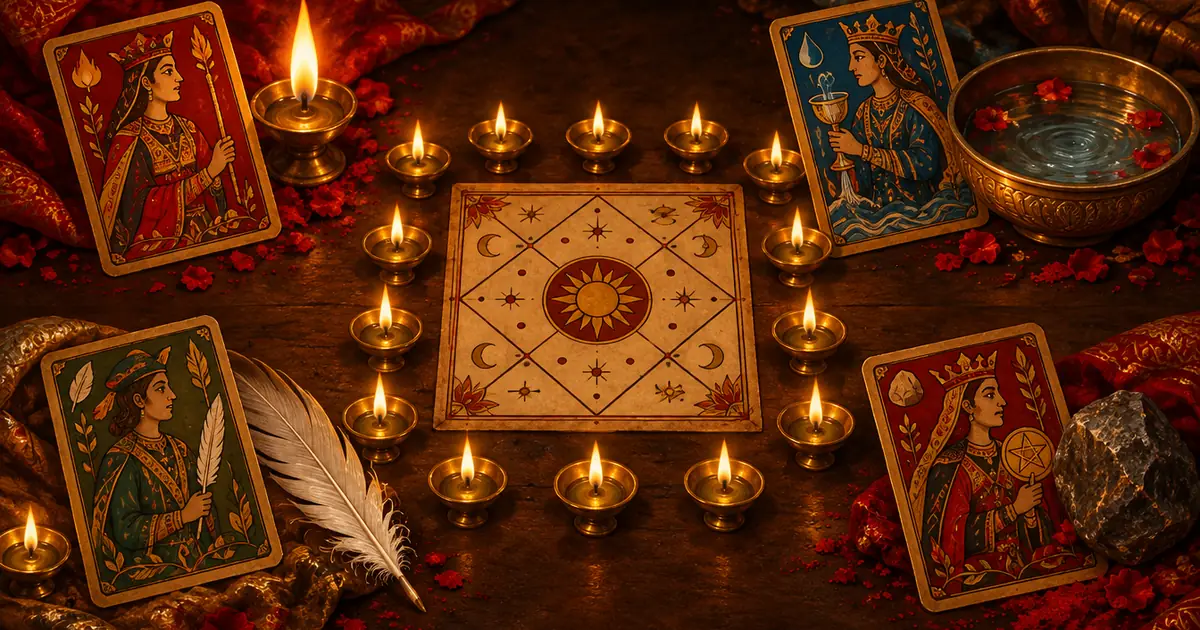
Linking Tarot Court Cards to Elements in Your Birth Chart
Tarot court cards meaning, linked to the fire, earth, air and water signs of a Vedic chart: how readers draw the link, where it helps and where it is forced.
Read article →
Pairing a Tarot Spread With Your Current Dasha
A tarot and astrology reading, step by step: read your running dasha and antardasha first, then lay a five-card spread on how to work with that period.
Read article →
Seasonal Tarot Check-Ins: Four Readings Around the Texas Year
How often to get a tarot reading? A quarterly rhythm tied to the Fort Worth year, from Stock Show winter to fall festivals, works better than repeat pulls.
Read article →Quick answers
How many cards are used in a tarot reading?
How many cards are used in a tarot reading? Usually one to ten from a 78-card deck, depending on the spread. A Fort Worth reader explains the common layouts.
Read answer →Is a tarot spread useful when comparing two job offers?
A tarot spread can help when comparing two job offers by clarifying what you value. It never replaces checking pay, benefits and terms. A Fort Worth guide.
Read answer →Talk to Astrologer and Psychic Vijayram
Tell us what you are facing. If a reading is unlikely to help, you will be told that plainly.