
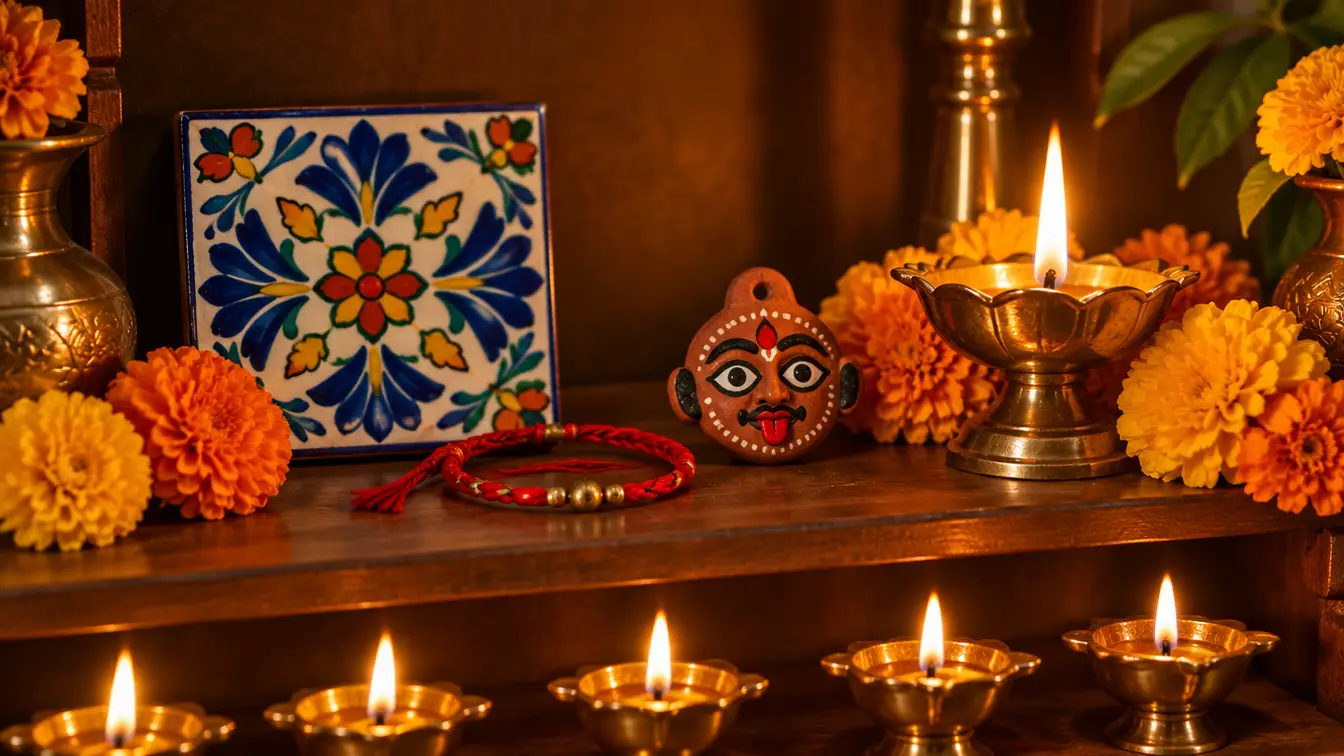
Evil Eye Traditions in Fort Worth's South Asian and Hispanic Homes
Evil eye removal traditions in Fort Worth come mainly from two families of belief: South Asian nazar, answered by circling salt or dried chillies around a person and burning them, and Hispanic mal de ojo, answered by an egg limpia and prayer. Both treat envy, even unintended, as something that can unsettle good fortune.
Key takeaways
- The overview of the evil eye traces it across those regions.
- In Hindi and Urdu, "nazar lag gayi" means the evil eye has struck.
- The post on protecting children from nazar goes into the baby customs in more depth.
- The full Vedic rite as it is guided here is described on the evil eye removal page.
- Mixed families are common in this city, and many households quietly keep both customs.
In plenty of Fort Worth kitchens, two very similar conversations happen in two different languages. In a home in west Fort Worth or out in the mid-cities, a grandmother says the baby has caught nazar after a crowded family party. On the Northside, a long-established and largely Hispanic neighborhood, another grandmother says the same baby has mal de ojo and reaches for an egg. Evil eye removal traditions sit side by side in this city, and they have more in common than either family might guess.
Two names for one old worry
The belief that an envious or admiring look can cause harm is among the oldest and most widespread folk beliefs in the world, found from the Mediterranean and the Middle East to South Asia and Latin America. The overview of the evil eye traces it across those regions. Researchers studying it in Latin America found the belief both varies from place to place and persists strongly; their paper on variation and persistence in Latin American beliefs about evil eye documents how families describe causes, symptoms and remedies.
How each tradition understands envy
Nazar in South Asian homes
In Hindi and Urdu, "nazar lag gayi" means the evil eye has struck. The cause is usually praise: someone admires a baby's chubby cheeks, a new car, a promotion or a beautiful bride, and the attention, even if loving, is believed to unsettle that good fortune. It is not always blamed on bad intent. Many grandmothers say a mother's own admiring look can give her baby nazar.
Mal de ojo in Hispanic homes
In many Mexican and Latin American families, mal de ojo comes from a strong gaze, often from someone who admires a child without touching them. Babies and young children are seen as the most vulnerable. The traditional answer is a limpia, a cleansing, often done by a grandmother or a curandera, with prayers drawn from folk Catholic tradition.
Prevention, side by side
| South Asian nazar customs | Hispanic mal de ojo customs |
|---|---|
| A small kajal dot on a baby's cheek or behind the ear | Touching the child while praising them |
| A black thread on the wrist, ankle or waist | A red bracelet or an ojo de venado seed charm |
| Lemon and chillies hung at a shop or door | A blessing such as "Dios te bendiga" with the praise |
| Saying a short blessing after praising someone | Keeping a new baby away from crowds for a while |
Both lists share a logic: soften praise with a blessing or touch, and give the eye something else to land on. The post on protecting children from nazar goes into the baby customs in more depth.
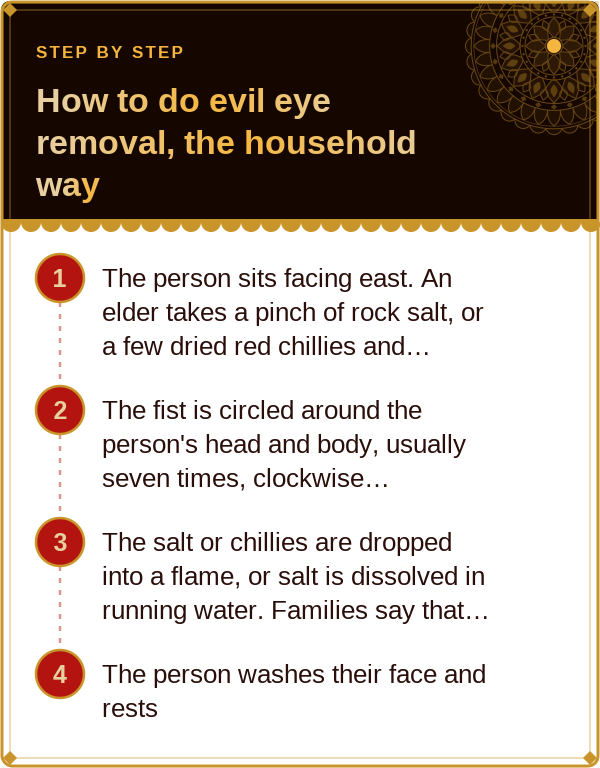
How to do evil eye removal, the household way
Nazar utarna
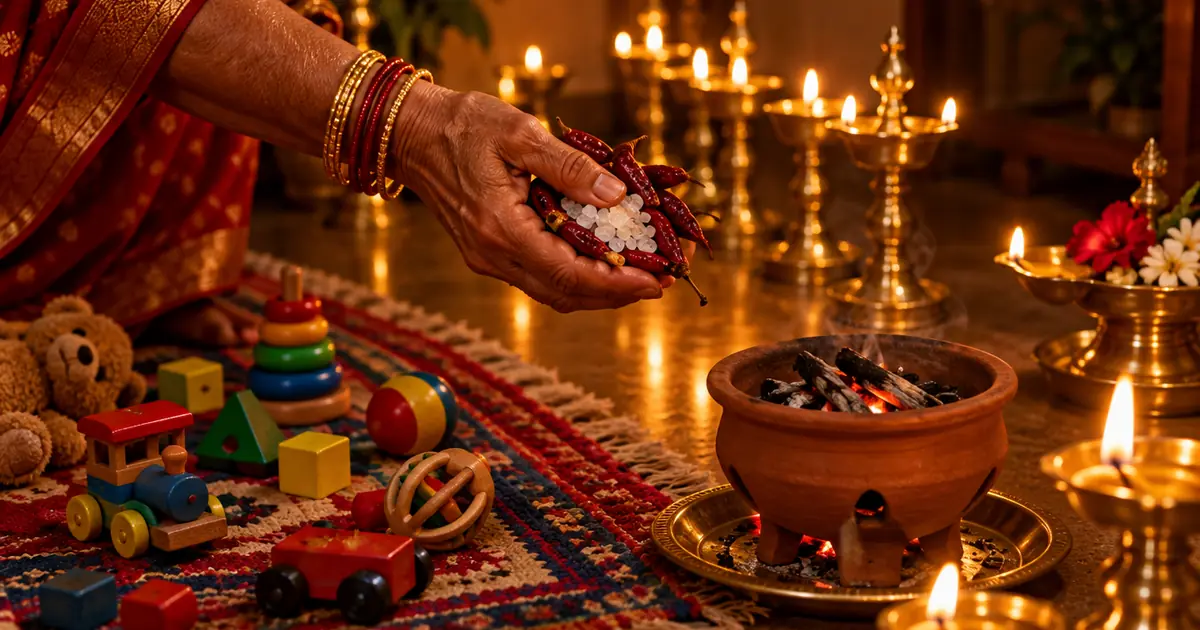
- The person sits facing east. An elder takes a pinch of rock salt, or a few dried red chillies and mustard seeds, in a closed fist.
- The fist is circled around the person's head and body, usually seven times, clockwise, sometimes with a short prayer.
- The salt or chillies are dropped into a flame, or salt is dissolved in running water. Families say that if the chillies burn without a harsh smell, nazar was present.
- The person washes their face and rests.
Limpia con huevo
- A raw egg, sometimes with herbs such as rue or basil, is passed over the body from head to feet while prayers are said.
- The egg is cracked into a glass of water, and the shapes are read as signs of what the limpia drew out.
- The egg is disposed of away from the home, and the person rests.
The full Vedic rite as it is guided here is described on the evil eye removal page. Comparisons of the cleansing side of both traditions are in how a limpia and a Vedic cleansing differ.
Where the traditions meet in Fort Worth
Mixed families are common in this city, and many households quietly keep both customs. A few guidelines help. Ask each set of grandparents how their custom is done, rather than improvising. Do not perform the other family's ritual without their blessing. And agree as parents on what feels right for your children. The short answer on whether nazar is the same as mal de ojo sums up the overlap, and the post on shared beliefs in Fort Worth families looks at how couples talk about it. For the neighborhood itself, see the Northside Fort Worth page.
Ordinary explanations come first
A baby who cries all evening after a party is often overtired and overstimulated. An adult who feels drained after good news may be stressed or short of sleep. If a child has a fever, will not feed, or seems unwell, call the pediatrician before anything else. The post on nazar worries and everyday causes walks through the common ones.
What these customs cannot do
Neither nazar utarna nor a limpia can treat illness or guarantee protection. They are faith-based customs of comfort and care that many families value. Astrologer and Psychic Vijayram guides the Vedic rite by phone, WhatsApp or video, in Central Time, and never blames anyone for causing the eye.
Common questions
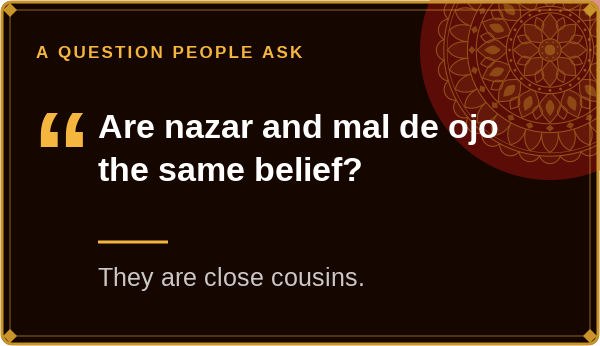
Are nazar and mal de ojo the same belief?
They are close cousins. Both describe harm from an envious or admiring gaze, and both focus on protecting children. The remedies, prayers and words differ, and each tradition has its own history and religious setting.
Why do some people touch a baby after praising it?
In many Mexican and Latin American families, touching a child while admiring it is believed to prevent mal de ojo. The touch shows the praise is warm rather than envious. Many South Asian families add a small blessing instead.
Can a South Asian and a Hispanic family share these customs?
Yes, with respect. In mixed households, families often keep both. The key is to ask elders how each custom is done, not to mix rituals casually, and to agree on what is right for the children.
Do I need to see someone for evil eye removal?
Most families do a simple version at home. If you want guidance, a session by phone or video can talk you through it. If the person is unwell, see a doctor first.
Related service
Keep reading

Before the Builder's Walkthrough: Blessing a New-Construction Home
A house blessing for a new home in Fort Worth's new subdivisions: timing it around the walkthrough, closing and first night, and what suits an empty house.
Read article →
Cleansing an Older Fairmount or Ryan Place Bungalow
House cleansing for an old home in Fairmount or Ryan Place: practical checks for century-old bungalows first, then a light traditional cleansing, no ghosts.
Read article →
Vahana Puja for a Pickup Truck: The Car Blessing, Texas Style
Vahana puja in Fort Worth for a new car, pickup or work truck: what vahan puja is, when families do it, the steps, and how to keep it safe in a driveway or lot.
Read article →Quick answers
Is nazar the same thing as mal de ojo?
Nazar and mal de ojo are close cousins: both name the evil eye of envy or admiration. How the South Asian and Latin American beliefs differ in Fort Worth.
Read answer →How do I know if I need a spiritual cleansing?
How do you know if you need a spiritual cleansing? Rule out health, sleep and stress first; then a cleansing can be a calm faith practice. A Fort Worth guide.
Read answer →Talk to Astrologer and Psychic Vijayram
Tell us what you are facing. If a reading is unlikely to help, you will be told that plainly.