
Abuela and Nani: Evil Eye Customs Fort Worth Families Share
Mal de ojo and nazar are the Hispanic and South Asian names for the same old belief: that an admiring or envious look can bring harm, especially to babies. Families answer it differently, with an egg limpia and a red string, or a black thread and a dark dot, but the shared idea is care for the vulnerable.
Key takeaways
- Belief in the evil eye is found around the Mediterranean, across the Middle East, South Asia and Latin America.
- Fort Worth's Northside is a long-established, largely Hispanic neighborhood, and many families there, and across the city, keep customs passed down from Mexico and Central America.
- South Asian families in Fort Worth, Euless, Keller, Southlake and beyond bring customs from India, Pakistan, Nepal and Bangladesh.
- The site's short answer on whether nazar is the same thing as mal de ojo sums up the overlap, and the post comparing limpia and Vedic cleansing looks at the rituals in more depth.
- Strip away the details and both traditions say something wise.
On Fort Worth's Northside, a grandmother might call it mal de ojo. In a South Asian home in the mid-cities, a nani might call it nazar. Ask either one what it means and you will hear almost the same story: someone looks at the baby with too much admiration, or a hint of envy, and soon the baby is crying, restless and off its food. Ask what to do about it and the answers diverge in lovely ways. This post sets the two side by side, with respect for both.
One idea, many names
Belief in the evil eye is found around the Mediterranean, across the Middle East, South Asia and Latin America. Researchers who compared beliefs about mal de ojo among Mexican Americans in south Texas, Puerto Ricans in Connecticut and communities in Mexico and Guatemala found that each group had its own version, yet the versions were strikingly similar. In Spanish it is mal de ojo or simply ojo. In Hindi and Urdu it is nazar or buri nazar; in parts of South India, drishti. The names differ, but the core idea is shared: attention, even loving attention, carries a kind of force, and the most vulnerable people, especially babies, need gentle protection from it.
Customs from Northside Hispanic homes
Fort Worth's Northside is a long-established, largely Hispanic neighborhood, and many families there, and across the city, keep customs passed down from Mexico and Central America.
- The egg limpia. A whole raw egg is passed over the baby's body, often while a prayer such as the Our Father or the Apostles' Creed is said. The egg is then cracked into a glass of water and looked at, and sometimes the glass is left under the bed overnight. Public radio's piece on the limpia as a Mexican folk remedy describes how these cleansings are still practiced today.
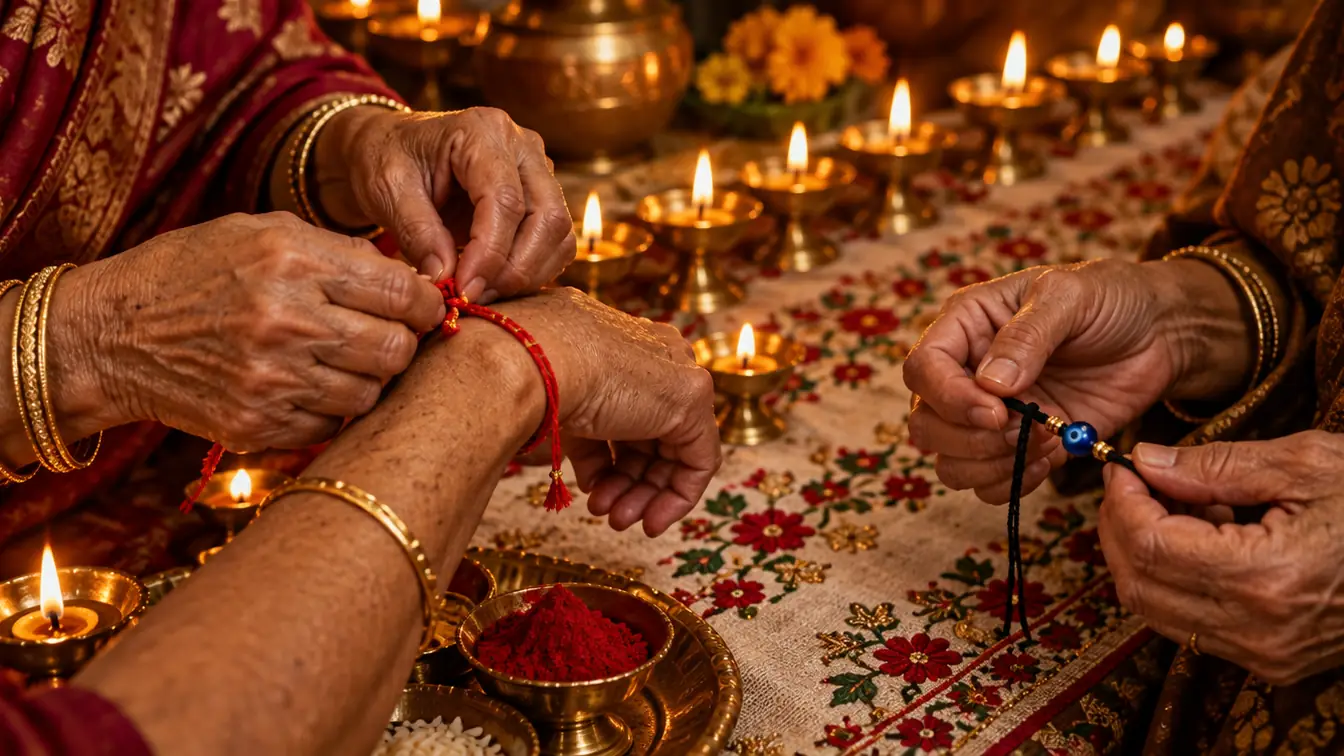
- The red string. A red bracelet, sometimes with a small charm such as an ojo de venado seed or a bead of jet, is tied on a baby's wrist.
- Touch when you admire. Many families expect a visitor who praises a baby to touch the child as well, which is believed to keep the admiration from doing harm.
Customs from South Asian homes
South Asian families in Fort Worth, Euless, Keller, Southlake and beyond bring customs from India, Pakistan, Nepal and Bangladesh.
- The kala tika. A small black dot, traditionally of kajal, is placed behind a baby's ear, on the cheek, forehead or sole of the foot. The small "flaw" is meant to deflect envious attention.
- The black thread. A black thread is tied around the wrist, ankle or waist of a baby, and sometimes of adults during an important time.
- Nazar utarna. Salt, dried red chillies or mustard seeds are circled around the person a few times and then discarded or burned, carrying the nazar away with them.
- Lemon and chillies. A lemon and green chillies strung together hang at a doorway, a shop or in a vehicle.
Side by side
| Theme | Mal de ojo | Nazar |
|---|---|---|
| Who is protected | Babies and small children most of all | Babies, brides, new homes, new ventures |
| Protective color | Red string | Black thread, black dot |
| Absorbing object | An egg passed over the body | Salt, chillies or seeds circled and discarded |
| Social custom | Touch the baby when you admire | Praise with a blessing, or not too much |
| Prayer | Christian prayers, often by a grandmother or curandera | Hindu, Muslim or Sikh prayers depending on the family |
The site's short answer on whether nazar is the same thing as mal de ojo sums up the overlap, and the post comparing limpia and Vedic cleansing looks at the rituals in more depth.
The shared idea behind both
Strip away the details and both traditions say something wise. Praise can be heavy. New life is fragile. The people who love a baby want to wrap it in care, and a thread, a dot or a prayer is a visible way to do that. Neither tradition, at its best, is about blaming anyone. The visitor who forgets to touch the baby is not accused of anything; the custom simply asks everyone to admire gently.
Health and safety come first
The signs traditionally linked with mal de ojo or nazar, such as crying, fever, poor sleep and fussiness, are also signs of ordinary illness in babies. Call your pediatrician first, and seek urgent care for a high fever, trouble breathing, dehydration or a baby who will not feed. A blessing can follow if it brings comfort. The post on signs people link to the evil eye and their ordinary explanations goes through this carefully.
One safety note for kajal: the FDA warns that kohl, kajal and surma can contain lead and are not approved as cosmetics in the United States. Many families now skip it on babies or use a lead-free product, kept well away from the eyes.
Names, too, are handled with care
Care around a newborn often extends to the name. Many Hindu families wait for the naming ceremony before sharing a baby's name widely, and some also look at the numbers in a name before choosing. A name numerology check with Astrologer and Psychic Vijayram can be part of that, as a family tradition, not a guarantee of anything. The post on protecting children from nazar covers other customs families keep in the first months.
When families want a blessing
Some families ask for a simple protective prayer after a stressful time. Astrologer and Psychic Vijayram removes nazar with the traditional rite and prayer, explained in advance, through evil eye removal sessions held by phone, WhatsApp or video. Nothing is said to frighten anyone, and no result is promised.
What these customs cannot do
A red string, a black thread or a prayer cannot treat an illness or replace a doctor. They express love and heritage and can bring comfort. When a child is unwell, medical care comes first.
Common questions
Is mal de ojo the same thing as nazar?
They are very close. Both describe harm believed to come from an admiring or envious look, and both focus on babies and young children. The remedies and words differ, and each tradition has its own prayers and history.
My baby is fussy and has a fever. Could it be mal de ojo?
Call your pediatrician first. Fever, crying that will not settle, vomiting or not feeding can be signs of illness that need medical care quickly. A family blessing can be added afterwards if it comforts you, but never in place of a doctor.
Is it safe to put kajal on a baby?
The FDA warns that traditional kohl, kajal and surma can contain lead, which is harmful to children. Many families now skip it, or make a small symbolic dot with a lead-free product away from the eyes.
Do I have to believe in the evil eye to keep these customs?
No. Many families keep a red string or a black thread as a sign of love and heritage, the way others keep a family recipe. Belief and custom can sit side by side.
Related service
Keep reading

After a Stockyards Ghost Tour: Questions Visitors Ask a Medium
After hearing Fort Worth Stockyards ghost stories, visitors ask a medium the same questions. Honest answers, and what a mediumship sitting is and is not.
Read article →
Your First Reading With Astrologer and Psychic Vijayram: From Booking to Follow-Up
What to expect in a psychic reading here, step by step: booking, the birth details asked for, consent and notes during the session, and follow-up afterwards.
Read article →
Good Psychic Questions for Every Life Stage, Freshman to Retiree
Questions to ask a psychic at every life stage, from college freshman to retiree, written so the answers help you act, plus the questions best left out.
Read article →Quick answers
Is the price agreed before a reading begins?
Yes. For a psychic reading in Fort Worth, the fee and session length are agreed in writing before the reading begins, with nothing added during the call.
Read answer →Can I bring a friend to my first psychic reading?
Yes, a friend can join your first psychic reading in Fort Worth, sitting beside you at home or on the video call, with your consent and a few privacy points.
Read answer →Talk to Astrologer and Psychic Vijayram
Tell us what you are facing. If a reading is unlikely to help, you will be told that plainly.