

Bringing a Family Member to a Medium Sitting in Fort Worth
A family medium reading is a sitting shared by relatives remembering the same person, such as siblings after a parent's death. It works best when everyone has agreed to join, expectations are talked through first, and there is time afterwards to be together. It offers comfort and remembrance, not proof, and it never replaces grief support.
Key takeaways
- After a death, siblings often find they are grieving the same person in very different ways.
- Every person in the sitting should have chosen to be there.
- One sibling may want a specific word or nickname as a sign.
- Gathering in one place lets people hold hands and make tea afterwards.
- Older teenagers may join only if they truly want to, with a parent's agreement and a parent present.
Grief first. If you or anyone in your family is struggling to cope, reach out for support before booking any sitting. Contact the Suicide and Crisis Lifeline at any hour if someone is in crisis. Hospice programs offer bereavement support to families after a death, and the Hospice Foundation of America explains what grief can look like. The MedlinePlus bereavement guide lists other places to turn. A medium sitting can be part of remembering someone. It is not a substitute for that care.
Why families ask for a shared sitting
After a death, siblings often find they are grieving the same person in very different ways. One wants to talk about Mom every day; another cannot. A parent who lost a child may want a sitting with their surviving children. Sometimes a family that is spread across Fort Worth, Arlington and three other states simply wants a moment to remember together. A family medium reading can offer that moment, if it is set up with care.
Mediumship is the practice of seeking messages from people who have died. It is a matter of faith, not proof. Families do not need to share the same beliefs to sit together, but they do need to agree that they want to.
Consent comes before anything
Every person in the sitting should have chosen to be there. That sounds obvious, but in families it is easy for one person to book and others to feel they cannot say no. Before booking:
- ask each person individually, not in the group chat, whether they want to join;
- make it easy to decline: "It's fine if you'd rather not";
- agree that anyone can step away during the sitting without explaining;
- agree on what will and will not be shared with relatives who are not there.
The site's short answer on stopping a medium sitting if it becomes too much applies to every person in a group, not only the one who booked.
Managing different hopes in one room
Different people bring different hopes. One sibling may want a specific word or nickname as a sign. Another may hope for forgiveness for something unsaid. A third may be there mainly to support the others. Talk about this beforehand, briefly and kindly. It helps to agree that:
- no one person's hopes are the measure of whether the sitting "worked";
- impressions are offered gently and may or may not fit;
- if something fits one person but not another, nobody needs to argue about it;
- the sitting is about remembering, not about testing the medium.
Families sometimes bring a photo or a keepsake. The short answer on bringing a photo or keepsake to a sitting explains how that is used.
A sitting by video, from one home or several
This practice holds sittings by phone, WhatsApp or video, so a family can gather around one laptop in a living room, or join from separate homes on one video call. Both work. Gathering in one place lets people hold hands and make tea afterwards. Joining separately lets a brother in Keller and a sister overseas take part together. The post on three generations on one video call has practical tips for family calls.
What about children?
This practice does not include young children in medium sittings. Children grieve too, but a sitting can be confusing or frightening for them, and they deserve support designed for their age, such as a school counselor or a children's grief program. Older teenagers may join only if they truly want to, with a parent's agreement and a parent present. If a teenager is struggling, start with their doctor or a counselor.
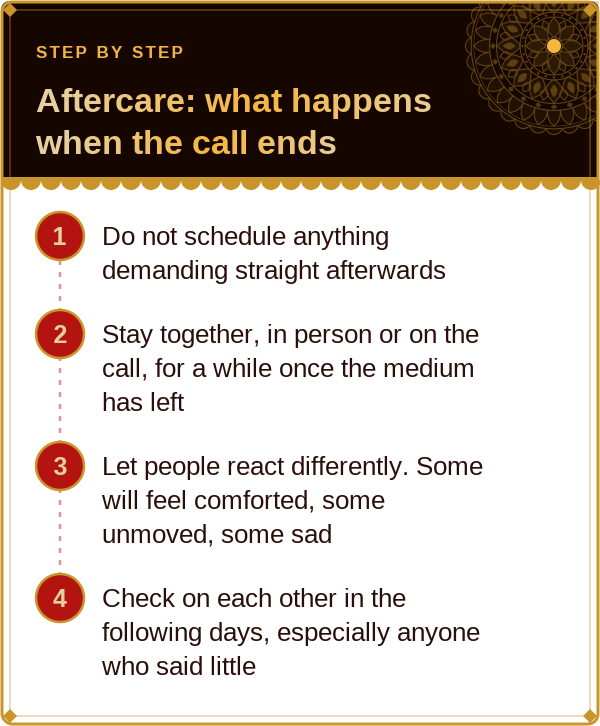
Aftercare: what happens when the call ends
The time after a family sitting matters as much as the sitting itself. Plan for it:
- Do not schedule anything demanding straight afterwards.
- Stay together, in person or on the call, for a while once the medium has left.
- Let people react differently. Some will feel comforted, some unmoved, some sad.
- Check on each other in the following days, especially anyone who said little.
If grief feels heavier rather than lighter in the weeks after, that is a signal to reach out for support. The post on grief support in Tarrant County with room for faith lists local and national options, and spiritual support in grief with Astrologer and Psychic Vijayram offers prayer and conversation without mediumship for families who prefer that.
Preparing the sitting itself
The post on how to prepare for a medium sitting covers the basics for any sitting. For a family, add one step: decide in advance who will speak first and agree that everyone gets a turn. A psychic medium sitting can be booked for a small group, with the length and fee agreed in writing first.
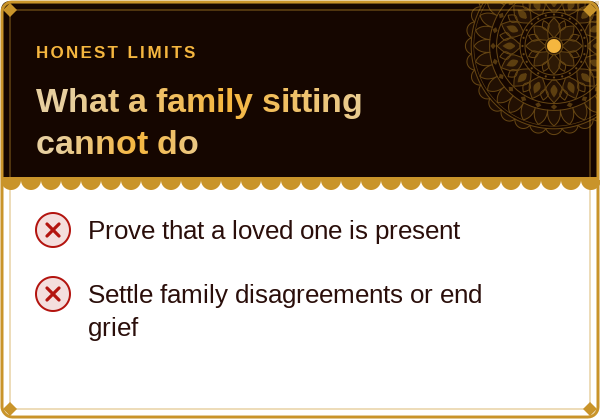
What a family sitting cannot do
A medium sitting cannot prove that a loved one is present, settle family disagreements, or end grief. It offers a shared space to remember someone together, held with care. The grief itself is carried by the family over time, with the support of friends, faith communities and professionals.
Common questions
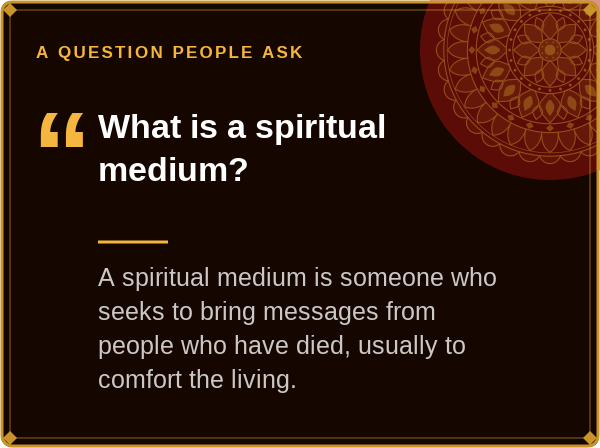
What is a spiritual medium?
A spiritual medium is someone who seeks to bring messages from people who have died, usually to comfort the living. Mediumship is a faith-based practice found in several traditions; it has not been shown to work under controlled conditions, and a careful medium is honest about that.
What do people mean by a love medium?
Usually a reader who takes questions about romantic relationships, sometimes including a partner who has died. This practice keeps love readings and medium sittings separate, and a sitting for a late spouse is treated as grief work, not a love reading.
Can a family sitting help settle a disagreement about the person who died?
It should not be used that way. A sitting is not a way to decide who was right about a will, a care decision or an old argument. Those conversations belong with a family counselor, a mediator or, where property is involved, an attorney.
How many relatives can join one sitting?
Two to four people is usually manageable. Larger groups tend to leave some people unheard. If more of the family wants to take part, two shorter sittings often work better than one crowded call.
Related service

Keep reading

After-Midnight Appointments for DFW Airport and Alliance Shift Crews
Psychic reading evening appointments in Fort Worth for DFW Airport and Alliance shift crews: how late-night or early phone sessions work around your sleep.
Read article →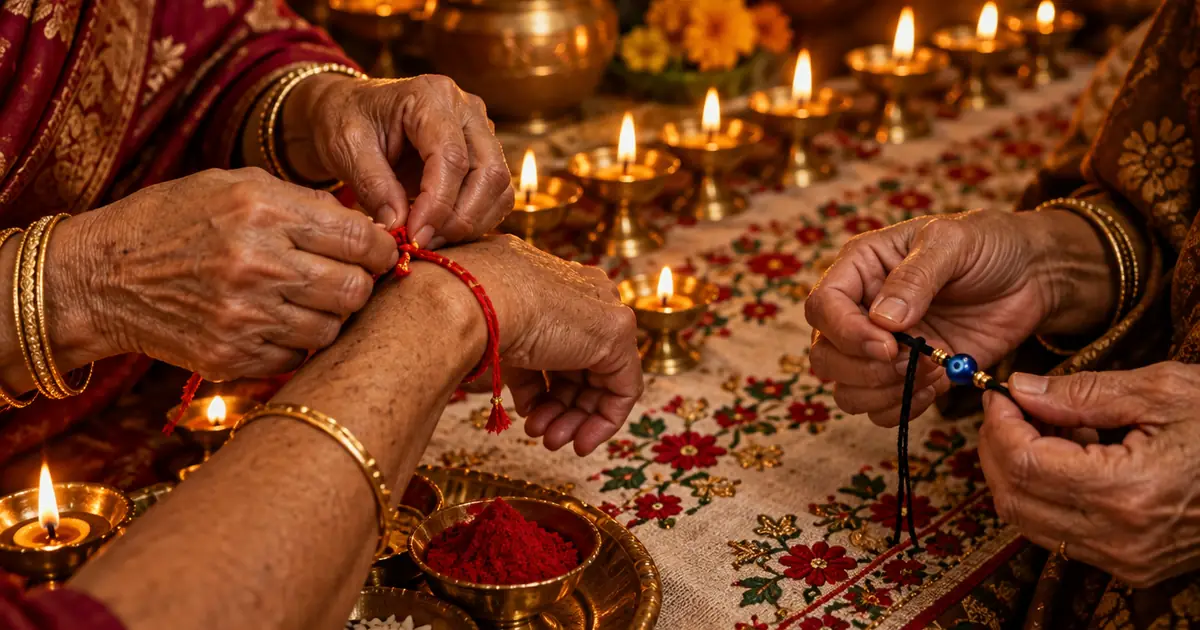
Abuela and Nani: Evil Eye Customs Fort Worth Families Share
Mal de ojo and nazar side by side: eggs and red string in Northside homes, black thread and kajal dots in South Asian ones, and the shared idea behind them.
Read article →
After a Stockyards Ghost Tour: Questions Visitors Ask a Medium
After hearing Fort Worth Stockyards ghost stories, visitors ask a medium the same questions. Honest answers, and what a mediumship sitting is and is not.
Read article →Quick answers
Can I stop a medium sitting if it becomes too much?
Yes, you can stop a medium sitting at any point. How a Fort Worth sitting is paused or ended gently, and where to turn for grief support if it feels heavy.
Read answer →Should I bring a photo or keepsake to a medium sitting?
A photo or keepsake is optional at a medium sitting in Fort Worth. What it can help with, what it is never used for, and how to hold one on a video call.
Read answer →Talk to Astrologer and Psychic Vijayram
Tell us what you are facing. If a reading is unlikely to help, you will be told that plainly.