
Porutham and Guna Milan: South and North Indian Matching Side by Side
Porutham vs guna milan comes down to method. South Indian porutham checks about ten pass-or-fail factors, with rajju weighted most. North Indian guna milan, or ashtakoota, adds points across eight factors out of 36, with nadi weighted most. Both start from the Moon's star, so they overlap, but their verdicts can differ.
Key takeaways
- Because both methods start from the same star, they share several tests.
- Most South Indian lists name ten tests, each marked as agreeing or not:
- Ashtakoota matching gives weighted points instead of a pass or fail.
- Three things explain most of the disagreement.
- For couples whose families also differ in faith or language, the post on a Fort Worth interfaith wedding weekend looks at how matching fits alongside other traditions.
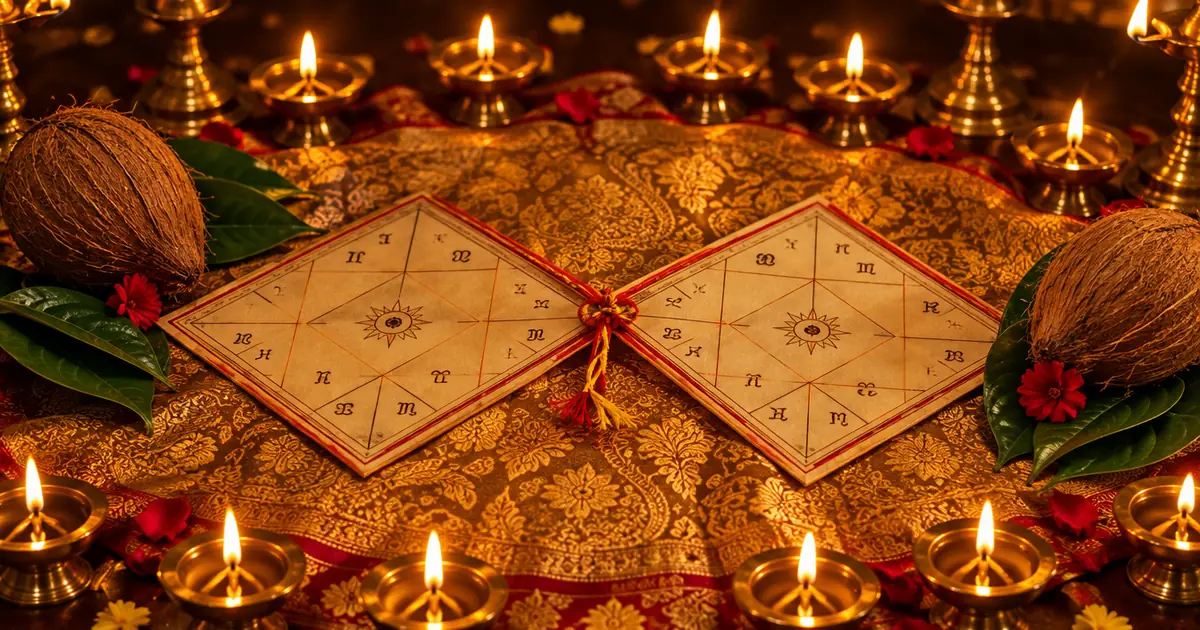
Picture two printouts on the same dining table in Tarrant County. One, from the groom's family in Chennai, says seven of ten poruthams agree and calls the match good. The other, from the bride's family in Delhi, gives sixteen gunas out of thirty-six and calls it weak. Same couple, same birth details. The question of porutham vs guna milan is really a question about why two respected methods can read the same pair so differently, and what to do when they do.
Where the two systems come from
Both belong to the wider practice of Vedic astrology, and both are built mainly on the Moon's position at birth: its sign (rashi) and its lunar mansion, the nakshatra. There are twenty-seven nakshatras, each a slice of the sky about thirteen and a third degrees wide, and the overview of the twenty-seven nakshatras explains how each one is named and ruled. Because both methods start from the same star, they share several tests. They part ways in which tests they keep, how they score them and which failure they treat as most serious.
Families from Tamil Nadu, Kerala, Andhra Pradesh, Telangana and Karnataka have usually grown up with porutham (also spelled poruthams or koota porutham in some regions). Families from the North and West usually know ashtakoota, the eight-koota system that produces the familiar score out of thirty-six. In the Metroplex, where engagements now often join a family from one region with a family from another, both printouts turning up at once is common.
The ten porutham checks
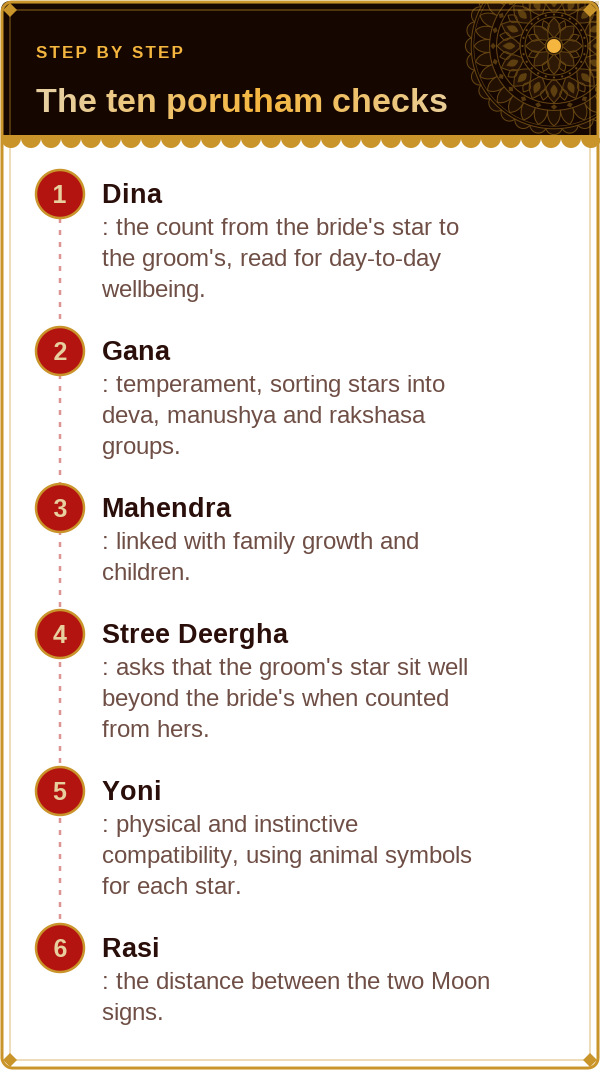
Most South Indian lists name ten tests, each marked as agreeing or not:
- Dina: the count from the bride's star to the groom's, read for day-to-day wellbeing.
- Gana: temperament, sorting stars into deva, manushya and rakshasa groups.
- Mahendra: linked with family growth and children.
- Stree Deergha: asks that the groom's star sit well beyond the bride's when counted from hers.
- Yoni: physical and instinctive compatibility, using animal symbols for each star.
- Rasi: the distance between the two Moon signs.
- Rasi Adhipati: whether the lords of the two Moon signs are friendly.
- Vasya: mutual attraction between certain signs.
- Rajju: the five rajju groups; the same group for both partners is treated as the gravest clash.
- Vedha: pairs of stars said to obstruct each other.
The result is a count, such as "seven out of ten", but families rarely treat the count as the whole story. A match with eight agreements and a rajju clash may be turned down, while one with six and a clean rajju may go ahead.
The eight kootas of ashtakoota matching
Ashtakoota matching gives weighted points instead of a pass or fail. The eight kootas and their maximum points are Varna (1), Vashya (2), Tara (3), Yoni (4), Graha Maitri (5), Gana (6), Bhakoot (7) and Nadi (8), for a total of thirty-six. Eighteen is the figure most families quote as a minimum. Nadi, worth the most points, is the factor North Indian families worry about first, and Bhakoot, the distance between Moon signs, comes next. The word bhakuta itself has a long history in Indian languages, as the Wisdom Library entry on bhakuta shows.
Side by side
| Question | Porutham (South) | Ashtakoota (North) |
|---|---|---|
| How results are given | A count of agreeing tests | Points out of 36 |
| Most feared clash | Rajju | Nadi |
| Shared ideas | Dina, Gana, Yoni, Rasi, Rasi Adhipati, Vasya | Tara, Gana, Yoni, Bhakoot, Graha Maitri, Vashya |
| Found only here | Mahendra, Stree Deergha, Rajju, Vedha | Varna, Nadi |
| Main input | Moon's nakshatra | Moon's nakshatra and sign |
Why the verdicts can clash
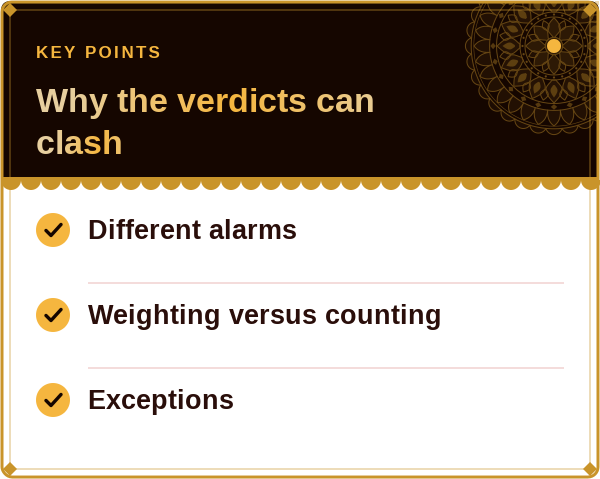
Three things explain most of the disagreement.
Different alarms. A couple can share the same nadi, which costs all eight Nadi points and drags the guna total down, while having different rajju groups, which South Indian matching treats as the key test passed. The reverse also happens: a strong guna score with a rajju clash underneath.
Weighting versus counting. Tara in ashtakoota is worth three points; its cousin Dina in porutham is one test in ten. A single disagreement shifts the two results by very different amounts.
Exceptions. Each tradition has its own cancellations, for example when the Moon-sign lords are friends or when both stars share a ruler. Two astrologers applying different exceptions to the same test will produce different answers, and neither is necessarily careless.
What to do with two different answers
- Decide the method first. If both families agree beforehand to read porutham and ashtakoota together and then look at the full charts, an awkward result is less likely to become a dispute.
- Look past the Moon. Both systems leave out the seventh house, the navamsa chart, the dasha periods each person is entering and Mars placement. A full kundli matching session that reads both charts weighs those alongside the koota results.
- Read the specific clash. If Bhakoot is the worry, our guide to the 6-8 and 2-12 Moon-sign pairings explains what the tradition says. If Nadi is the worry, the post on nadi dosha and family health worries sets tradition beside medicine.
- Keep the decision with the couple. Neither score is a veto. Families who want a plain answer to the hardest question can start with whether a couple can marry when kundlis do not match.
For couples whose families also differ in faith or language, the post on a Fort Worth interfaith wedding weekend looks at how matching fits alongside other traditions.
How Astrologer and Psychic Vijayram reads a mixed match
Sessions are by phone, WhatsApp or video, set in Central Time so relatives in India or elsewhere can join a call at a sensible hour. Both systems are worked out from the same birth details, shown side by side with the shared tests lined up, and then the full charts are read. Elders hear why a test failed and which exceptions the texts allow, in plain language rather than a bare number.
What matching cannot tell you
Neither porutham nor ashtakoota can say whether two people will be kind to each other, share chores fairly, handle money well or stay together. They describe traditional harmony between two Moon positions, nothing more. A low score does not doom a marriage, and a perfect one does not protect it.
Common questions
Which system should we use if one family is from the South and one from the North?
Agree on that before anyone runs a chart. Many mixed families ask for both, read side by side, and then look at the full birth charts. What matters is that both sides accept the method in advance, so a result is not rejected simply because it was unwelcome.
Is 7 out of 10 poruthams the same as 25 out of 36 gunas?
No. A porutham count tells you how many separate tests passed, and some tests weigh far more than others. A guna score adds weighted points. The two numbers are not on the same scale and should never be converted into one another.
What if rajju fails but everything else passes?
Many South Indian families treat a rajju clash as serious, while others accept classical exceptions or give the whole chart more weight. A careful reader explains which exceptions apply in your two charts and leaves the decision with the couple and their families.
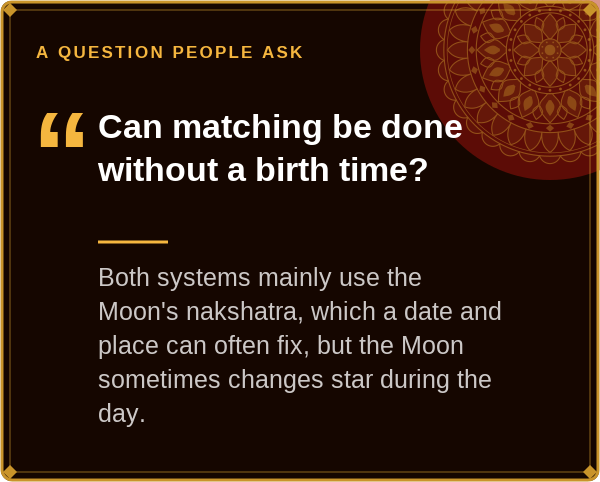
Can matching be done without a birth time?
Both systems mainly use the Moon's nakshatra, which a date and place can often fix, but the Moon sometimes changes star during the day. Without a time the result may carry a caveat, and the full-chart part of a match is much weaker.
Related service
Keep reading
Manglik Worries in Second-Generation Texas Families
Manglik dosha in the USA for Texas families: why parents worry, why their children doubt it, what the cancellations say, and keeping the choice with the couple.
Read article →
A Couples' Chart Review Before Diwali: Setting Intentions for the Year
A couples horoscope review at Diwali: read both charts for the year ahead, mark family dates and agree on one shared intention. A Fort Worth guide.
Read article →
Venue Contract or Muhurta First? Planning a Fort Worth Wedding
What is wedding muhurat, and should you get dates before signing a Fort Worth venue? Two planning routes, venue questions, and handling a date already fixed.
Read article →Quick answers
Do gunas matter if we are already engaged?
If you are already engaged, guna scores still offer useful talking points, used as guidance rather than a veto. How kundli matching helps Fort Worth couples.
Read answer →Can we marry if our kundlis do not match?
Yes, you can marry if your kundlis do not match. How kundli matching is done, whether it is necessary for a love marriage, and what Fort Worth couples weigh.
Read answer →Talk to Astrologer and Psychic Vijayram
Tell us what you are facing. If a reading is unlikely to help, you will be told that plainly.