
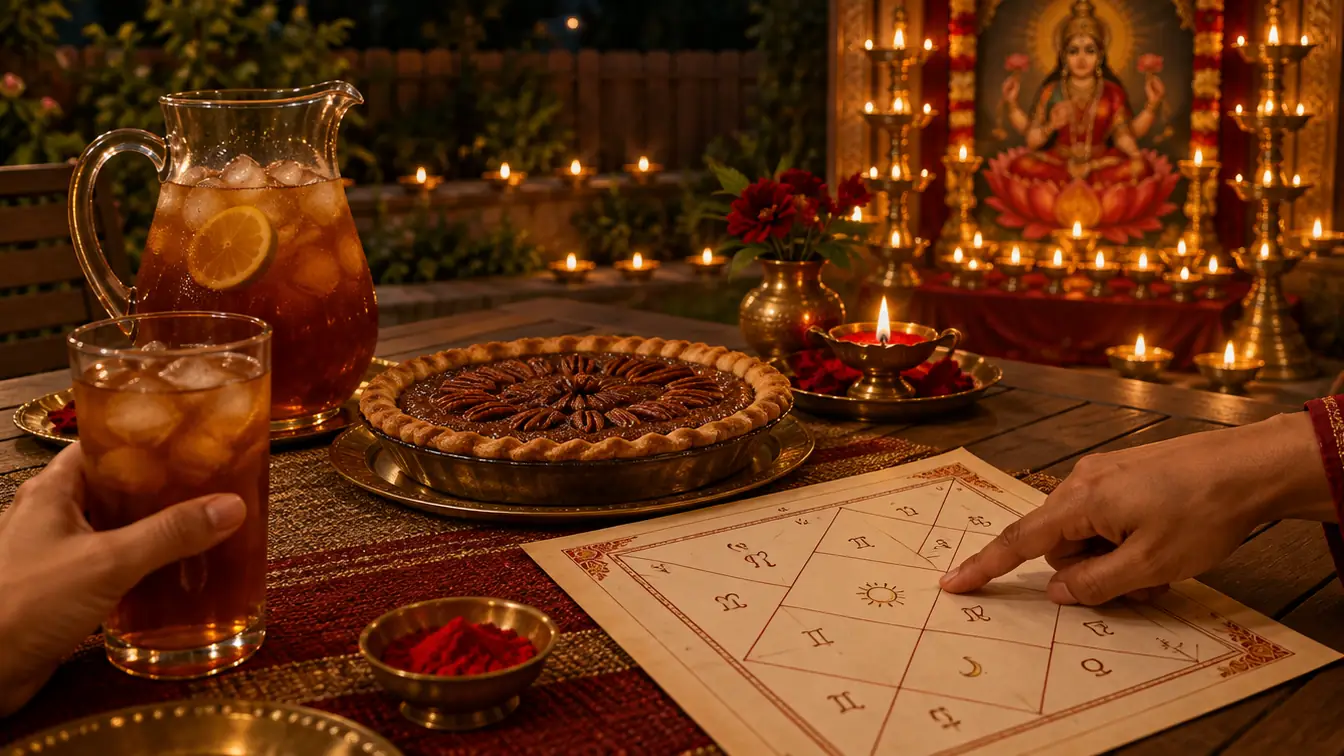
Explaining Kundli Matching to Your Texan In-Laws
Explaining kundli matching to non-Indian in-laws works best in plain terms: it is a traditional comparison of two birth charts, centered on the Moon at each birth, that many Hindu families use for reflection before a wedding. It is not a test of their child, not a religious requirement for them, and not a veto over the couple.
Key takeaways
- A kundli is simply a birth chart: a map of where the Sun, Moon and planets were at the moment and place of a person's birth, drawn according to the sidereal system of Hindu astrology .
- Kundli milan is the Hindi name for the same thing.
- Astrologer and Psychic Vijayram explains every result in plain English by phone or video, with both families welcome on the call.
You are marrying into a family from Weatherford, or Benbrook, or a ranch out past Aledo. Your future mother-in-law has been nothing but warm. Then, over Sunday lunch, someone mentions that your parents are "having the horoscopes matched," and you watch her expression change. Is this a test? Is her son being judged? Is it a religious thing they are expected to join? Explaining kundli matching well, early and in plain words, saves a lot of quiet worry on both sides.
What is kundli matching in astrology?
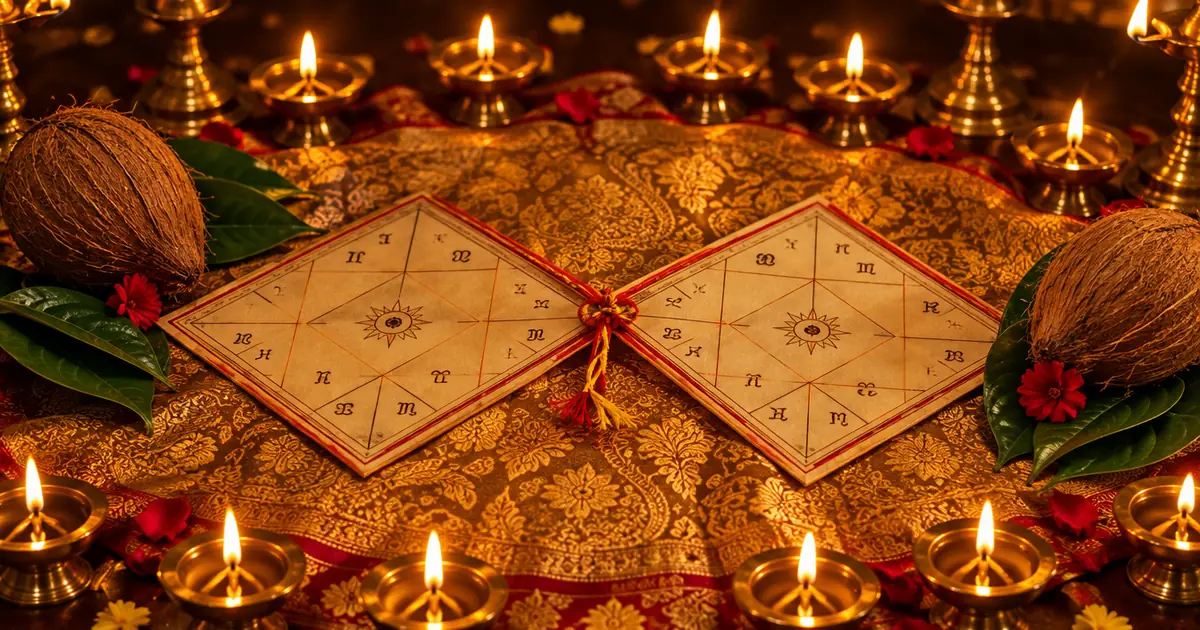
Kundli matching is the traditional comparison of two people's birth charts before marriage, scoring how their Moon signs and birth stars fit across eight categories and then reading the wider charts for temperament and timing. A kundli is simply a birth chart: a map of where the Sun, Moon and planets were at the moment and place of a person's birth, drawn according to the sidereal system of Hindu astrology. The way the chart is laid out, as a grid of twelve houses, is described under kundali.
What is kundli milan?
Kundli milan is the Hindi name for the same thing. "Milan" means meeting or matching. Its scoring system, guna milan, gives a total out of 36, and families often quote that number. The full method is on the kundli matching service page.
A plain explanation you can actually use
A version like this tends to land well:
"My family has a tradition called kundli matching. Before a wedding, an astrologer compares the two birth charts, mostly where the Moon was when each of us was born, and talks about how our temperaments might fit and what good times for the wedding might be. It is a bit like a family blessing ritual. Nobody has to believe in it, it is not about judging anyone, and we have already decided to get married. My parents just find it reassuring."
Adjust it to your family. The last sentence matters most, if it is true: the decision has been made, and the matching supports it rather than deciding it.
What kundli matching is not
- It is not a judgment of their child. No one's chart is "bad," and a careful astrologer never describes it that way.
- It is not about race, religion or background. A chart describes a person's temperament and timing, nothing else.
- It does not ask them to worship anything or take part in a religious rite.
- It is not fortune telling. Readings are offered as traditional guidance and reflection, not predictions about the marriage.
- It is not a veto, at least not in your family, if you and your partner say so together.
Questions Texan families often ask
- "Do you need my son's birth time?" It helps, and a Texas birth certificate often records it; see finding a Texas birth time. For someone born in Texas decades ago, daylight saving rules matter too, as Texas birth charts and war time explains. If he would rather not share it, that is fine.
- "What if the numbers come out low?" It usually means a closer look, and many low scores are softened by exceptions in the tradition itself.
- "Do we have to be there?" No, but they are welcome. Many families find it reassuring to listen in on a video call and ask questions.
- "Is this going to change the wedding?" Possibly the time of the Hindu ceremony, which is chosen as an auspicious window. Rarely anything else.
Including both families respectfully
- Ask your partner first. They should agree before their birth details go anywhere.
- Tell the in-laws before it happens, not after. Surprises feel like secrets.
- Offer them a seat at the table. A short video session where they can hear the explanation directly often settles more nerves than anything you say.
- Share a short written summary in plain English afterwards, so nothing is lost in translation.
- Be willing to skip it. If your partner or their family is truly uncomfortable, many couples simply leave matching out and keep only the muhurta for the ceremony.
If the wedding will also include a church service, the post on a Fort Worth interfaith wedding walks through timing both ceremonies, and Hindu weddings with a Texas touch has ideas both families tend to enjoy.
Where the tradition stops
Astrologer and Psychic Vijayram explains every result in plain English by phone or video, with both families welcome on the call. What no matching can tell either family is whether the couple will be kind to each other, keep their promises and grow together. Your in-laws already have a good read on that, from watching the two of you, and that is worth saying out loud too.
Common questions
Does my non-Indian partner need a kundli?
Only if they are comfortable sharing their birth date, time and place. A chart can be drawn for anyone born anywhere, but taking part is entirely their choice.
What happens if the score is low?
Usually a closer look, not a cancellation. Many low scores are softened by classical exceptions, and the families decide how much weight to give the tradition. The couple's decision stands either way.
Is kundli matching a religious ritual?
It is part of Hindu cultural tradition rather than an act of worship. Your in-laws do not need to share the belief to respect it, and they are never asked to take part in anything that conflicts with their own faith.
Can my in-laws see the kundli matching report?
Yes, if your partner agrees. A short summary in plain English usually helps more than the full technical report, which is full of Sanskrit terms. The astrologer can prepare one and answer their questions on a video call.
What if my in-laws are uncomfortable for religious reasons?
Respect that. Many couples leave the chart comparison out and keep only a muhurta for the Hindu ceremony, or keep the matching private between the Hindu family and the couple, with the partner's consent.
Related service
Keep reading
Bikram Sambat Birth Dates: Converting Before Kundli Matching
Nepali cheena matching starts with converting a Bikram Sambat birth date and time correctly. How conversion works, what both traditions check, and pitfalls.
Read article →
Porutham and Guna Milan: South and North Indian Matching Side by Side
Porutham vs guna milan in plain terms: how the South Indian ten-porutham list and North Indian ashtakoota matching differ, and why their verdicts can clash.
Read article →
Manglik Worries in Second-Generation Texas Families
Manglik dosha in the USA for Texas families: why parents worry, why their children doubt it, what the cancellations say, and keeping the choice with the couple.
Read article →Quick answers
Do gunas matter if we are already engaged?
If you are already engaged, guna scores still offer useful talking points, used as guidance rather than a veto. How kundli matching helps Fort Worth couples.
Read answer →Can we marry if our kundlis do not match?
Yes, you can marry if your kundlis do not match. How kundli matching is done, whether it is necessary for a love marriage, and what Fort Worth couples weigh.
Read answer →Talk to Astrologer and Psychic Vijayram
Tell us what you are facing. If a reading is unlikely to help, you will be told that plainly.