
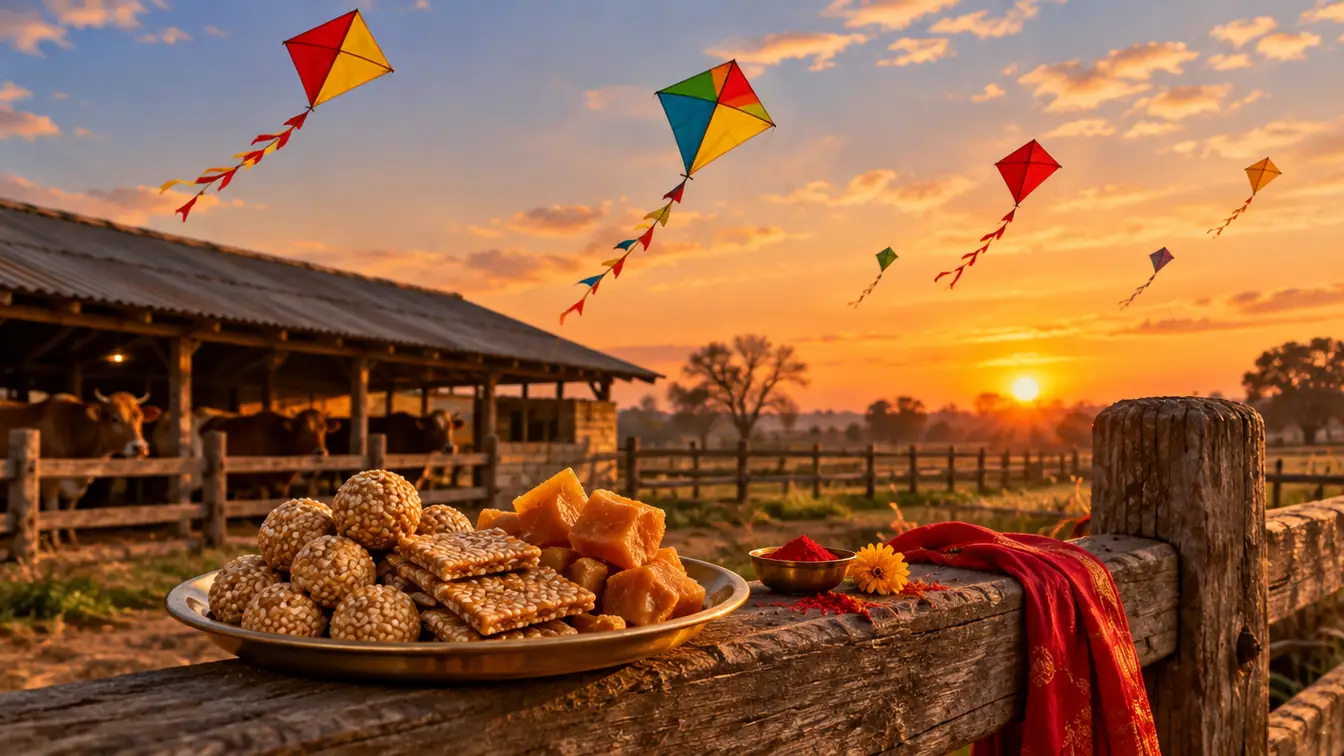
Makar Sankranti During Fort Worth Stock Show Season
Makar Sankranti in Fort Worth is the day the Sun enters sidereal Capricorn. In 2027 that happens at about 9:40 am Central Time on Thursday 14 January, so local families mark it that day, in daylight. In India the moment falls after sunset, which is why many calendars there show Friday 15 January.
Key takeaways
- Makar Sankranti is the day the Sun moves into Makara, the sidereal sign of Capricorn.
- Worked out for Fort Worth, the Sun crosses into sidereal Capricorn at about 9:40 am Central Standard Time on Thursday 14 January 2027.
- The Metroplex is home to families from every part of South Asia, and each brings its own version:
- North Texas wind is good for kites and hard on fingers.
- A simple home observance needs no special tools.
Mid-January in Fort Worth means longhorns, show cattle and rodeo crowds around Will Rogers Memorial Center as the Stock Show and Rodeo begins its three-week run. For many South Asian families it also means sesame sweets, kites and a pot of rice boiling over on the stove. Makar Sankranti in Fort Worth lands right in Stock Show season, and the two have more in common than first appears: both are winter gatherings that honor harvests and the animals that make farming possible.
What the festival marks
Makar Sankranti is the day the Sun moves into Makara, the sidereal sign of Capricorn. In the traditional reckoning it opens Uttarayana, the six months of the Sun's northward course, and it closes the harvest year in much of India. The account of Makar Sankranti and its regional names shows how widely it is kept.
People are often surprised that it does not coincide with the winter solstice. The solstice is tied to the seasons, while Sankranti is tied to the stars, and the slow wobble of Earth's axis has pulled the two apart. The astronomer James Kaler explains this precession in plain terms in an essay on why zodiac signs have shifted. Our post on Vedic and Western astrology covers the same drift as it applies to birth charts.
The 2027 date, and why India may show a different one
Worked out for Fort Worth, the Sun crosses into sidereal Capricorn at about 9:40 am Central Standard Time on Thursday 14 January 2027. That is mid-morning here, so the punya kaal, the meritorious period after the crossing, runs through Thursday's daylight. Thursday is the local day.
On an India Standard Time clock the same moment is about 9:10 pm, after sunset. When the crossing happens at night, Indian almanacs move the observance to the next morning, so many calendars printed there will show Friday 15 January. Neither is wrong. Each follows its own sky.
One festival, many names in Tarrant County
The Metroplex is home to families from every part of South Asia, and each brings its own version:
- Lohri (Punjabi) on the evening before, with a bonfire, songs, popcorn, peanuts and rewri thrown into the flames.
- Pongal (Tamil), kept over several days. The sweet rice is cooked until the pot boils over, a sign of plenty, and the third day honors cattle.
- Uttarayan (Gujarati), the great kite festival, with undhiyu and chikki.
- Sankranti (Telugu and Kannada homes), with rangoli in the doorway and a mix of sesame, jaggery, coconut and peanuts shared with friends.
- Til-gul (Marathi), sesame and jaggery sweets handed out with the words "eat sweets and speak sweetly".
- Maghe Sankranti (Nepali), with ghee, sesame laddoos and sweet potatoes, kept by many families in the growing Nepali community around Euless.
- Magh Bihu (Assamese), with a community feast and a bonfire.
Kites and a Texas winter
North Texas wind is good for kites and hard on fingers. If you fly kites for Uttarayan, choose an open park well away from power lines and roads, use plain cotton string rather than glass-coated manja, which injures birds and people, and dress for a wind chill that can feel far colder than the forecast suggests. Bring the children home before dusk; January sunset in Fort Worth comes at about 5:45 pm.
Sankranti and the Stock Show, side by side
It is a happy coincidence that Mattu Pongal, the day for thanking cattle, falls in the same weeks that the Cultural District fills with show steers and longhorns. A family visit to the Stock Show can be a natural way to explain the festival to children growing up in Fort Worth: people everywhere have marked the turn of winter by honoring the animals and harvests that feed them.
A Sankranti morning facing east
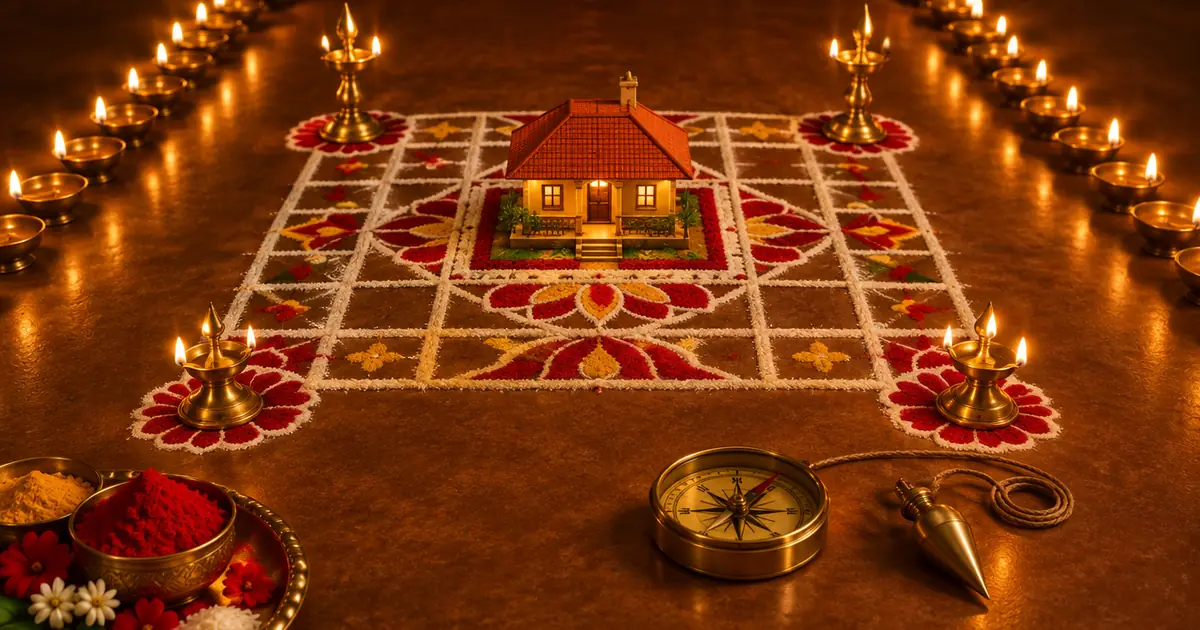
A simple home observance needs no special tools. Rise before the Sun, bathe, and offer water toward the sunrise from a window, patio or front step that faces east, with a short prayer to Surya. Then share sesame and jaggery with family and neighbors. Many households also use the day to open curtains on the east side of the house and clear clutter from the northeast corner, both old ideas in home arrangement. A vastu consultation for a Fort Worth home can show where east and northeast actually fall in your floor plan, since few Tarrant County subdivisions are laid out square to the compass.
Giving in the cold month
Charity is at the heart of the day. Sesame, grain and blankets are the traditional gifts. In a Fort Worth January, warm coats or a meal donated to a local shelter carry the same spirit.
What the Sun's move cannot do
The Sun changing sign is a moment to give thanks and begin again, not a switch that alters anyone's fortunes. If you would like the year's festival and puja dates worked out for your household, Astrologer and Psychic Vijayram prepares them by phone, WhatsApp or video, in Central Time, with the reasoning explained.
Common questions
Is Makar Sankranti always on 14 January?
It falls on 14 or 15 January in this era, depending on the exact moment the Sun crosses into sidereal Capricorn and where you are. Over centuries it drifts slowly later, which is why older relatives may remember it falling a little earlier in the month.
Why does it not fall on the winter solstice?
The solstice, around 21 December, is measured against the seasons. Sankranti is measured against the stars, and the two reference points have drifted about 24 degrees apart over the last two thousand years. So the festival arrives a little over three weeks after the solstice.
Can we light a Lohri bonfire in a Fort Worth backyard?
Check the city's rules on outdoor fires and whether a county burn ban is in force, which happens in dry Texas winters. A small fire pit used safely, or simply lamps and the traditional snacks, keeps the custom without the risk.
What is Mattu Pongal?
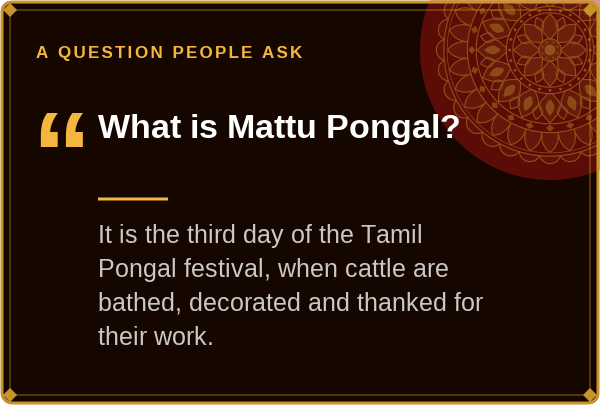
It is the third day of the Tamil Pongal festival, when cattle are bathed, decorated and thanked for their work. In a city that fills with prize cattle every January, it is an easy custom to explain to Texan neighbors.
Related service
Keep reading
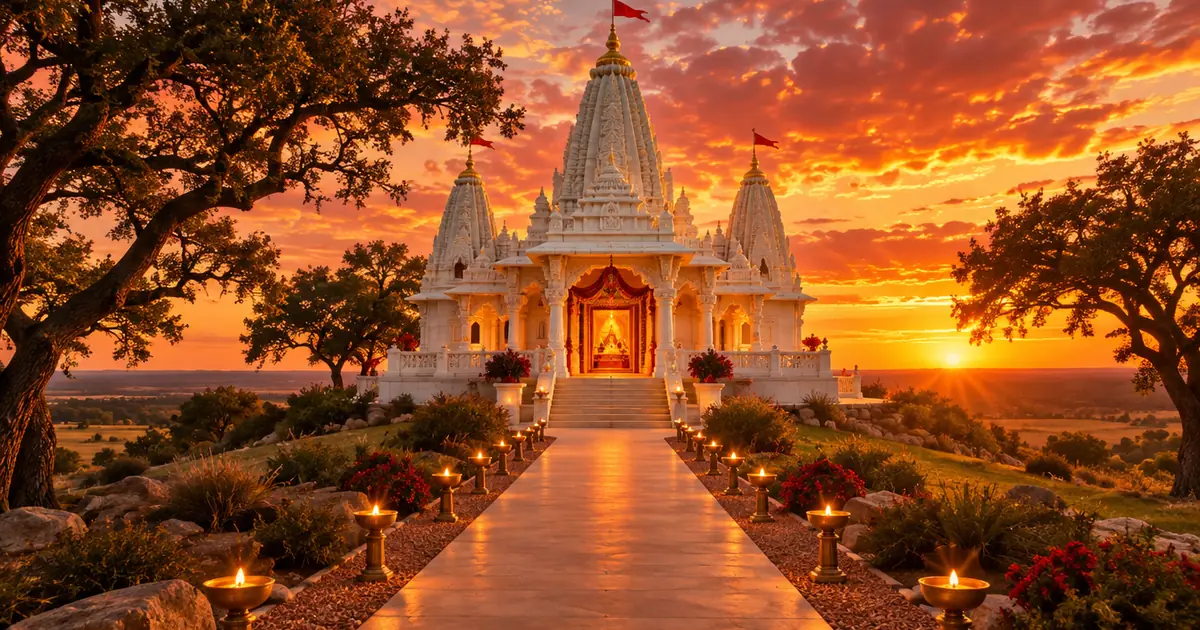
From Hulen Pointe to Longvue: The Hindu Temple of Greater Fort Worth
The Hindu temple in Fort Worth on Longvue Avenue: its start at Hulen Pointe, the 2014 consecration, visitor etiquette and checking the temple's own calendar.
Read article →
Rahu Kaal Shifts Daily in Fort Worth: Reading It From Local Sunrise
Rahu Kaal in Fort Worth is one eighth of local daylight, so its clock time shifts every day and jumps with daylight saving. How to work it out in Central Time.
Read article →
Setting Up a Panchang App for Fort Worth: Location, Time Zone and DST
A panchang for Fort Worth only works with the right city, time zone and daylight saving setting. How to set up an app and read the day's tithi and nakshatra.
Read article →Quick answers
Must I stop reading Western horoscopes to see a Vedic astrologer?
No, you do not need to stop reading your Western horoscope to see a Vedic astrologer in Fort Worth. How the two zodiacs differ and why your sign may shift.
Read answer →Do I need my birth certificate for a Vedic reading?
You do not need your birth certificate for a Vedic reading in Fort Worth: date, time and place of birth matter, and a certificate simply confirms the time.
Read answer →Talk to Astrologer and Psychic Vijayram
Tell us what you are facing. If a reading is unlikely to help, you will be told that plainly.