
Lab-Grown or Natural? Gemstone Certificates for Fort Worth Buyers
An astrology gemstone certificate is a lab report that identifies the stone, states whether it is natural or laboratory-grown, and lists treatments such as heating or filling. Traditional practice prefers natural, untreated or lightly treated stones, but a stone should be suggested only when your chart supports it, and many charts need none at all.
Key takeaways
- The overview of the navaratna describes the tradition.
- A report from an independent gemological laboratory usually includes:
- A treated natural stone has been altered after mining: heated to improve color, oiled or resin-filled to hide cracks, dyed, or filled with lead glass.
- The Federal Trade Commission's Guides for the Jewelry Industry, 16 CFR Part 23 , set out two protections worth knowing.
- Many traditional astrologers prefer natural stones and accept stable heating as a long-standing practice.
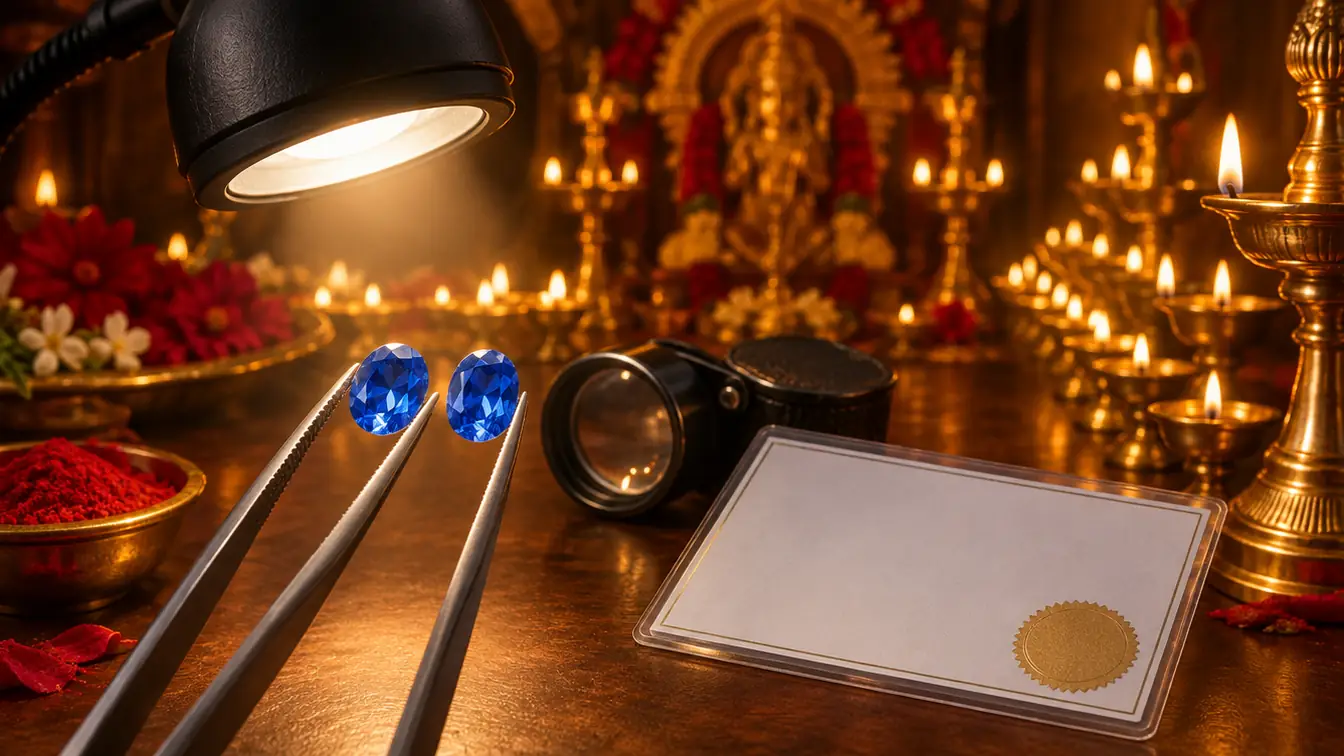
A relative returns from Jaipur with a "certified" yellow sapphire. An online seller offers a blue sapphire with a glossy certificate and a countdown timer. A jeweler in the Metroplex says the stone in the window is natural, but the tag is vague. If you have been told to wear a gem for astrological reasons, sooner or later you will hold an astrology gemstone certificate and wonder what it actually proves. This post explains how to read a gem lab report, what treatments and lab-grown stones mean for traditional use, what US rules require sellers to disclose, and why a stone should only be suggested when the chart supports it.
First question: does your chart call for a stone?
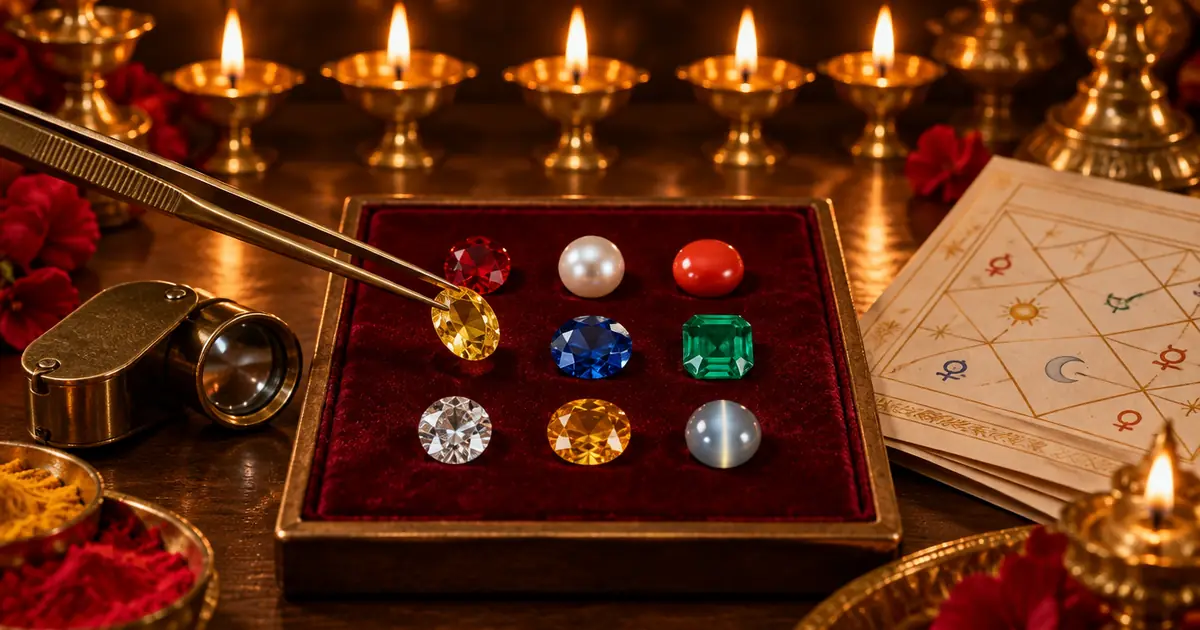
In Vedic astrology, each of the nine planets is linked with a gem, the set known as the navaratna: ruby for the Sun, pearl for the Moon, red coral for Mars, emerald for Mercury, yellow sapphire for Jupiter, diamond for Venus, blue sapphire for Saturn, hessonite for Rahu and cat's eye for Ketu. The overview of the navaratna describes the tradition. A gem is meant to strengthen its planet, which is only helpful if that planet rules good houses and is weak. Strengthening a planet that rules difficult houses can work against you by the tradition's own logic. That is why a careful reader often recommends no stone at all. The gemstone suitability reading starts from that question, not from a sales list.
What a gem lab report shows
A report from an independent gemological laboratory usually includes:
- Identification: the mineral species and variety, for example "corundum, variety sapphire."
- Natural or not: whether the stone is natural, laboratory-grown (synthetic) or an imitation such as glass.
- Treatments: phrases such as "indications of heating," "no indications of heating," "clarity enhanced," "filled" or "dyed."
- Weight and measurements: in carats and millimeters, plus shape and cut.
- Color description and sometimes an opinion on geographic origin.
- A report number and photograph that you can check on the lab's own website.
Read the treatment line first. It matters more for traditional use than almost anything else on the page. Ask for weight in carats; older measures such as the ratti do not convert neatly.
Natural, treated, lab-grown, imitation
These are four different things. A natural stone formed in the earth. A treated natural stone has been altered after mining: heated to improve color, oiled or resin-filled to hide cracks, dyed, or filled with lead glass. A lab-grown stone has the same chemistry and crystal structure as the natural gem but was made in a factory. An imitation only looks similar: colored glass sold as emerald, for example. Heated sapphire is common and stable; lead-glass-filled ruby can be more glass than ruby and needs special care.
What US rules require sellers to tell you
The Federal Trade Commission's Guides for the Jewelry Industry, 16 CFR Part 23, set out two protections worth knowing. Under section 23.24, a seller should disclose that a gemstone has been treated when the treatment is not permanent, creates special care requirements or significantly affects the stone's value. Under section 23.25, a stone made in a laboratory should not be called simply a "ruby" or "sapphire"; the name should be immediately preceded, just as prominently, by words such as "laboratory-grown" or "laboratory-created." These rules apply to sellers at every level, including online listings. If a seller will not put the stone's nature and treatments in writing, walk away.
How tradition sees lab-grown and treated stones
There is no single answer. Many traditional astrologers prefer natural stones and accept stable heating as a long-standing practice. Most advise against filled or composite stones. Lab-grown stones divide opinion: some readers see them as physically identical and acceptable, others feel a gem's value lies in its natural formation. It is also honest to say that no controlled study has shown gems changing anyone's fortunes. Wearing one is a faith practice. Choose what you can afford without strain and what sits right with your own beliefs.
A buyer's checklist for Fort Worth and abroad
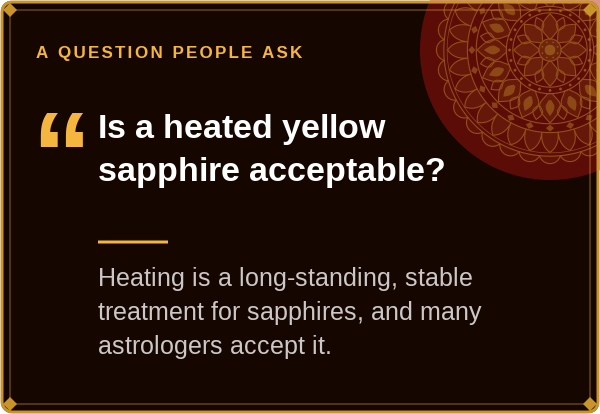
- Confirm with your reader that the chart supports a stone, which one, and why.
- Get a written invoice naming the stone, stating natural or laboratory-grown, and listing treatments.
- Ask for an independent lab report and verify the report number on the lab's website.
- Check the return policy before paying, especially online.
- Do not buy under time pressure, or from someone who also diagnosed the problem only their stone can fix.
- If you buy in India or Nepal, keep the invoice and report for US customs declarations.
Alternatives that need no purchase
If a planet needs support and a stone is not suitable or affordable, the tradition offers other paths: a mantra for that planet, charity on its weekday, simple fasting where health allows, or wearing its color. The post on planet-based mantras explains how these are chosen.
What a gemstone cannot do
A gem cannot guarantee success, repair a relationship or treat illness, and it is never a substitute for medical, financial or legal advice. At most it is a reminder, worn with faith, of a quality you are working to build.
If you are unsure whether you need a stone at all, start with a kundli and birth chart reading or ask Astrologer and Psychic Vijayram about the planet in question during a dasha and transit reading, by phone, WhatsApp or video.
Common questions
Does a lab-grown stone work the same as a natural one in astrology?
Opinions differ. Many traditional astrologers prefer natural stones, while others accept lab-grown ones as chemically identical. There is no scientific evidence that any stone changes life outcomes, so treat the choice as a matter of faith and budget, not necessity.
Is a heated yellow sapphire acceptable?
Heating is a long-standing, stable treatment for sapphires, and many astrologers accept it. Filled or glass-treated stones are a different matter and are usually not recommended. Whatever you choose, the treatment should be disclosed in writing.
Is the seller's own certificate enough?
It is better than nothing, but an independent laboratory report you can verify by its number on the lab's website is far stronger. Be wary of certificates you cannot check.
Someone says only their stone can fix my chart. Should I buy it?
No. Pressure to buy from the same person who diagnosed the problem is a warning sign. Get a second opinion, take time, and remember that most charts do not require any gemstone.
Related service
Keep reading
Sankashti Chaturthi Moonrise Times for Fort Worth
Sankashti Chaturthi moonrise times for Fort Worth in 2027, month by month in Central Time, with cloudy-night guidance and sensible fasting cautions.
Read article →
Kartik Deepdaan: An Evening Lamp Each Night in a Fort Worth Home
Kartik month deepdaan in a Fort Worth home: the nightly lamp custom, 2027 dates and sunset times in Central Time, and flame safety for apartments.
Read article →
Annaprashan: Choosing a Date for Baby's First Rice in Fort Worth
Choosing an annaprashan muhurat in Fort Worth: traditional ages for boys and girls, a window in Central Time, and why the pediatrician's advice comes first.
Read article →Quick answers
Must I stop reading Western horoscopes to see a Vedic astrologer?
No, you do not need to stop reading your Western horoscope to see a Vedic astrologer in Fort Worth. How the two zodiacs differ and why your sign may shift.
Read answer →Do I need my birth certificate for a Vedic reading?
You do not need your birth certificate for a Vedic reading in Fort Worth: date, time and place of birth matter, and a certificate simply confirms the time.
Read answer →Talk to Astrologer and Psychic Vijayram
Tell us what you are facing. If a reading is unlikely to help, you will be told that plainly.